
Smarter LGBTQ+ trip planning requires auditing Miami’s highly fragmented geography and substantial hidden expenses before booking accommodations. The metropolitan area does not possess a consolidated queer district; instead, safe nodes span across South Beach, Brickell, and upper regions like Wilton Manors, which sits 35 miles north in Broward County. Moving between these scattered zones demands realistic budget allocations for ridesharing, as surge pricing routinely inflates cross-causeway trips to $45 each way during weekend peak hours.
Recent commercial gentrification has completely dismantled nightlife infrastructure in mainland hubs like Wynwood, making baseline accommodation proximity critical for safety and convenience. Travelers must calculate mandatory layout additions including Florida’s 13% hospitality tax and automated 20% venue service fees directly into daily cash flow models. Balancing these rigid structural elements ensures an efficient itinerary centered around genuine community venues rather than overpriced, poorly connected tourist traps.
Miami sells a very specific image to gay and LGBTQ+ travelers — beach bodies, drag brunches on Ocean Drive, year-round sunshine, and a city that feels like it was built for the community. Some of that is real. Some of it is marketing. Miami The Hype’s job is to tell the difference. This page doesn’t celebrate the fantasy — it maps the reality, so you can decide whether Miami actually makes sense for your trip, your budget, and your expectations. We update it as the city changes, because Miami’s gay scene has been changing faster than most guides will admit.
Is Miami Actually LGBTQ+-Friendly in 2026?
The short answer is yes — with an asterisk the size of the state of Florida.
Miami sits inside one of the most politically hostile environments for LGBTQ+ people in the United States. Florida passed its so-called “Don’t Say Gay” law, banned gender-affirming care for minors, and in 2024 quietly removed its official LGBTQ+ travel section from the Visit Florida website. The state’s posture toward the community is not subtle.
Miami, however, operates as a bubble. It’s one of the few cities in the country with its own LGBTQ+ chamber of commerce, a police Safe Place initiative, and a culture that has been queer-coded since the 1930s. The Miami-Dade county human rights ordinance includes protections that the state does not. South Beach’s 12th Street Beach has been an unofficial gay beach for decades. The city consistently draws over a million LGBTQ+ visitors a year.
The honest answer on LGBTQ+ safety in Miami
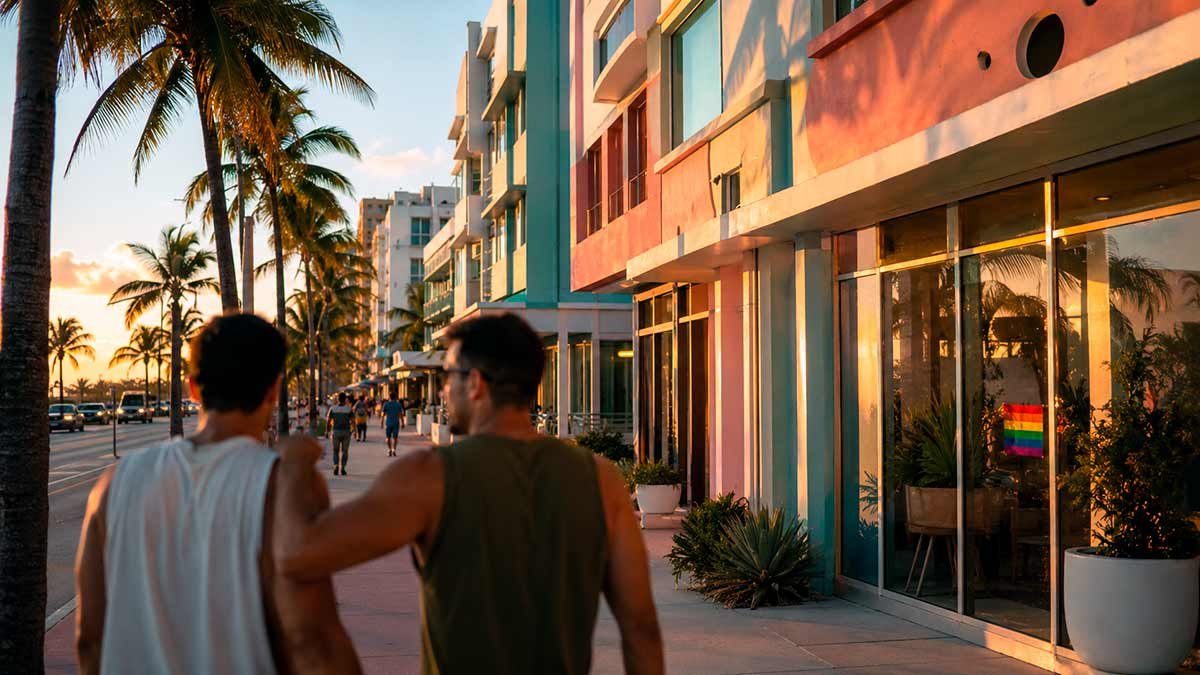
Miami is welcoming and relatively safe for gay and LGBTQ+ travelers. Public displays of affection in South Beach, Wynwood, and Brickell are common and largely unremarkable. The tension is at the state level — laws that affect healthcare access, education, and trans rights — not at the street level of daily life in Miami. Travelers who are trans or non-binary should research current healthcare access before an extended stay. For most visitors, Miami functions as a genuinely inclusive city inside a state that is not.
A 2024 survey by the International LGBTQ+ Travel Association found that 52% of LGBTQ+ Americans expressed hesitancy about visiting Florida — but 66% said they’d visit LGBTQ+-friendly cities within hostile states. Miami is exactly that city.
Understanding Miami’s Gay Geography — Before You Book Anything
This is the single most important thing to understand about gay Miami: there is no compact gayborhood.
Unlike New York’s Hell’s Kitchen, Chicago’s Boystown, or even Fort Lauderdale’s Wilton Manors, Miami does not have one walkable street where everything LGBTQ+ is concentrated. The scene is distributed across a sprawling, car-dependent metro. If you arrive expecting to step out of your hotel and be surrounded by gay bars in every direction, you’re going to be disoriented.
What Miami has is a collection of nodes. Understanding those nodes — and the real logistics of moving between them — is what separates a great trip from an expensive, frustrating one.
South Beach is where most visitors land their expectations. It’s the image — Ocean Drive, 12th Street Beach, Palace Bar’s drag shows spilling onto the sidewalk, the Gaythering Hotel’s bar packed with locals and visitors on a Thursday night. The concentration of gay-specific venues is real, but smaller than the reputation suggests. Twist, Palace, and the Gaythering are the anchors. The scene works best when you’re staying within walking distance of it.
Wynwood used to be part of this story. As of early 2026, it isn’t. Willy’s Neighborhood Bar — Wynwood’s first and only dedicated gay bar — closed in August 2025 when developers cut its lease short. Gramps, the beloved venue that hosted the neighborhood’s longest-running drag night (Double Stubble, every Thursday for years), closed in January 2026 after 13 years. The owner’s own words landed with the weight they deserved: “Gramps started as a destination. Now it’s not anymore.” Wynwood Pride as a June event continues. Wynwood as a gay neighborhood does not exist anymore.
Brickell and Downtown serve a different function. They’re not gay-specific, but they’re inclusive, walkable by Miami standards, and relevant if you’re visiting for business or want access to the city’s restaurant scene without the South Beach premium. No gay bars here — but no discomfort either.
Wilton Manors is the node that most guides mention and almost none explain properly. It’s not in Miami. It’s 35 to 40 miles (56 to 64 km) north, a 40-to-50-minute drive or a $50–70 Uber each way, depending on traffic on I-95. It is, however, the most concentrated gay community in South Florida — second only to Provincetown, Massachusetts in the proportion of gay couples per resident in the U.S. Wilton Drive has 118 LGBTQ+-owned or friendly businesses. If what you’re looking for is a walkable gayborhood with bars, restaurants, and a community that actually lives there year-round, Wilton Manors delivers what Miami doesn’t. It warrants its own trip, its own planning, and its own page — which we cover in the Wilton Manors guide.
The Real Cost of Being Gay in Miami
Gay Miami is expensive Miami. The demographic spends well, venues price accordingly, and the city’s baseline costs apply on top of everything.
Here’s what the math looks like in practice:
Accommodation: Gaythering Hotel, the only dedicated gay hotel actively operating in South Beach after the Axel Hotel closed in March 2025, runs $90–$160/night depending on season. That’s below the South Beach average — but add resort fees (typically $25–35/night on top of the listed rate), Florida’s 13–14% combined tax, and you’re adding $40–55/night to whatever number you see on the booking screen.
During peak events — Miami Beach Pride (April), Winter Party Festival (February/March), Sizzle on Memorial Day weekend — hotel prices in South Beach can double or triple. A room that goes for $120 on a random Wednesday in October can hit $350 during Winter Party. Budget accordingly or book far in advance.
Nightlife Costs: Palace Bar charges $55 for its bottomless drag brunch (food + mimosas). Twist has no cover and daily two-for-one happy hours from 3 to 9pm — the most cost-effective entry point into South Beach nightlife. Ticketed circuit parties and festival events range from $95 to $200+ per night.
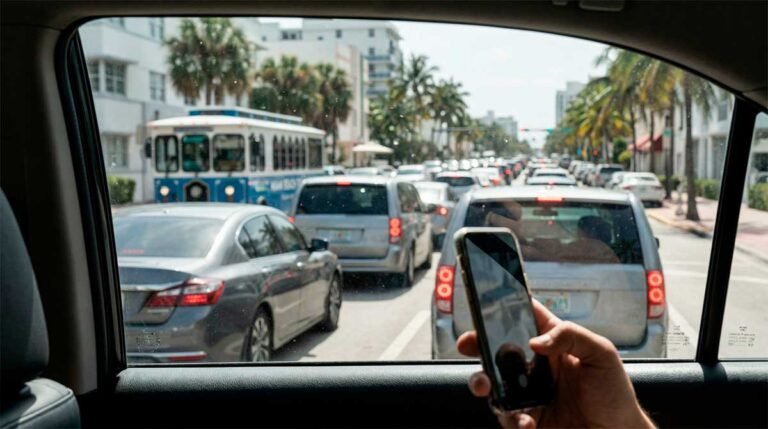
Transportation: This is where gay Miami’s hidden cost lives. If you’re staying in South Beach and want to experience anything outside of it — Wynwood events, Brickell restaurants, Coral Gables, or especially Wilton Manors — you’re Ubering. The I-95 corridor at night is erratic. A Saturday night Uber from South Beach to Wynwood runs $25–45 each way with surge pricing. Round-trip to Wilton Manors and back: budget $100–140 for transportation alone.
The 7% Miami-Dade sales tax applies to everything. Tipping culture runs 20–22% as the baseline at sit-down venues, with many drag brunches adding an automatic 18–20% service charge before you get to add your own tip.
- Navigating Miami Without a Car: A Guide to Public Transportation
- Uber, Rental Car, or Public Transit in Miami: The Real Cost Most Visitors Skip
Where Gay & LGBTQ+ Travelers Actually Stay in Miami
Stay in South Beach if: your priority is walking distance to gay bars, 12th Street Beach, and the Ocean Drive drag scene. Gaythering Hotel is the reference property — men-only sauna, bar that functions as the actual epicenter of the local gay community, free bikes, genuinely knowledgeable staff. It’s not a luxury hotel by Miami Beach standards, but the community density and insider access it provides are worth more than a rooftop pool at a generic resort.
Stay in Brickell or Downtown if: you want Miami’s modern urban side, easy access to the best restaurants in the city, and you’re comfortable Ubering to South Beach for nightlife. You’ll pay less per night, get more square footage, and spend that difference on food and experiences rather than the South Beach premium for proximity.
Consider a split itinerary if: you’re spending five or more days. Two nights in South Beach for the beach and nightlife infrastructure, the rest in Brickell or even a night in Fort Lauderdale close to Wilton Manors. Miami rewards travelers who treat it as a metro region, not a single neighborhood.
Getting Around Miami as an LGBTQ+ Traveler
The question isn’t whether you need a car in Miami. It’s whether you’re willing to pay the Uber tax instead.
The Metromover covers downtown and connects to the Metrorail, but it doesn’t touch South Beach or Wynwood. The South Beach Local trolley runs along Washington Avenue and is free — useful for moving within South Beach, useless for anything beyond it. The free trolleys in Brickell, Wynwood, and Little Havana operate on separate routes and don’t connect to each other in any useful way for a visitor.
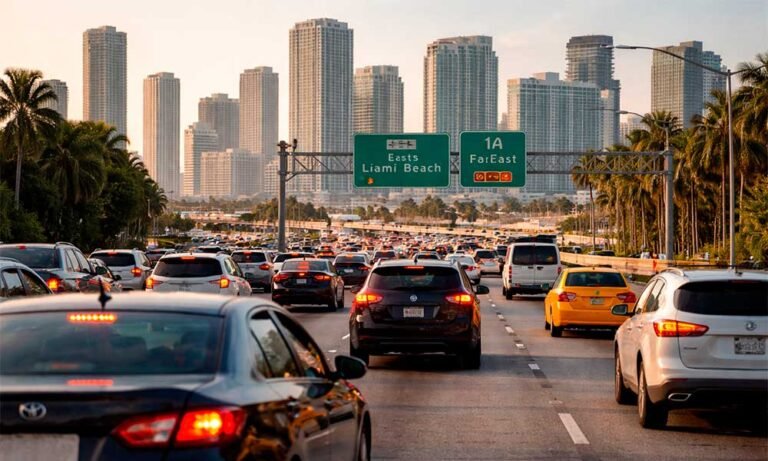
Renting a car solves the logistics problem but creates a parking problem. Parking in South Beach on a weekend night means valet ($25–40) or a garage ($20–30). The MacArthur Causeway back to the mainland on Saturday night after midnight is a known bottleneck.
The practical formula: If you’re based in South Beach and your trip is mostly beach days, Palace, Twist, and Gaythering — no car needed. If you want to move freely across the city, especially to Wilton Manors or Coral Gables — rent a car or accept that Uber will be a line item in your trip budget comparable to a hotel night.
We break down the full car vs. no-car math for Miami in the Move Smart section.
The Miami Gay Nightlife You’ll Actually Find
The gap between Instagram and reality is widest here.
Miami has exceptional LGBTQ+ nightlife during its peak moments — Winter Party Festival in February draws the world’s largest concentration of international gay travelers to South Beach for a week. Miami Beach Pride in April transforms Lummus Park. Wynwood Pride in June takes over the mainland. Sizzle on Memorial Day Weekend is a circuit institution. During these events, Miami is one of the most electric LGBTQ+ destinations on the planet.
Outside of events, the permanent infrastructure is small. South Beach’s dedicated gay bar scene is essentially three anchors — Palace (drag institution, Ocean Drive), Twist (seven bars, no cover, opens late), and Gaythering Bar (local community hub, Lincoln Road). R House in Wynwood does drag brunches and remains open. Azucar in Coral Gables serves the Latin LGBTQ+ community. ClubBOi, a Miami institution for the gay BIPOC community for over a decade, now operates as a Saturday night pop-up with rotating locations.
The permanent scene requires knowing the weekly calendar. A random Tuesday in November in South Beach is not a circuit party. The energy is there when you look for it, and flat when you don’t.
What Miami actually has that most guides miss: a thriving underground pop-up culture. Queer parties announce via Instagram at secret locations — themed around music eras, fashion, seasons. The community finds each other through people, not venues. This is both the limitation and the authenticity of gay Miami in 2026.
What’s left in Wynwood for the LGBTQ+ community
R House continues to operate and hosts drag brunches. Wynwood Pride as a June event is real and growing — it started as a weekend and now covers the entire month. But there are no dedicated LGBTQ+ bars in Wynwood as of early 2026. The neighborhood serves the community through events, not infrastructure.
Major LGBTQ+ Events That Define Miami’s Calendar
Miami’s event calendar is how the city compensates for what its permanent infrastructure lacks. These events matter — they’re the reason to time your trip specifically, and the reason to avoid Miami (or book very early) if your dates happen to overlap.
Winter Party Festival (February/March): Circuit-focused, internationally attended, South Beach as epicenter. Peak booking season for the Gaythering and every other South Beach hotel. Tickets for individual parties run $95–$200+. This is the event that puts Miami in the same conversation as Mykonos and Ibiza for the circuit crowd.
Miami Beach Pride (April): 11-day festival, parade on Ocean Drive, free festival at Lummus Park, Trans Pavilion, Women’s Tent. Now in its 18th edition. More community-oriented than Winter Party, more accessible in cost, wider demographic range. The 2026 theme was “Pride is Infinite” — a pointed message given the current Florida political landscape.
Wynwood Pride (June): Grassroots, mainland-based, a full month of events across the city. Younger, more diverse, more community-focused than South Beach events. Started as a weekend in 2019 and expanded to a month-long calendar. Less expensive, more authentic, less internationally attended.
Sizzle Miami (Memorial Day Weekend): Pool parties, Black gay men’s event, South Beach infrastructure. One of the longest-running circuit events in the country.
Gay8 Festival (February, Little Havana): The largest Hispanic LGBTQ+ festival in the United States, with 60,000+ annual attendees. Often overlooked by international travel guides but an essential piece of Miami’s actual queer identity.
Gay Cruises From Miami — A Different Kind of LGBTQ+ Trip
Port Miami is one of the largest cruise ports in the world, and it’s the home base for multiple dedicated LGBTQ+ cruise lines and events. Atlantis Events and RSVP Cruises both operate sailings out of Miami, typically toward the Caribbean. The cruises attract a high-income demographic and sell out well in advance.
For many LGBTQ+ travelers, the structure works well: fly into Miami, spend a night or two at the Gaythering or a South Beach hotel, board the ship, and return to spend another day or two in the city. Port Miami is about 3 miles (5 km) from South Beach — a $15–20 Uber.
The economics are different from standard Miami travel. The all-inclusive cruise structure means your food, entertainment, and accommodation are bundled. Miami becomes the pre- and post-cruise destination rather than the primary one. We go deeper on the gay cruise logistics — lines, pricing, timing, what’s worth the premium — in the Gay Cruises From Miami article.
Miami vs. Wilton Manors: Two Different Experiences of Gay South Florida
The honest answer to “which is better for gay travelers” is that they serve different needs, and the mistake is treating them as competing options rather than complementary ones.
Miami (specifically South Beach) gives you the beach, the event infrastructure, the international crowd, and the visual spectacle of a major American city with a visible LGBTQ+ presence. Wilton Manors gives you the walkable gayborhood, the community density, the year-round local scene, and a much lower cost of entry per night.
The distance between them is real — 35 to 40 miles (56 to 64 km), 40 to 50 minutes by car, $50–70 by Uber. They’re not a cab ride apart. Planning a trip that includes both requires treating them as distinct destinations with a day trip between them, not as two neighborhoods you can hop between in one evening.
We cover the full comparison — logistics, costs, who each one suits, and whether a split itinerary makes sense: Wilton Manors: The Gay Neighborhood Miami Doesn’t Have.
What This All Means If You’re Planning Your Trip
Miami works for LGBTQ+ travelers who arrive with the right map. The city rewards preparation and punishes assumptions.
If your reference for a gay travel destination is a compact neighborhood where everything is walkable and the bars are open every night with full energy — Miami isn’t that, and Wilton Manors is closer to it. If your reference is a world-class city with exceptional event infrastructure, beach culture, nightlife that genuinely competes globally during peak weeks, and an inclusive atmosphere even outside explicitly gay spaces — Miami delivers.
The question isn’t whether Miami is gay-friendly. It is. The question is whether Miami is the right version of gay-friendly for what you’re actually looking for.
Miami’s Gay & LGBTQ+ FAQ
Is Miami safe for gay couples showing affection in public? In South Beach, Wynwood, Brickell, and most of Miami’s urban core, yes — public displays of affection between same-sex couples are common and unremarkable. Miami has a long history of LGBTQ+ visibility and a municipal human rights ordinance that predates many state-level protections. The tension in Florida is at the legislative level, not the street level in Miami’s main neighborhoods.
Do I need a car to experience gay Miami? It depends on your itinerary. If you’re staying in South Beach and limiting your activities to the beach, Twist, Palace, and the Gaythering, you can manage without a car using the free South Beach Local trolley and Uber for the occasional longer trip. If you want to visit Wynwood for events, explore Brickell’s restaurant scene, or make a day trip to Wilton Manors, a rental car or a realistic Uber budget ($80–120/day for active movers) is necessary.
What’s the best time of year to visit Miami as an LGBTQ+ traveler? February through April is peak season for the community: Winter Party Festival (February/March) and Miami Beach Pride (April) both fall in this window. The weather is also at its best — low 80s°F (high 20s°C), low humidity. The tradeoff is cost: hotel prices are at their annual peak. If budget matters more than event access, October through November offers good weather, dramatically lower hotel rates, and a quieter but functional local scene.
How far is Wilton Manors from Miami Beach? Approximately 35 to 40 miles (56 to 64 km), which translates to 40 to 50 minutes by car under normal conditions on I-95. An Uber each way typically runs $45–70 depending on time and surge pricing. It’s a day trip or a separate overnight — not a neighborhood you can add to a South Beach evening without planning.