

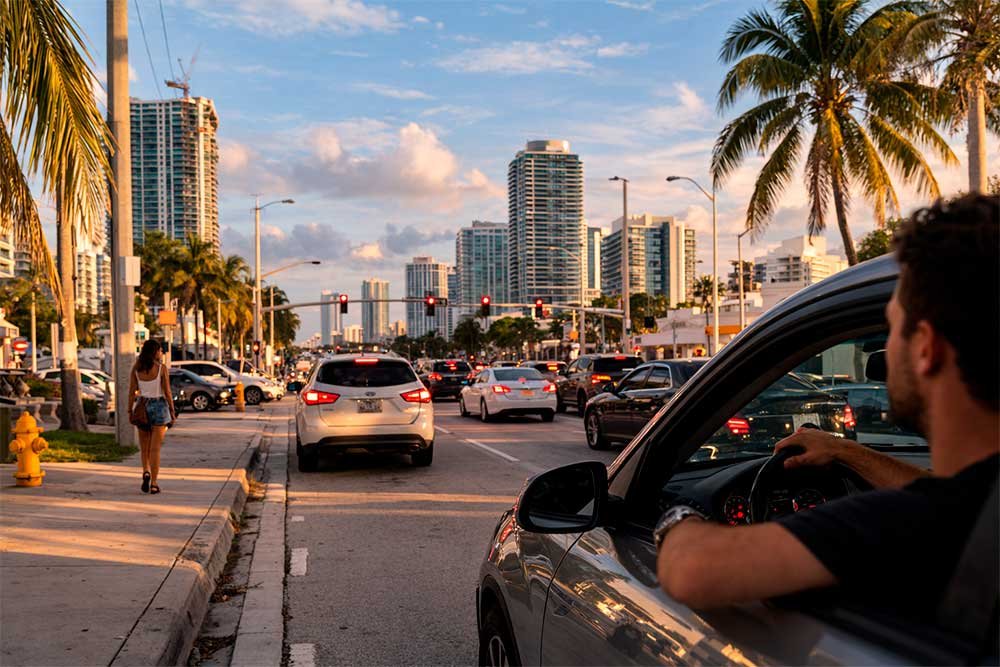
Many travelers ask the same question before visiting Miami: can you explore the city without driving?
The short answer is yes — but it depends heavily on where you stay and how you plan to move around.
Many travelers arrive in Miami expecting a city that works like New York, Barcelona, or Paris — places where walking and public transportation handle most daily movement.
Miami works differently.
The city is not hostile to pedestrians, but it was built around cars. Distances between neighborhoods are larger than they appear on the map, public transportation is limited in many areas, and many everyday places assume you will arrive by car.
If you dislike driving — or strongly prefer cities where you can walk everywhere — this can change your experience more than you expect.
Understanding this before you plan transportation, hotels, or daily activities can help avoid frustration and unnecessary spending.
Miami Is a Car-Dependent City for Tourists
Miami grew during the era when American cities expanded with highways, large avenues, and car-centered infrastructure.
That urban design is still visible everywhere.
You see it in:
- wide multi-lane roads
- large parking lots
- shopping centers designed for drivers
- neighborhoods separated by major roads
Restaurants, supermarkets, malls, and entertainment areas usually assume people will arrive by car. Parking is common and often built directly into the design of the location.
In many parts of Miami, driving isn’t a convenience. It’s simply how the city moves.
Distances Are Larger Than They Look
One of the biggest surprises for first-time visitors is how far apart many popular areas are.
On the map, everything appears relatively close.
In practice, the city spreads out.
Typical examples:
- South Beach → Brickell
- Brickell → Wynwood
- Wynwood → Design District
- Design District → Aventura
Each of these trips can take 15–30 minutes by car — sometimes longer during evening traffic on Biscayne Blvd or I-95.
Walking between them is usually unrealistic, and public transit often requires multiple connections.
This means daily movement tends to happen in “jumps” between neighborhoods rather than continuous walking.
Uber Works Well — But You May Use It Constantly
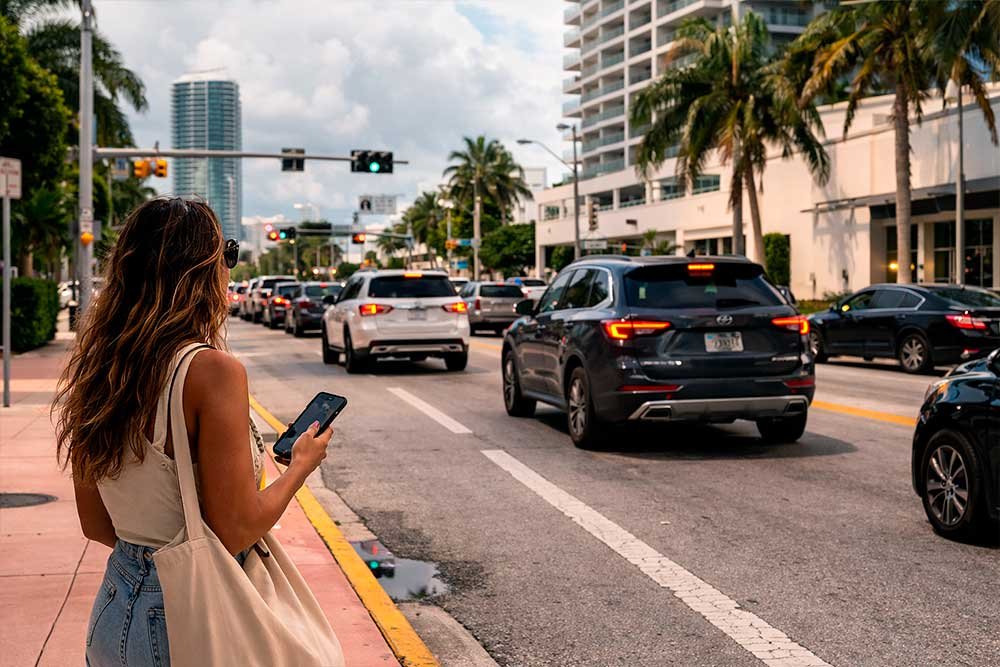
Ride-hailing services like Uber and Lyft work well in Miami.
They are widely available and usually arrive quickly in most tourist areas.
However, many visitors underestimate how often they will rely on them.
You might use Uber for:
- dinner in another neighborhood
- visiting a mall
- returning from nightlife
- going to the beach from a different area
None of these trips are particularly expensive on their own.
But when used several times a day, transportation can become a meaningful part of the daily budget.
For short trips the cost may stay manageable. For longer distances, rides can easily add up over the course of a trip.
This is one reason many travelers consider whether renting a car makes more sense depending on their itinerary.
Walkable Areas Do Exist — But They Are Limited
Some parts of Miami are pleasant and practical for walking.
Examples include:
- South Beach
- parts of Brickell
- Coconut Grove
- certain areas of Downtown
In these neighborhoods you can often reach restaurants, cafes, or shops on foot.
But these walkable zones are relatively small compared with the overall city.
Moving between them typically requires either a car or ride-hailing service.
In other words, Miami has walkable pockets, not a fully walkable urban structure.
The Real Question: Do You Mind Driving?
For some visitors, driving in Miami is not a problem.
They rent a car, explore different neighborhoods, and treat the city as a collection of distinct areas connected by short drives.
For others, driving is something they strongly prefer to avoid.
Common reasons include:
- discomfort with unfamiliar roads
- dislike of traffic
- stress from parking
- preference for cities built around public transit
If you fall into the second group, Miami may feel less convenient than cities designed for walking and trains.
That doesn’t mean the city is difficult to visit. It simply means transportation planning becomes more important.
Choosing the right neighborhood and understanding distances can make a significant difference in how smooth the trip feels.
When Miami Works Very Well
Miami can be an excellent city to explore if you are comfortable with driving or using cars regularly.
Many visitors enjoy the flexibility of moving between beaches, neighborhoods, shopping areas, and restaurants throughout the day.
Driving makes it easier to experience places that are not close to each other, such as:
- Wynwood’s street art district
- large shopping areas like Aventura
- quieter neighborhoods like Coconut Grove
When transportation is planned realistically, the city opens up much more.
So, do you actually need a car in Miami?
In most cases, yes — Miami is a highly car-dependent city, and understanding this before your trip can completely change how you plan transportation.
Understanding This Before You Plan Your Trip
Miami rewards visitors who understand how the city actually functions.
It is not primarily a walking city.
It is a driving city.
If you are comfortable with that, transportation becomes just another practical detail of the trip.
If you strongly prefer destinations where everything is reachable on foot or by subway, choosing where to stay — and how you plan to move around — becomes an important decision before arriving.
Most tourists do not need to drive every day, but they do need to plan around Miami’s car dependency.
Understanding this early can help you avoid unnecessary transportation costs and make better decisions about hotels, rental cars, and daily plans.