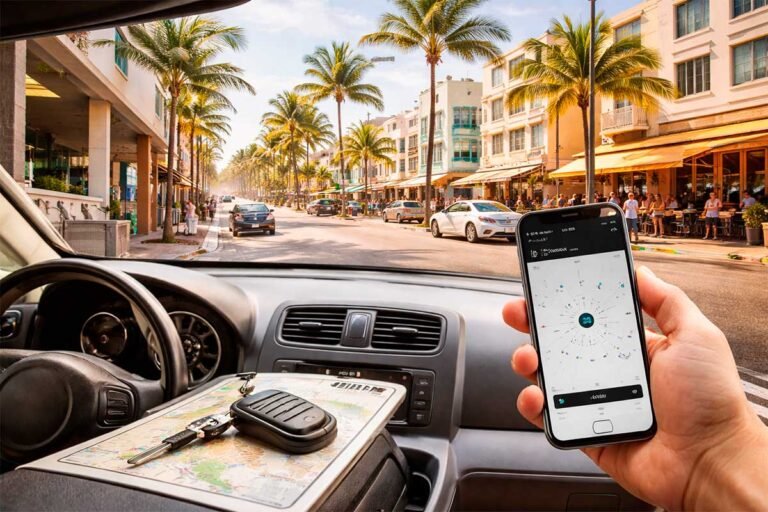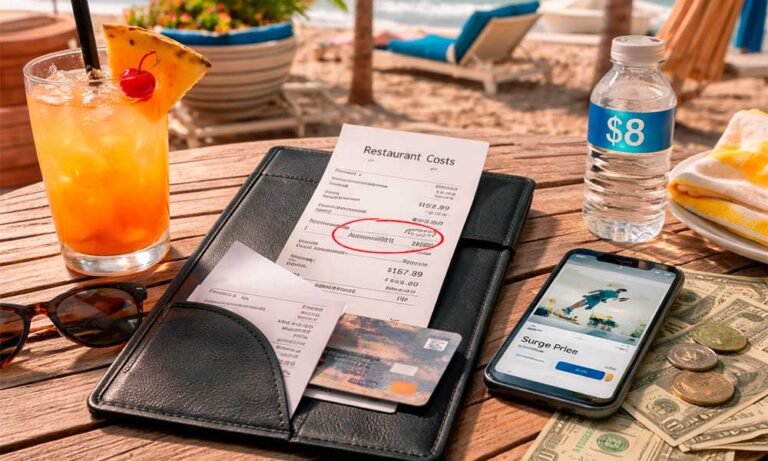


Evaluating real local logistics reveals why is miami expensive to visit for travelers relying on default convenience choices. While baseline county public transit remains highly affordable due to a strict $5.65 daily fare capping system, visitors operating rental vehicles face sharp municipal parking rates that consistently reach $20 per day in neighborhood city garages, scaling up to a flat $100 daily maximum during structural high-impact events in the coastal Art Deco District. Standard dining layout configurations heavily shift final expenditure metrics due to specific Florida restaurant operations-charge laws; these regulatory structures allow automatic service fees, card processing surcharges, and predefined gratuities to be appended directly to the invoice without upfront placement on the main menu view. Selecting a suboptimal lodging base to reduce room rate margins frequently triggers financial backlash, forcing a constant dependency on surge-priced rideshares to traverse the major causeways separating mainland business districts from the beach. Navigating the city efficiently requires auditing these secondary micro-transactions instead of expecting visible upfront costs.
Miami can be expensive, but the bigger problem is that it often does not look expensive until you are already spending. A hotel that feels “fine,” a couple of short rides, one parking charge, one meal in the easiest possible area, one stop you assumed was casual and cheap — and suddenly the trip is costing more than it looked like on day one.
That is the real answer to the question. Yes, Miami can be expensive. But not because every single price is brutal from the moment you arrive. Miami usually gets pricey when ordinary decisions keep drifting toward the most convenient option.
If you are already trying to estimate a full total, this article works best next to a realistic one-week Miami budget breakdown. This page is about something different: what actually makes a Miami trip feel expensive in real life.
Quick answer: yes, but not in one simple way
Miami is expensive for many visitors, but not because the city hits you with one giant unavoidable bill. It is more often a stack of medium-sized costs: a stronger hotel location than you truly needed, repeated parking, restaurant totals that land above the menu price, paid stops that looked smaller on paper, and a lot of “let’s just do what’s easiest” decisions. The city’s own parking rates, transit fares, and other official pricing signals make that pattern pretty easy to see.
Where Miami usually gets expensive
| Cost area | What tourists often expect | What actually pushes the total up |
|---|---|---|
| Hotel | “The room rate is the main cost.” | Location changes the whole trip. A more desirable base often leads to pricier meals, more paid rides, and more convenience spending nearby. |
| Transportation | “Transit or a rental car will solve it.” | Transit can be manageable, but parking can become a daily bill. Miami-Dade fare capping is $5.65 per day and Metromover is free, while Miami Beach parking can reach $20 daily in many city garages and far more during certain special periods in the Art Deco District. |
| Food | “I’ll just figure meals out as I go.” | Miami is easy to overspend on because tourist-area meals, drinks, and automatic charges can move the final total well above the mental estimate. Florida now requires clearer notice of operations charges such as service charges, automatic gratuities, credit card surcharges, and delivery fees. |
| Attractions and casual stops | “Not every day is an attraction day.” | Some places that feel like neighborhood wandering still have admission. Wynwood Walls sells general admission through its official site, which is a small example of how these “minor” costs add up. |
| Daily extras | “It’s just a few little things.” | In Miami, repeated add-ons can matter more than one big splurge. That is why so many trips feel expensive without feeling especially luxurious. |
Miami is not expensive in the same way as New York or Los Angeles
This comparison helps because a lot of travelers use those cities as their mental reference point.
New York usually feels expensive more directly. Transit itself is pricier, with the MTA listing a $35 seven-day cap for subway and local bus rides through OMNY. Los Angeles looks different again: LA Metro caps regular fares at $5 per day and $18 over seven days. Miami-Dade Transit is lower on paper, with fare capping at $5.65 per day and a free Metromover. So on pure transit pricing, Miami is not behaving like the harshest of the three.
The reason Miami still feels expensive is that the pressure often moves somewhere else. In New York, the cost is more obvious earlier. In Los Angeles, people usually expect distance and car dependence to shape the trip. In Miami, many visitors underestimate how quickly location, parking, restaurant totals, and easy choices can reshape the whole budget. That is why a direct Miami vs. New York cost comparison is often more useful than broad “Miami is cheaper” assumptions.
| City | Where the pain usually shows up | Why people misread it |
|---|---|---|
| Miami | Hotel location, parking, nearby meals, repeated convenience spending | It looks like a beach trip, so people assume it will be simpler and cheaper than it really is. |
| New York | Higher baseline prices, especially visible upfront | Travelers usually know NYC will be expensive, so the shock is lower even when the cost is high. |
| Los Angeles | Distance, car logic, spread-out spending | People expect driving to matter in LA, but often do not expect how much “small movement” spending can matter in Miami too. |
Hotel location changes more than the hotel bill
This is where a lot of Miami trips quietly get more expensive than planned.
A higher-demand hotel area does not just change the room price. It often changes your breakfast choices, your dinner choices, how often you use rideshare, whether you pay for parking, and how easy it feels to spend money just because everything around you is built for visitors. That is why a hotel decision in Miami can keep affecting the budget long after checkout.
This is also one reason Miami can feel deceptively manageable at first glance. A traveler may compare hotel options and think the gap is survivable. Then the rest of the trip starts orbiting that location, and the real total climbs.
Transportation is manageable for some trips. Parking is where things go wrong.
Miami-Dade Transit gives travelers a few real tools. The county says fare capping is $5.65 per day for Metrobus and Metrorail when you keep using the same payment method, and Metromover is free. Miami Beach also runs a free citywide trolley from 8 a.m. to 11 p.m., seven days a week, with roughly 20-minute service on most routes.
That does not make Miami a no-car paradise. It does mean transportation is not always the main problem by itself.
Parking is often the bigger issue. Miami Beach’s official garage page shows many municipal garages maxing out at $20 per day, though the 42nd Street Garage is a notable cheaper exception at $8 daily max. During certain designated high-impact periods in the Art Deco District, the city also says four garages can move to flat rates between $40 and $100, while street parking and surface lots there can hit $20 per hour with a $100 daily maximum.
That is the kind of cost that changes the answer to “Is Miami expensive?” in a hurry.
Food is one of the easiest places to overspend
Food in Miami is not automatically unreasonable. But it is extremely easy to overspend without meaning to.
The city encourages convenience spending. You eat where you already are. You grab drinks because you are already sitting down. You accept the location premium because it is hot, you are tired, and you do not want to stop and optimize every meal. Then the bill arrives with a total that feels noticeably higher than the menu impression you had a few minutes earlier.
Florida’s restaurant operations-charge law matters here because it shows this is not just a vague tourist complaint. The state defines operations charges as automatic fees beyond taxes and says they can include service charges, automatic gratuities, credit card surcharges, and delivery fees.
One good reality check is the federal per diem table. For FY 2026, the GSA lists Miami’s meals and incidental expenses rate at $92 per day. That is not a tourist recommendation and should not be treated like one. It is simply a useful benchmark showing that food and day-to-day extras in Miami are not small side costs.
Some of Miami’s most annoying costs do not look big at first
This is what makes the city feel more expensive than expected.
A $12 admission does not seem dramatic. One parking payment does not seem dramatic. One delivery fee does not seem dramatic. One paid ride because the weather changed your plans does not seem dramatic. The problem is the accumulation.
Wynwood Walls is a good example of how this works. Many visitors mentally place Wynwood in the category of “walk around, look around, maybe spend a little.” But Wynwood Walls itself sells general admission through its official site, so even a casual art stop can already be a paid stop.
That pattern shows up all over Miami. The city does not always drain a budget through one huge mistake. It often does it through repeated little upgrades and add-ons.
If you want to go deeper into those charges, this guide to Miami costs tourists often do not expect is a useful companion piece.
When Miami feels overpriced vs. when it feels manageable
| Situation | Miami feels overpriced when… | Miami feels more manageable when… |
|---|---|---|
| Hotel | You pay for the most obvious tourist base without needing it | You choose a base that works for the trip, not just the postcard image |
| Transportation | You rely on a car in areas where parking becomes a daily expense | You use transit or free options where they genuinely help |
| Food | Most meals happen in the closest high-demand area | You mix convenient meals with smarter ones |
| Daily decisions | Every inconvenience gets solved with spending | You accept a few trade-offs early and protect the rest of the budget |
| Overall trip feel | The trip is built around ease first, value second | The trip is built around value first, ease where it truly matters |
So, is Miami expensive to visit?
Yes. For a lot of people, it is.
But the most honest answer is this: Miami is expensive when your trip keeps leaning toward convenience, premium location, parking, and easy spending. That is why it can feel more expensive in real life than it looked during planning.
If you understand that before the trip, you have a much better chance of spending well instead of simply spending more.