
Riding an Uber in Miami sounds simple until you get hit with surge pricing on Ocean Drive or realize airport tolls bumped your final fare. In 2026, a standard UberX from Miami International Airport to South Beach typically costs between 28 and 42 dollars, but traffic, exact pickup points, and toll roads like the I-95 Express Lanes constantly change what you pay on the screen. Here is a breakdown of real fares, hidden airport fees, and practical tricks I learned from hundreds of rides across the city so you never overpay for a trip.
Real Price Reference: Average Uber Fares in Miami (2026)
- Miami Airport (MIA) to South Beach: 28 to 42 dollars (UberX, roughly 25 minutes without heavy traffic)
- Miami Airport (MIA) to Brickell / Downtown: 20 to 32 dollars (UberX, roughly 20 minutes)
Fort Lauderdale Airport (FLL) to South Beach: 55 to 85 dollars (UberX, roughly 45 to 60 minutes)- South Beach to Wynwood or Design District: 16 to 26 dollars (UberX, roughly 20 minutes)
- Peak Surge Hours: Weekday mornings (7:30 AM to 9:30 AM), evening rush (5:00 PM to 7:30 PM), and South Beach nightlife exits (2:30 AM to 4:00 AM) where prices increase by 30 to 100 percent.
💰 Uber/Lyft, Rental Car, or Public Transit in Miami: The Real Cost Most Visitors Skip
Uber and Lyft in Miami can feel fine when you check one route in isolation. The problem usually shows up later, when a “cheap” hotel starts demanding multiple rides a day and your transportation budget quietly grows faster than expected. In Miami, the app is rarely the real issue. The bigger issue is where you stay, how often you move between the beach and the mainland, and how many short trips could have been avoided altogether.
For most tourists, the difference between a manageable Uber budget and an annoying one is not a few dollars on one ride. It is the pattern of the trip. A hotel that looks cheaper on booking night can turn into the more expensive option once you add airport transfers, beach runs, dinner rides, and shopping detours.
How Much Is an Uber from Miami Airport to South Beach or Brickell?
When you land at Miami International Airport (MIA), your Uber fare depends on two major factors: the mandatory 2-dollar airport fee added to every pickup, and the exact time you exit the terminal.
For South Beach, expect to pay between 28 and 42 dollars for a standard UberX. If you head to Brickell or Downtown Miami, the fare usually stays between 20 and 32 dollars.
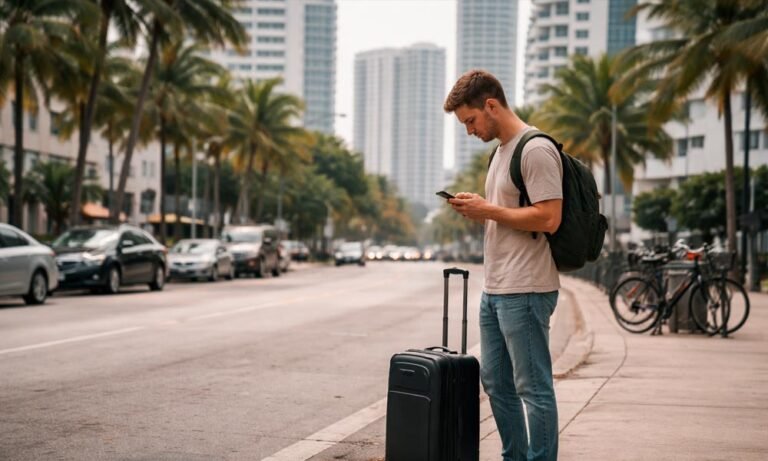
Here is a practical tip that saves both time and money: follow the signs inside MIA for “Ride App Pick Up” on the Arrivals level (Level 2). Drivers cannot wait at the curb for more than a couple of minutes, so only hit request once you have collected all your luggage and are standing at the numbered door outside.
If you land during severe rush hour or bad weather, check the price of a standard yellow taxi at the curb. Taxis operate on a flat rate zone system from MIA to South Beach (usually between 38 and 44 dollars). When Uber surge pricing pushes UberX above 45 dollars, walking straight to the taxi line is faster and cheaper.
Are Tolls and I-95 Express Lanes Included in Your Uber Price?
Yes, tolls are included in your final price, but there is a catch you need to watch for. Florida relies heavily on SunPass electronic tolling, especially on highways like the Florida Turnpike, the SR-836 (Dolphin Expressway), and the I-95 Express Lanes.
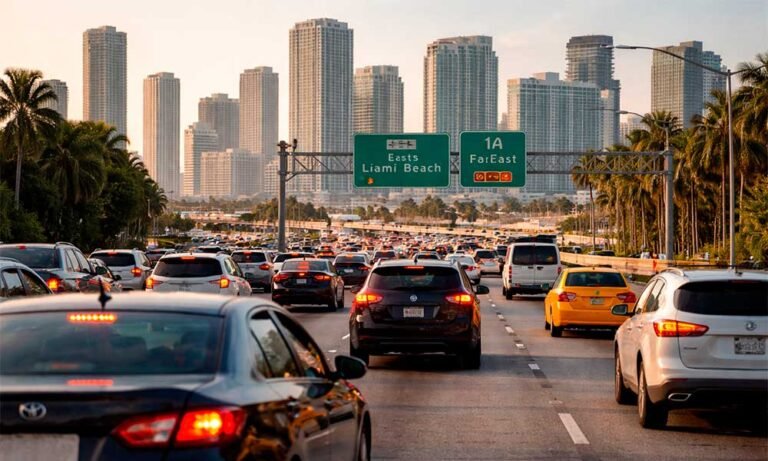
Uber automatically calculates expected tolls along your route and bakes them into your upfront fare estimate. However, if traffic causes your driver to take a different toll route or use the I-95 Express Lanes (where tolls fluctuate dynamically from 50 cents to over 10 dollars depending on congestion), your final charge might be adjusted slightly higher.
If you want to keep fares predictable when riding between South Beach and the mainland, you can ask your driver to take the Venetian Causeway instead of the busier Julia Tuttle or MacArthur Causeways during peak hours. It offers a calmer ride with scenic views and fewer sudden toll spikes.
When Does Surge Pricing Hit Miami and How Do You Avoid Paying Double?
Surge pricing in Miami is frequent, but it follows very specific patterns. If you know when demand spikes, you can easily plan around it.
Morning Rush (7:30 AM to 9:30 AM): Drivers move toward business districts like Brickell and Downtown. Fares across the city jump about 30 percent. Evening Rush (5:00 PM to 7:30 PM): Traffic crawling over the causeways pushes fares up significantly. South Beach Nightlife Exit (2:30 AM to 4:00 AM): As clubs close along Ocean Drive, Washington Avenue, and Collins Avenue, surge pricing peaks. A 10-dollar ride inside South Beach can quickly jump to 35 dollars or more.
To avoid paying double, walk two or three blocks away from main nightlife strips like Ocean Drive or Wynwood Walls before ordering. Moving away from the crowded pinpoint zone often drops the surge multiplier instantly. You can also wait 15 to 20 minutes in a hotel lobby or lounge for the peak demand wave to clear.
A quick reality check
These sample Uber route averages help show how differently Miami behaves depending on the route:
| Route | Approx. Uber average |
|---|---|
| Miami International Airport to South Beach | $33–$34 |
| Miami International Airport to Doral | About $27 |
| Miami International Airport to Sunny Isles Beach | About $50 |
| Brickell to South Beach | About $20 |
| Doral to Miami Beach | About $30 |
| Wynwood Walls to Design District | About $8 |
These are not fixed fares. They can change with traffic, demand, weather, ride type, tolls, and timing. But they are still useful because they show a clear pattern: short, logical rides are one thing; building your whole trip around long cross-city rides is something else.
Where tourists usually misread the cost
The most common mistake is simple: people compare hotel prices without comparing movement patterns.
A room in Doral or near the airport may look like a smart deal. But if your trip is built around South Beach, Brickell, Wynwood, Bayside, or other central areas, that lower nightly rate can start leaking money every day.
A rough example makes the point. If your hotel base turns one normal outing into a round trip that costs around $60, and you do that several times during the stay, the room savings stop looking impressive. You are not really saving. You are just shifting the expense from the hotel line to the transport line.
That is why Miami is not just about “Do I need a car?” It is also about Move Smart in Miami. The right question is: Will my hotel location force me to buy the same ride over and over again?
What changes your daily Uber bill the most
| Where you stay | What usually happens | Best for | Budget risk |
|---|---|---|---|
| South Beach | Fewer paid rides once you are there; more walking and trolley use | Beach-focused trips, first-timers who want simple logistics | Lower |
| Brickell / Downtown | Good without a car, but beach trips add up | City + dining + some beach time | Medium |
| Doral / airport area | Lower room price, but many long rides if your plans are elsewhere | Airport convenience, short stays, specific shopping plans | High |
| Sunny Isles / farther north | Can work well for that area, but longer trips to other zones get expensive | Travelers focused on that part of the coast | Medium to high |
This is why the “cheapest” hotel is not always the most economical hotel.
Is Lyft Cheaper Than Uber in Miami or Should You Stick to One App?
Neither app is permanently cheaper in Miami. In fact, price differences of 5 to 12 dollars for the exact same trip happen all day long depending on driver availability in a specific neighborhood.
Uber generally has more available drivers near Miami Airport and outer areas like Coral Gables or Doral, which keeps wait times under 5 minutes. Lyft often offers lower base rates for rides moving between South Beach, Mid-Beach, and Wynwood during mid-day hours.
The smartest strategy is to keep both apps installed on your phone. When you land at the airport or leave a restaurant, open both apps, enter your destination, and compare upfront fares before requesting. Switching between them takes less than 30 seconds and saves a noticeable amount over a full trip.
When Uber starts getting expensive faster than expected
Staying far from the action to save on the room
This is the classic trap.
A hotel near the airport or in Doral may look much cheaper than one in South Beach, Brickell, or a more central area. But if your day keeps pulling you back toward the beach, central Miami, or nightlife areas, you start paying for the same distance again and again.
That can be fine for one day. It becomes much less attractive across a full trip.
Treating the airport choice like it has no ground cost
Some travelers save on airfare by flying into Fort Lauderdale instead of Miami. Sometimes that still makes sense. Sometimes it does not.
If your trip is built around Miami Beach or central Miami, the airport decision can change your first-day cost more than people expect. A cheaper flight does not automatically mean a cheaper trip once ride-share enters the picture.
Planning with the cheapest ride type even when it does not fit
This happens all the time with families and airport arrivals.
The price you mentally approve is often the smallest ride category. Then the real-world version includes more people, more luggage, or both. The result is moving up to a bigger and more expensive ride than planned.
That is not a Miami problem. But in Miami, where many visitors arrive with shopping plans and larger suitcases, it matters more.
Turning one ride into a chain of “quick stops”
A lot of tourists do this without realizing how much it changes the math.
One ride becomes hotel to beach, then beach to lunch, then lunch to shopping, then shopping back to the hotel, then hotel to dinner, then dinner back again. None of those rides sounds dramatic on its own. The total is what hurts.
Miami punishes scattered planning more than compact planning.
The smartest way to use Uber in Miami
The cheapest strategy is usually not “never take Uber.”
It is this:
- stay close to your main daily area
- use walking when the area allows it
- use the free Miami Beach trolley for local beach-side movement
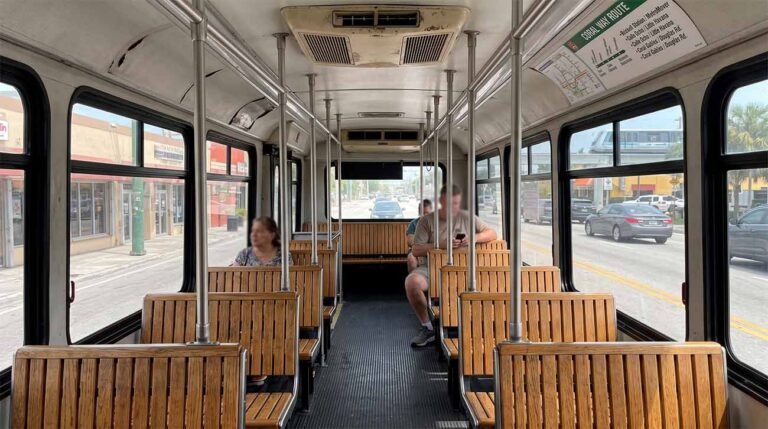
- use Metromover in Downtown/Brickell
- use ride-share for the parts that are annoying, slow, late, or less practical by transit
That hybrid approach works much better than choosing between two extremes like “Uber everywhere” or “public transit only”.
For example, a tourist staying in South Beach can often keep local spending lower because a lot of basic movement happens within the same area. A tourist staying in Brickell may still do well if the trip is city-heavy and beach time is occasional. But a tourist staying far west and repeatedly going east for leisure usually feels the cost much more.
A simple way to think about your daily cost
Before booking the hotel, ask yourself one honest question:
Where will I spend most of my actual hours?
Not the place that sounds nice on the map. Not the place with the cheapest nightly rate. The place where you will really spend your mornings, afternoons, and evenings.
If the answer is South Beach, then staying far away and relying on Uber every day often stops being a bargain.
If the answer is Brickell, Downtown, or central Miami, then staying nearby can make more sense than chasing a lower room rate somewhere that forces constant movement.
If your plans are spread across completely different parts of Miami, expect the transport budget to reflect that.
Smart Ways to Keep Your Miami Ride Costs Down
Getting around Miami with Uber does not have to eat up your travel budget if you manage your timing well. Keep an eye on peak rush hours, check both Uber and Lyft before booking, and don’t hesitate to jump into a traditional yellow taxi at the airport if surge rates are sky-high. By keeping these simple tips in mind, you will navigate the city efficiently and keep your transportation expenses right where they belong.
A better way to think about it is this:
- Lower daily spend usually happens when your hotel is close to your main activities and you only use Uber for a few strategic rides.
- Moderate daily spend usually happens when you stay in a workable area but still move between zones once or twice.
- Higher daily spend usually happens when you choose a cheaper hotel far from your real plans, arrive through the less convenient airport for your itinerary, or depend on ride-share for nearly every move.
That is the real cost of Uber and Lyft in Miami. It is not only about one fare. It is about whether your trip is built in a way that keeps buying the same distance over and over.
If you are still deciding where to stay, this is where related guides matter. A piece on the best areas to stay in Miami without a car can save more money than any promo code. A guide on whether Miami works without a rental car can help you avoid choosing the wrong hotel for the wrong style of trip. And if your trip starts at the airport, a focused post on the cheapest ways to get from MIA to Miami Beach can make the first day less expensive and less annoying.
In Miami, ride-share is not automatically overpriced. It just gets expensive very quickly when your base and your plans do not match.