
Florida tourism marketing sells the Brightline high-speed rail as a stress-free, neon-orange fantasy. They promise a sleek 3.5-hour journey connecting Downtown Miami to Orlando International Airport (MCO), complete with craft beers, leather seats, and zero highway traffic.
The implication is clear: throw away your rental car keys and let the train solve your interstate travel woes. The reality on your credit card statement and your actual travel schedule, however, is far more complicated. Deciding if the Brightline train is worth the premium price tag requires pulling back the curtain on hidden station logistics, dynamic ticket pricing curves, and the costly reality of landing in Orlando without a car.
Evaluating this rail service is not about whether the train is beautiful—it is. It is about whether the math and the logistics match your specific travel profile.
The Practical Pocket Test: Real Train Fares vs. Driving Costs
The biggest misconception about the Brightline train is that it automatically saves you money compared to tackling the 235 miles (378 km) of asphalt up the Florida Turnpike. To understand the financial logic, you have to break down the costs based on who is traveling. Brightline uses an airline-style dynamic pricing model, meaning fares fluctuate wildly based on demand, day of the week, and how close you are to your departure date.
For a solo traveler or a couple, the financial equation often swings in favor of the train. A standard “Smart” tier ticket purchased a few weeks in advance hovers around $79 to $99 one way. When you factor in the cost of a rental car, gas prices, and the unavoidable Florida Turnpike tolls—which run about $22 round trip via SunPass—a solo passenger breaks even or wins on the train.
The financial logic collapses the moment you add a third or fourth person to your group. Consider a typical family of four planning a trip from Miami to the Orlando theme parks.
| Expense Category | Driving a Rental Car | Brightline (4 Pax) |
| Base Transit / Tickets | $180 (4-day rental) | $632 (Smart tier RT) |
| Gas & SunPass Tolls | $75 total | $0 |
| Miami Station Parking | $0 | $60 (4 days) |
| Orlando Last-Mile Uber XL | $0 | $130 (Round trip) |
| Total Real Out-of-Pocket | $255 | $822 |
A family of four paying standard Smart-tier fares will spend upwards of $600 just to get up and back on the tracks. Once you add the unavoidable costs of getting to the Miami station, parking, and catching an Uber XL from the Orlando airport terminal to your final destination, the train ride turns into an expensive luxury line rather than a smart budget hack. If your group has three or more people, you are paying a massive premium for the privilege of not holding a steering wheel.
The Turnpike Stress vs. The Rail Office: Buying Your Time Back
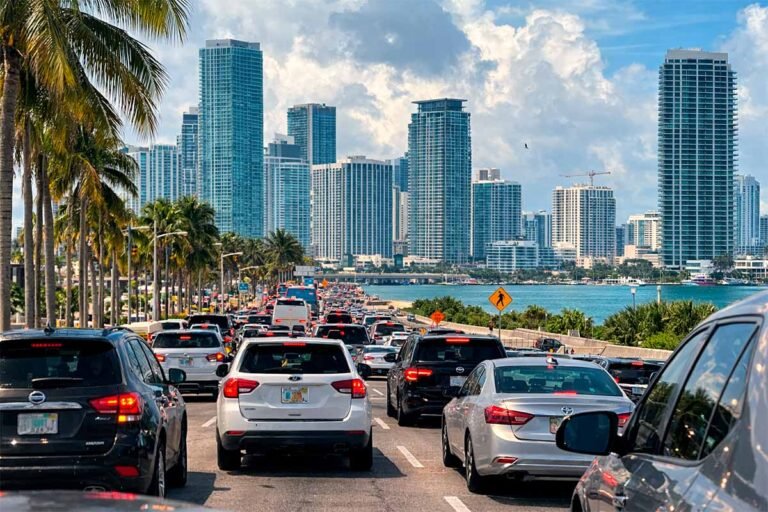
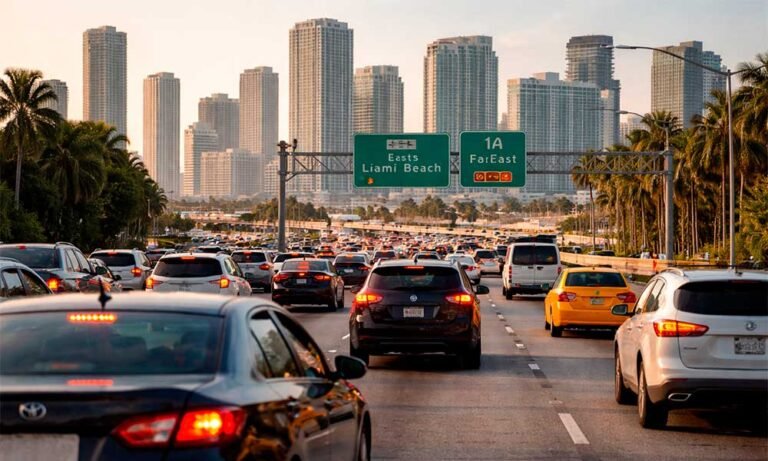
If the math does not favor groups, why are the trains hitting high capacity? The answer lies in the value of your time and your sanity. Driving from Miami to Orlando via the Florida Turnpike or I-95 is a notoriously monotonous, white-knuckle experience. You are sharing the road with aggressive semi-trucks, dealing with unpredictable construction bottlenecks near Fort Pierce, and dodging sudden tropical downpours that drop highway visibility to near zero.
When you drive, those 3.5 to 4.5 hours are entirely lost to focus and stress. You arrive at your destination with stiff shoulders and an empty tank of patience.
Brightline changes the definition of travel time by turning the transit hours into usable space. For business travelers, remote workers, and freelancers, the train functions as a high-speed mobile office. The onboard Wi-Fi is remarkably stable compared to traditional regional rail, and every single seat features dedicated power outlets and USB ports.
- The Commuter Advantage: A professional can clock a half-day of billable work, clear out an inbox, or run a project strategy while moving at 125 mph (201 km/h). If your billable rate or organizational output justifies it, those 3.5 hours on the train become highly profitable.
- The Decompression Factor: For leisure travelers, the train offers a rare window to read, sleep, or watch a movie without staring at taillights. You step off the train at MCO feeling physically fresh, which is a massive advantage if you plan to head straight to a theme park or an evening dinner reservation.
However, this environment requires a reality check for parents. While adults might value the quiet productivity of the cabin, keeping young children restrained in a train seat for nearly four hours without the ability to pull over for an impromptu bathroom or snack break can turn that peaceful rail office into a pressure cooker.
The Orlando Last-Mile Puzzle: Stranded at MCO Terminal C
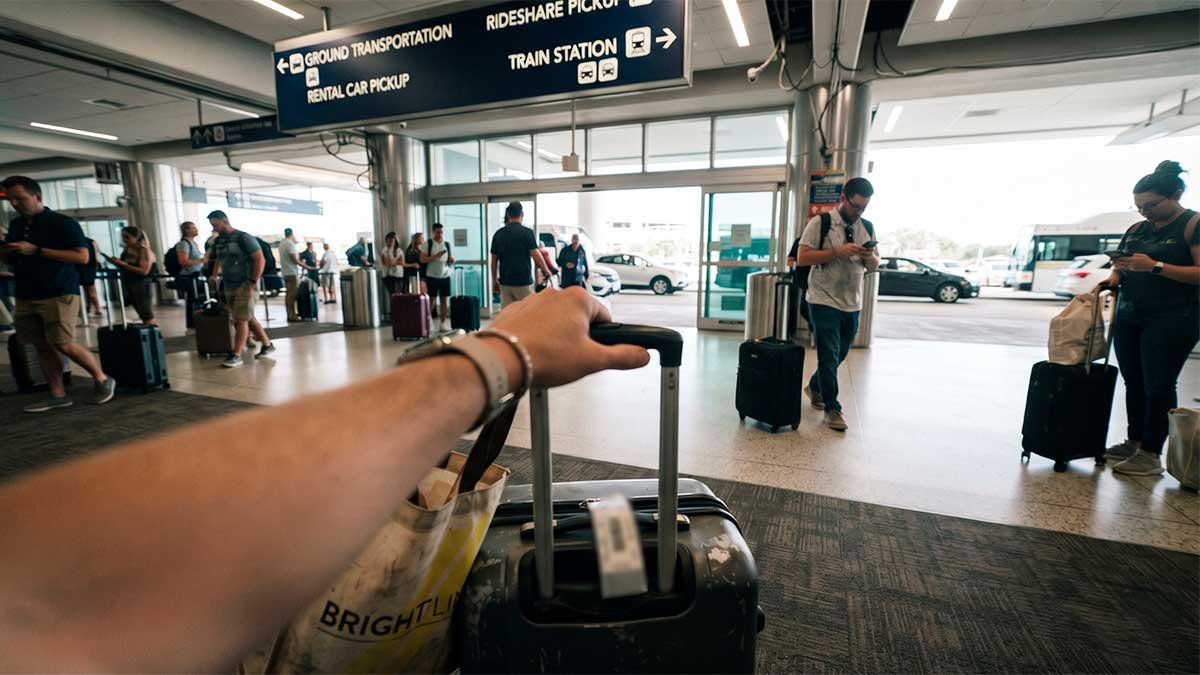
The single biggest logistical trap for unsuspecting travelers is the physical location of the Brightline Orlando station. The tracks terminate inside the brand-new Terminal C at Orlando International Airport (MCO).
The tourism brochures gloss over what happens next. The airport is not near the theme parks or the main resort corridors. MCO sits roughly 18 miles (29 km) east of Universal Studios and nearly 25 miles (40 km) east of the heart of Walt Disney World in Lake Buena Vista.
| Destination from MCO | Approximate Distance | Typical Uber XL Fare |
| International Drive | 15 miles (24 km) | $35 – $50 |
| Universal Orlando Resort | 18 miles (29 km) | $40 – $60 |
| Walt Disney World Resorts | 25 miles (40 km) | $55 – $80 |
When you step off the train, you are stranded at an airport terminal. If your vacation strategy involves staying at a Disney or Universal resort and utilizing their free internal transportation networks, you must first pay for a rideshare or a shuttle service to get onto the property. During peak arrival windows or afternoon rainstorms, surge pricing can easily push an Uber XL fare past $80 for a single leg.
If you decide to solve this problem by renting a car at the airport, you have walked directly into a massive time trap. The rental car counters at MCO are famous for some of the longest, most frustrating lines in the country. If you spend 3.5 hours relaxing on a train just to spend 60 minutes standing on the hard floor of an airport terminal waiting for a key fob, you have completely defeated the purpose of bypassing the Miami car rental counters.
Two Paths: The Tourist Trap vs. The Smart Move
To see how these hidden logistics play out in real life, let’s look at how two different travelers approach the exact same route.
Scenario A: The Tourist Trap
A family of four decides to book Brightline tickets on a whim, four days before their trip. Because of the tight booking window, the dynamic pricing engine pumps the Smart fare to $139 per person each way. Total ticket cost: $1,112.
On the day of travel, they drive their personal car to the MiamiCentral station garage because they did not check the neighborhood logistics. They pay the standard $30-per-day non-validated parking rate. They arrive in Orlando, wait 20 minutes in a crowded rideshare zone at Terminal C during a peak 4:00 PM surge, and shell out $75 for an Uber to their hotel. They repeat this on the way back.
- The Result: They spent over $1,300 on transit, faced multiple logistical bottlenecks, and still had to ride in a stranger’s SUV to see Mickey Mouse.
Scenario B: The Smart Move
A solo professional needs to visit a client in Orlando. She books her Brightline Smart ticket exactly five weeks in advance, locking in the baseline $79 fare. She takes a quick, $12 rideshare from her Brickell apartment to MiamiCentral, skipping parking fees entirely.
She uses the 3.5-hour northbound trip to finalize a presentation deck using the free onboard Wi-Fi. Upon landing at MCO Terminal C, she bypasses the rental car circus completely because her hotel is attached to the airport area, or she coordinates a pre-arranged corporate shuttle. On the return leg, she upgrades to the Premium tier for $149 because she wants access to the station lounge for free breakfast and quiet workspace before her departure.
- The Result: She maximized every dollar, converted transit time into billable company hours, and experienced zero highway anxiety.
Bypassing the Dynamic Pricing Traps and Hidden Fees
If you decide that the train fits your travel profile, you must understand how to navigate Brightline’s fee structure to protect your wallet. The company operates much like a budget European airline: the base fare is just the starting point.
- The 30-Day Booking Rule: Brightline fares generally follow a predictable upward curve. Tickets loaded into the system start at their lowest baselines ($79 for Smart, $149 for Premium). As inventory drops, the remaining seats jump to higher pricing brackets. If you are looking for tickets less than 14 days out, expect to pay a hefty premium. If you are booking within 48 hours, the price is almost always prohibitive.
- Baggage Weight Boundaries: Do not assume train travel means unlimited luggage privileges. Brightline allows you to bring two carry-on items for free, but they must fit into the overhead racks or under your seat. Checked bags incur a fee starting at $10 to $25 per bag, and they strictly enforce a 50-pound (22.6 kg) weight limit. If your bags are heavy from vacation shopping, you will face over-limit penalties at the kiosk.
- The MiamiCentral Parking Mirage: If you must leave your car at the MiamiCentral garage, do not just roll through the gate and pay at the exit. Look for Brightline’s official parking validation options inside the mobile app or at the guest services desk. Validated guest parking drops the daily rate significantly compared to the standard drive-up public pricing.
Making the Call: Should You Book the Train or Rent a Car?
The Brightline train is an exceptional piece of transportation infrastructure, but it is not a unilateral fix for the trek between South Florida and Central Florida. Deciding whether to buy a ticket comes down to a clear division of travel priorities.
Book the train if you are traveling alone or as a couple, value your mental peace over absolute financial savings, and plan to use the travel time to work or unwind. It is also an excellent option if your final destination in Orlando is highly centralized or if you are being picked up by friends or family who live in the area.
Stick to a car rental if you are traveling with a family, moving heavy luggage, or planning an extensive itinerary across multiple Orlando theme parks and neighborhoods. The freedom of having a vehicle parked outside your resort—without paying a continuous stream of rideshare fees—easily outweighs the tedious drive up the Turnpike. Filter out the slick travel marketing, run your specific group numbers, and choose the option that protects your time and your budget.
Brightline Travel FAQ
Does Brightline drop you off directly inside Walt Disney World or Universal Studios?
No. The Brightline train terminates exclusively at Orlando International Airport (MCO) inside Terminal C. To reach Walt Disney World, Universal Studios, or the International Drive resort area, you must arrange secondary transportation, such as a rideshare service, taxi, or regional shuttle.
What is the exact difference between Brightline Smart and Premium tickets?
Smart is the standard economy class, providing comfortable leather seats, free Wi-Fi, and access to power outlets. Premium is the first-class tier, which includes complimentary select snacks and drinks on the train, access to an exclusive station lounge with free food and beverages, and priority boarding.
What happens if I miss my scheduled Brightline train due to Miami traffic?
Brightline tickets are tied to specific departure times. If you miss your train, you must modify your reservation via the app or at a guest kiosk. Depending on your ticket type, you will likely have to pay the fare difference for the next available train, which can be substantial due to last-minute dynamic pricing.