
Miami sells a legendary fantasy of absolute queer freedom, built on decades of neon-lit marketing, drag brunches spilling onto Ocean Drive, and iconic beach imagery. For gay and LGBTQ+ travelers looking at the state of Florida from afar, the media headlines create a confusing paradox: a state government passing deeply restrictive legislation while its most famous city historicizes itself as a global queer capital. The daily reality of visiting this region requires moving past political noise and tourist brochures to look at the practical logistics of the streets, local county shields, and the literal financial cost of staying within the city’s safe zones.
Is Miami safe for gay travelers? Yes. Miami, and specifically the municipality of Miami Beach, remains one of the safest, most welcoming destinations in the United States for LGBTQ+ visitors. Local county-level human rights ordinances legally protect travelers against discrimination, and public displays of affection are entirely normal in the urban and tourist core. The primary safety concerns for visitors are standard metro property crimes and high rideshare fees, not targeted social hostility.
Tallahassee Headlines vs. Miami Streets: Understanding the Legal Shield
The political climate in Florida is undeniably tense for the LGBTQ+ community. State-level actions, such as the quiet removal of the official LGBTQ+ travel section from the Visit Florida website, demonstrate a clear governing posture. This state-wide political shift creates a real sense of hesitation for travelers.
Data from a survey conducted by the International LGBTQ+ Travel Association shows that 52% of LGBTQ+ Americans express deep hesitation about booking a trip to Florida. However, that same study reveals a critical nuance: 66% of those same travelers state they are fully willing to visit specific, inclusive cities within politically hostile states. Miami is the textbook definition of this dynamic.
The reason for this separation is jurisdictional. Miami-Dade County operates under its own long-standing Human Rights Ordinance, which explicitly prohibits discrimination based on sexual orientation and gender identity in housing, public accommodations, and employment. This local law predates and counteracts the lack of protections at the state level. When you step off the plane, you are entering a local municipal bubble that actively protects its tourism economy. For a tourist spending a week spending money at local hotels, restaurants, and clubs, your experience will be insulated by a population and business community that is thoroughly queer-coded and economically dependent on your presence.
The Trans and Non-Binary Reality: Navigating Public vs. Private Spaces
While gay and lesbian travelers experience almost seamless social integration in the main tourist tracks, visitors who are transgender or non-binary face a more complex logistical landscape in Florida. Understanding exactly where state laws apply—and where they stop—is essential for a stress-free trip.
The most frequent source of anxiety stems from the state’s Safety in Private Spaces Act, which regulates restroom and changing facility access based on biological sex at birth. The critical piece of information missing from most travel guides is that this state law applies strictly to government-owned buildings, state colleges, public schools, state prisons, and public state parks.
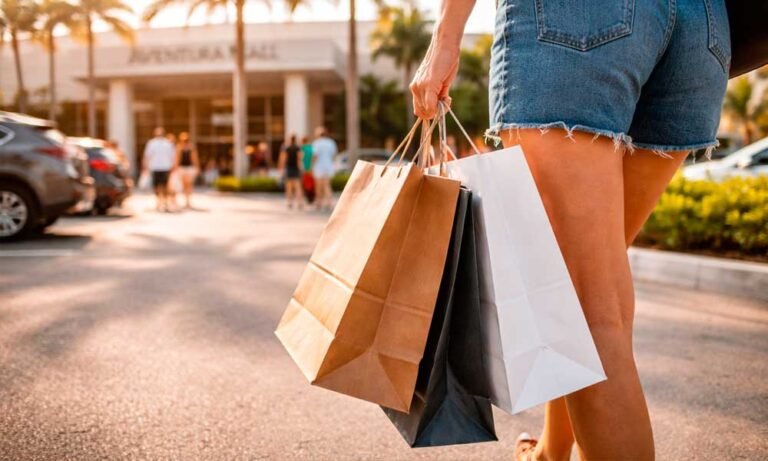
The law does not govern private businesses. Your hotel, private restaurants, independent bars, nightclubs, private museums, and major shopping centers like Aventura Mall or Brickell City Centre are completely exempt. These private establishments set their own codes of hospitality, and in Miami’s urban core, they universally respect and validate gender identity and expression.
Practical Rules for Airport and Itinerary Planning
The only moments a trans traveler will realistically cross into state-regulated territory are during transit or when visiting public parks. Here is how to handle those spaces with complete confidence:
- Airport Navigation: Both Miami International Airport (MIA) and Fort Lauderdale-Hollywood International Airport (FLL) are government-owned facilities. To completely bypass any potential discomfort or legal technicalities in these high-traffic hubs, look for the designated “Companion Restrooms” or “Family Restrooms.” These are fully private, single-occupancy, unissex facilities located throughout every terminal.
- Hotel Check-In: Florida hotels are legally required to verify the identity of the primary guest checking into a room. They require a valid government ID (passport or driver’s license) that matches the name on the credit card used for the reservation. Front desk staff are looking for electronic billing verification, not gender markers or biological alignment. As long as your payment name matches your official travel ID, the process is purely transactional.
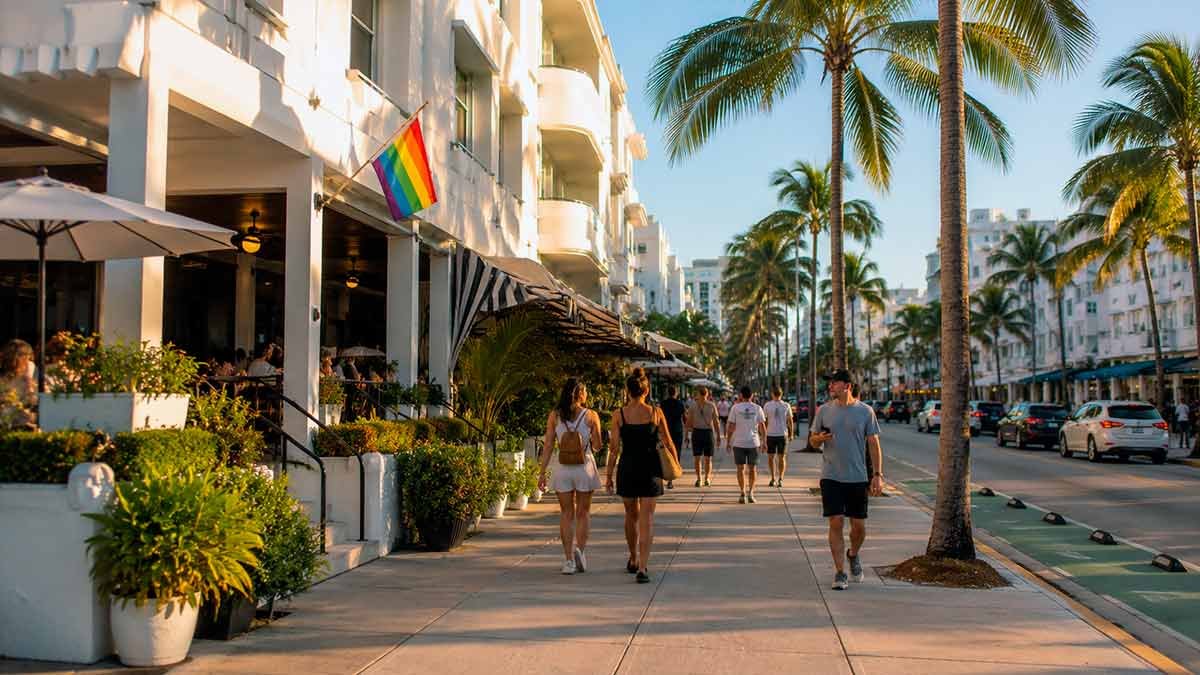
- The Safe Place Initiative: On the streets of Miami Beach, local businesses actively participate in a police-backed safety program. Keep an eye out for a visible, rainbow-shaped shield decal pasted on store and restaurant windows. This decal indicates the business is an official “Safe Place,” where staff are explicitly trained to provide immediate shelter, a secure indoor space, and a direct priority phone line to the Miami Beach Police Department’s dedicated LGBTQ+ liaison officers if you ever face street harassment.
The Miami LGBTQ+ Social Comfort Map
Miami is a massive, sprawling metro area tied together by congested highways. Because there is no single, consolidated gay neighborhood where all the venues sit side-by-side, your level of social comfort shifts depending on which neighborhood zip code you are standing in.
| Neighborhood | Visibility Level | Social Atmosphere |
| South Beach | ⭐⭐⭐⭐⭐ Ultra-High | Historic, unapologetic queer epicenter |
| Brickell & Downtown | ⭐⭐⭐⭐ High | Cosmopolitan, corporate, universally inclusive |
| Wynwood | ⭐⭐⭐ Medium-High | Trendy, youth-centric, but event-dependent now |
| Suburbs (Doral/Kendall) | ⭐⭐ Medium | Non-tourist, traditional residential zones |
South Beach: Historic Visibility and Zero Tension
This is the area most travelers picture when they think of gay Miami. Along Ocean Drive, specifically around the 12th Street Beach corridor, the community isn’t just accepted; it dictates the culture. Following the permanent closure of the Axel Hotel in March 2025, the Hotel Gaythering on Lincoln Road has solidified its position as the absolute anchor for locals and visitors. Walking down the street holding hands, presenting exactly how you want, and showing affection is completely standard here. The policing is visible, and the tourist density means street safety is a top municipal priority.
Brickell & Downtown: Corporate Inclusion
This is Miami’s financial center. You won’t find rainbow flags hanging from the skyscrapers or dedicated gay bars, but you will find an upscale, highly educated, international crowd. The social vibe here is upscale and corporate. Same-sex couples dining at high-end restaurants or staying at major hotels experience zero social friction. It is highly safe, walkable by Miami standards, and thoroughly professional.
Wynwood: The 2026 Commercial Reality Check
Wynwood is still marketed by generic travel sites as a thriving arts district packed with queer spaces, but our local observation shows a very different reality due to hyper-gentrification. In August 2025, Willy’s Neighborhood Bar—the neighborhood’s only dedicated gay bar—was forced to shut down after developers cut its lease short. A few months later, in January 2026, the iconic venue Gramps—which hosted Wynwood’s longest-running weekly drag night for over a decade—closed its doors for good.
While the massive Wynwood Pride festival still draws thousands of younger, diverse travelers every June, the permanent, daily queer infrastructure in this neighborhood is mostly gone, save for the weekend drag brunches at R House. Wynwood is progressive and safe to visit, but do not book a hotel here expecting a walkable, everyday gay nightlife scene.
The Mainland Suburbs: Standard Big-City Rules
If your itinerary takes you deep into mainland suburbs like Doral, Kendall, or Miami Gardens, you are entering family-focused residential areas. These areas are not dangerous or overtly hostile, but public displays of affection are highly uncommon and might draw curious stares simply because they break the local suburban routine. Standard metropolitan awareness applies here.
Public Displays of Affection: What is Safe vs. What is Wise?
A frequent question from incoming travelers is whether they need to modify their behavior when traveling through Miami. Inside the primary tourist and urban zones—meaning anywhere in South Beach, Brickell, Downtown, Coconut Grove, and the Design District—same-sex couples show affection freely without concern. The local population is thoroughly accustomed to international travelers of all backgrounds.
The only time precaution is a smart logistical move is if you cross into rural, interior towns of Florida outside the Miami-Fort Lauderdale metro area, or if you choose a cheap Airbnb in an isolated, deep-mainland residential neighborhood where you are surrounded entirely by locals who aren’t part of the hospitality economy. Within the main city limits, your relationship status is simply not a point of interest to the people around you.
The Financial Cost of Comfort: Hidden Fees and the Wilton Manors Tax
To maintain total comfort and stay entirely within Miami’s safe, inclusive zones, you have to accept a specific set of premium costs. Booking a trip based solely on the cheapest sticker prices will quickly land you outside the bubble.
The South Beach Hotel Math
Staying at a dedicated property like the Hotel Gaythering provides instant community access and an incredibly safe home base, with rates varying between $90 and $160 a night depending on the season. But the advertised rate is never what hits your credit card. Florida’s combined lodging and tourist taxes add 13% to 14% to your bill, and mandatory daily “resort fees” add another $25 to $35 per night hidden in the fine print.
Furthermore, if you time your trip to coincide with major circuit events—like the Winter Party Festival in late winter, Miami Beach Pride in April, or Sizzle over Memorial Day weekend—hotel rates across South Beach easily double or triple due to high demand.
The $140 Wilton Manors Uber Tax
Many international visitors read about Wilton Manors and assume it’s just another neighborhood down the street from South Beach. It isn’t. Wilton Manors is its own independent city located 35 to 40 miles (56 to 64 km) north in Fort Lauderdale. It features an unmatched density of over a hundred LGBTQ+-owned businesses along a single walkable strip, making it a fantastic destination.
The issue is the cost of getting there. Driving from Miami Beach takes 40 to 50 minutes each way via the unpredictable I-95 corridor. If you plan to drink and rely on rideshares on a weekend night, a one-way Uber from South Beach to Wilton Drive ranges from $50 to $70 depending on surge pricing. That means you must budget a literal $140 transit tax just to experience that scene for a single evening. If that specific community density is your main goal, the smart financial move is to split your lodging inventory: stay a few nights in Miami Beach for the ocean assets, then move your bags to a hotel in Fort Lauderdale for your nightlife days.
Realistic Trip Scenarios: The Walkable Bubble vs. The Mainland Trap
To see how these choices play out in your bank statement, let’s look at two real-world vacation setups observed during peak season.
Scenario A: The Mainland Airbnb Mistake
A traveler finds a highly rated Airbnb in an isolated residential neighborhood near Miami Gardens for a cheap $80 a night. They assume they are saving a fortune compared to South Beach hotel rates.
- The Reality: The traveler immediately feels isolated from the city’s inclusive core. They cannot walk anywhere. To go to the 12th Street Beach, they face a 45-minute drive. Because they want to go out at night in South Beach, they take an Uber out and back.
- The Statement: The morning ride costs $35. The midnight ride back with surge pricing hits $55. Add a 7% sales tax on everything they buy plus heavy tips, and they are spending $90 a day just on rideshare transit while staying in a neighborhood where they have to constantly monitor their surroundings. Their total daily cost is higher than a beach hotel, with zero of the vacation lifestyle.
Scenario B: The Smart Walkable Move
A traveler bites the bullet and books a room in South Beach within walking distance of Washington Avenue and Lincoln Road.
- The Reality: They pay $140 a night plus resort fees. However, their transportation cost drops to nearly zero. They walk to the gay beach, walk to dinner at Palace, and use the free South Beach Local trolley to move up and down the sand.
- The Statement: They spend zero dollars on Ubers for the first three days. They are entirely surrounded by a visible, protective community network. They only pay for an Uber when they explicitly decide to head out for a dedicated dinner in Brickell or a major night out. They saved money, saved time, and completely eliminated geographic anxiety.
Things More Likely to Ruin Your Miami Trip Than Social Hostility
When analyzing safety on your South Florida vacation, look at the actual consumer friction points that disrupt trips every single day. Statistically, you are far more likely to face financial headaches than any form of social pushback. Keep these local realities in mind:
- Automatic Service Charges: Iconic spots like Palace Bar charge a baseline of $55 for their bottomless drag show brunches. Tourists often make the mistake of adding a standard 20% tip at the end of the meal without looking closely at the paper receipt. Nearly all tourist-heavy venues in Miami Beach automatically include an 18% to 20% service charge directly into the subtotal. Check your bill closely so you don’t double-tip by accident.
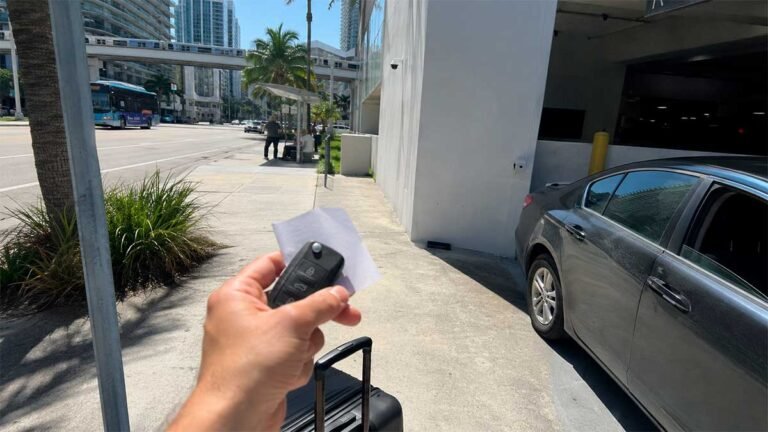
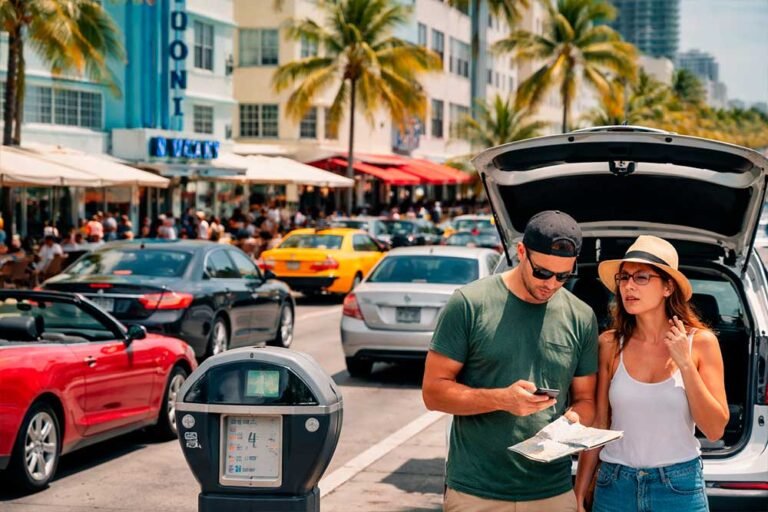
- The Parking Garage Bottleneck: Renting a car to escape the city seems convenient, but public parking in South Beach or Brickell is a logistical nightmare. Private lots and hotels charge between $20 and $40 a night for valet or storage.
- Causeway Gridlock: The MacArthur and Julia Tuttle Causeways connect the mainland to the beach. On Friday and Saturday nights after midnight, these bridges turn into absolute bottlenecks due to nightlife traffic. If you are riding in a metered rideshare, you will watch your fare rise while sitting completely still over the water.
How to Plan Your South Florida Itinerary Around Real Value
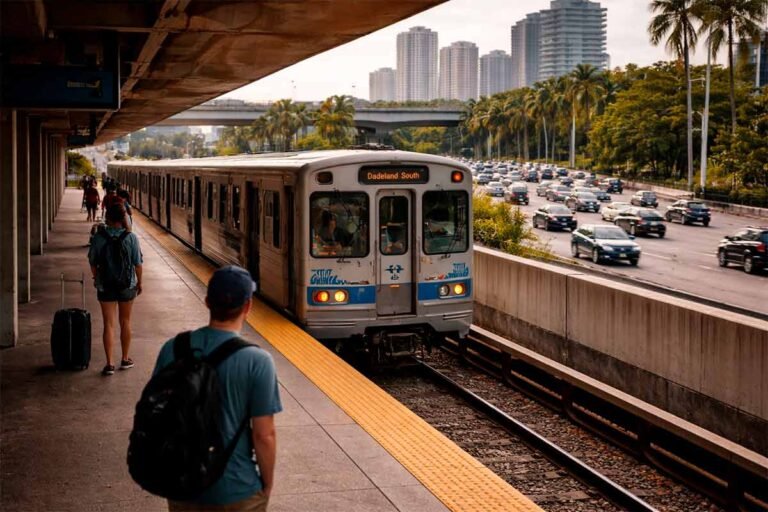
The secret to navigating a South Florida vacation as an LGBTQ+ traveler is choosing the right geographic anchor for your specific trip goals. If your priority is standard beach access, historical visibility, and a completely walkable routine where you can step out of your room and instantly be surrounded by community spaces, focus your entire accommodation budget on South Beach. Use the free municipal transit options, skip the car rental entirely, and stay within the coastal bubble.
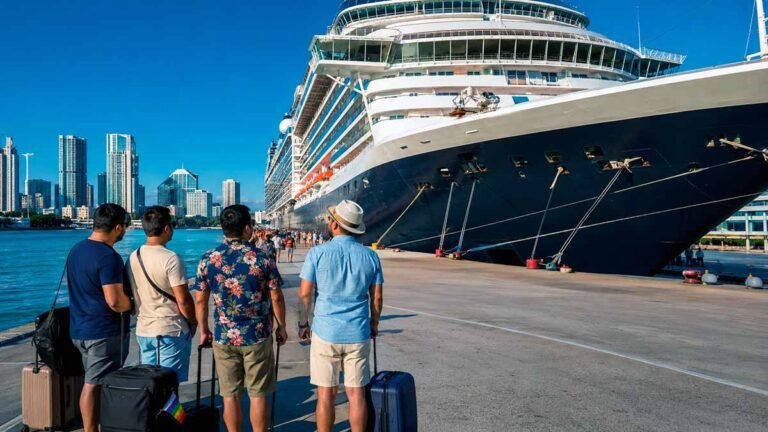
If you are staying for more than five days and want a deep dive into the region’s diverse nightlife infrastructure, do not try to run your entire vacation from one spot. Split your time. Spend your first few days enjoying the urban energy of Brickell or the beach assets of Miami, then transfer north to a Fort Lauderdale base to access Wilton Manors without drowning in triple-digit Uber fees. By treating South Florida as a collection of separate hubs rather than a single neighborhood, you keep your expenses down, protect your logistics, and experience the actual reality of the region on your own terms.
Frequently Asked Questions About Miami LGBTQ+ Travel Safety
Is it safe for same-sex couples to hold hands on the street in Miami?
Yes, within all major tourist corridors and urban centers—including South Beach, Brickell, Downtown, Coconut Grove, and the Design District—holding hands and public displays of affection are completely normal and safe. The local population is highly diverse and thoroughly accustomed to international visitors.
Do Florida’s state-level LGBTQ+ laws apply to private hotels and restaurants?
No. State laws regarding restroom access or corporate policies apply strictly to public, state-owned entities, such as government buildings, public schools, and state parks. Private businesses—including all hotels, private clubs, bars, and restaurants in Miami—are entirely exempt and set their own codes of customer service, which are overwhelmingly inclusive.
How far is the Wilton Manors gay scene from Miami Beach?
Wilton Manors is roughly 35 to 40 miles (56 to 64 km) north of Miami Beach, located in Fort Lauderdale. Driving takes between 40 and 50 minutes each way via the I-95 corridor under normal traffic conditions. Because a round-trip rideshare can easily cost upwards of $140, it should be treated as a separate overnight base or a dedicated day trip, not a quick evening side-trip.
Do I need to rent a car if I am staying in South Beach?
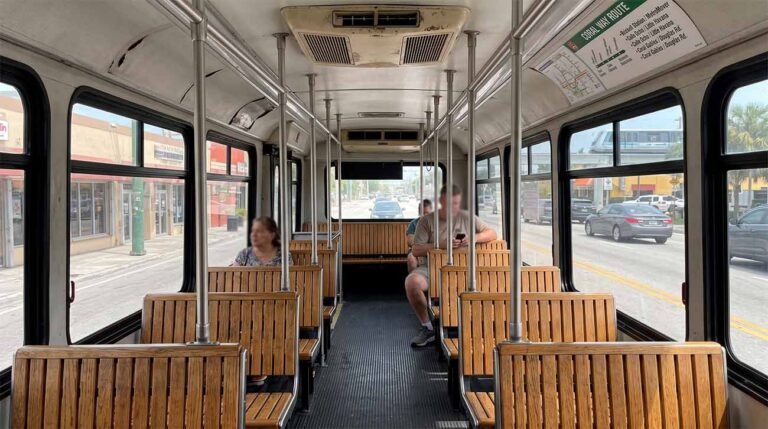
If your itinerary is focused entirely on beach days, local dining, and the South Beach gay scene (Palace, Twist, Gaythering), you do not need a car. The area is highly walkable, parking fees average $20 to $40 a night, and local free trolleys can handle short distances. Only rent a car if you plan to travel extensively outside the main tourist zones or head deep into the mainland suburbs.