
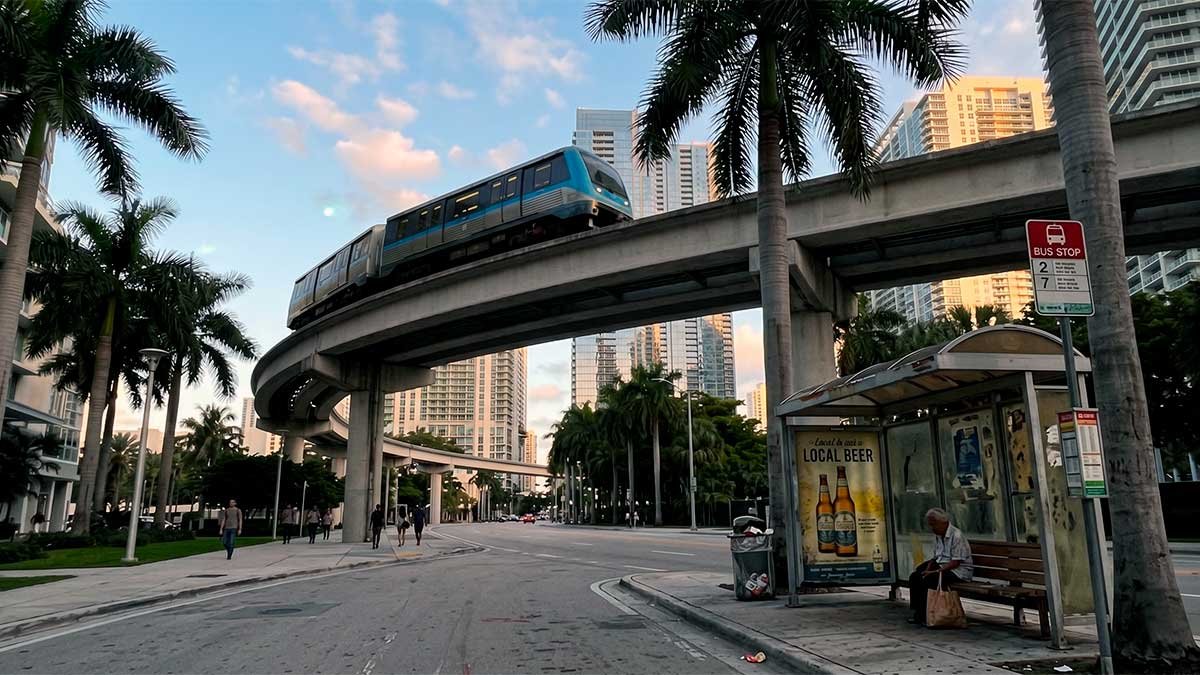
Visiting Miami without a car isn’t just a budget-conscious experiment—it’s a tactical maneuver to bypass a city that charges you a $150 daily “Car Tax” just for the privilege of sitting in gridlock. While the postcard image of Florida involves a convertible on Ocean Drive, the reality for the uninitiated is a soul-crushing bottleneck on the MacArthur Causeway and predatory $60 valet fees.
Successfully navigating the 305 without a steering wheel requires a calculated strategy that links the right neighborhood to specific transit layers, effectively reclaiming your vacation time from the clutches of the I-95.
Quick Answer: Is it possible to visit Miami without a car? Yes. You can successfully navigate Miami without a car by staying within the Transit Spine (Brickell, Downtown, or South Beach below 17th St) and utilizing a hybrid strategy of Metrorail for airport transfers and the Metromover/Freebee for local hops. This approach typically saves travelers over $125 per day by eliminating hotel valet fees and rental surcharges.
At Miami The Hype, we don’t buy into the “car is mandatory” myth. In fact, for the smart traveler, visiting Miami without a car is the ultimate tactical advantage. Unless you are planning daily expeditions to the Everglades or the deep keys, a steering wheel is often an expensive liability that drains both your budget and your vacation hours.
This is not a generic list of bus routes. This is a strategic blueprint on how to exploit Miami’s geography, bypass the I-95 parking lot, and keep your money where it belongs—in your dining and shopping budget.
The Reality Check: The True Cost of “Freedom”
When you see a rental car advertised for $35 a day online, you are looking at a mirage. Once you factor in the 7% Florida sales tax, mandatory insurance surcharges, and SunPass toll fees, that car is costing you $80 before you’ve even turned the key.
But the real “Car Tax” is the one you pay at your hotel. In high-density hubs like Brickell, Downtown, and South Beach, overnight parking is a predatory business. Expect to pay between $45 and $70 per night for valet. Add in the $30 you’ll spend on parking during a lunch outing or a trip to Wynwood, and your “cheap” rental is now costing you $180 a day.
Before you book, look at the reality of Miami traffic and understand why Miami traffic is so bad. If you are staying in the urban core, you are paying a premium to be stuck in a bottleneck.
The Rental, Daily fees & Risk (RDR) Formula
We developed the RDR Formula (Rental, Daily fees & Risk) to expose the financial insanity of renting a car for a city trip. If your hotel valet fee plus insurance exceeds $90, you are losing money every hour.
The RDR Formula: Why Your Rental Car is a Financial Trap Renting a car for a city-centric trip often sounds like freedom, but it’s usually a math error. We developed the RDR Formula to highlight the tipping point where convenience becomes a liability. If your daily hotel valet fee combined with your insurance coverage exceeds $90, you are effectively losing money every hour that vehicle sits idle in a garage. In major hubs like Miami or New York, ridesharing isn’t just easier—it’s the only way to keep your budget from bleeding out on a car you aren’t even driving.
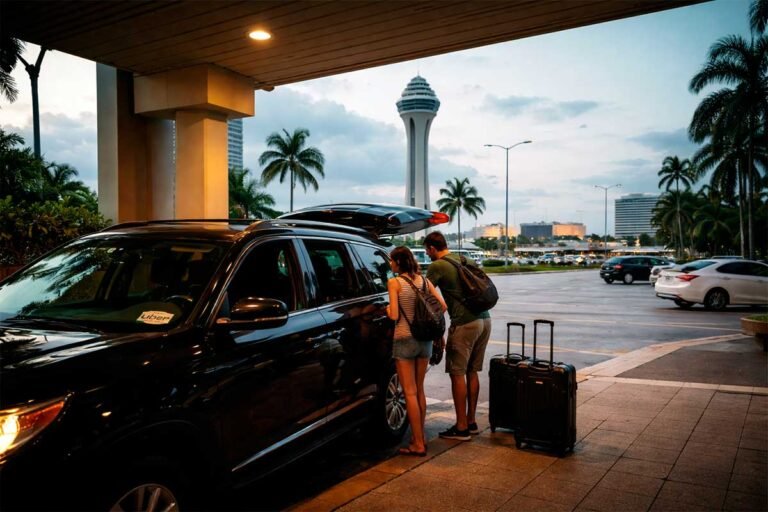
The RDR Formula is simple: Rental rate + Daily fees + Risk. Most travelers ignore the ‘hidden’ $90 baseline. If your hotel charges $50 for valet and you’re paying $40 for full insurance, you are spending $90 a day before even turning the key. That’s not a convenience; it’s a tax on poor planning. For that same $90, you could have a private driver (Uber/Lyft) take you across the city and back without the stress of Miami traffic or parking hunting.
Editor’s Note: Miami valet service is notoriously slow. You will often wait 20 minutes for your car during peak morning hours. That is 20 minutes of your life you’ll never get back, spent standing on a hot sidewalk.
| Expense Item | The Rental Trap (Daily) | Miami Without a Car (Daily) |
| Rental + Insurance | $85 | $0 |
| Hotel Valet/Overnight | $55 | $0 |
| Public Parking/Tips | $30 | $0 |
| Strategic Ubers/Transit | $15 (Gas/Tolls) | $60 (3 Strategic Jumps) |
| Daily Total | $185 | $60 |
By choosing to visit Miami without a car, you are essentially giving yourself a $125 daily raise. Over a 4-day long weekend, that is $500. Check our Miami without a car vs rental car breakdown for the full weekend data.
Strategic Lodging: The Foundation of Mobility
Navigating Miami without a car successfully depends 90% on where you drop your bags. If you stay in Doral, Kendall, or near the airport, the Miami driving dependency is absolute. You will be stranded, waiting 15 minutes for an Uber and paying $45 just to get to the “action.”
To win, you must stay within the Transit Spine. This is the 5-mile (8 km) corridor where the city actually functions without a car.
- Brickell (North of SW 13th St): The king of logistics. You have the Metrorail for the airport and the Metromover for free loops around Downtown.
- South Beach (Below 17th St): Highly walkable, but you are an “island-dweller.” You need a bridge strategy to reach the mainland.
- Edgewater: Perfect for those who want to be near the Design District and Midtown without the Brickell price tag.
If you are still undecided, read our guide on the best areas to stay in Miami without a car and our honest answer to if you can stay in Miami without a car based on your itinerary.
The Bridge Problem: Mastering the MacArthur and Julia Tuttle
The biggest hurdle for anyone in Miami without a car is the water. The bridges (Causeways) are the city’s choke points. Crossing from Brickell or Wynwood to the beach is where your schedule can fall apart.
The MacArthur Causeway is a 4:30 PM nightmare. An Uber that costs $18 at noon will jump to $55 during the surge window.
The Local Hack: Don’t call an Uber from your hotel lobby in Downtown. Take the Metromover (Free) to the Historic Overtown station first. From there, your car journey to the beach is shorter and avoids the worst of the surface-street gridlock. Alternatively, use the Route 150 Miami Beach Express. It’s a $2.25 “shuttle” that uses dedicated bus lanes on the Julia Tuttle Causeway, often moving faster than the luxury SUVs stuck in traffic.
Check our analysis of the best time to drive in Miami to plan your “bridge jumps” like a professional.
Layering Your Transit: Metrorail, Mover, and Freebee
Most tourists think “Transport = Uber.” That is a rookie mistake. To move through Miami efficiently, you need to use the city’s three layers of transit.
The Metrorail (The Airport Tunnel)
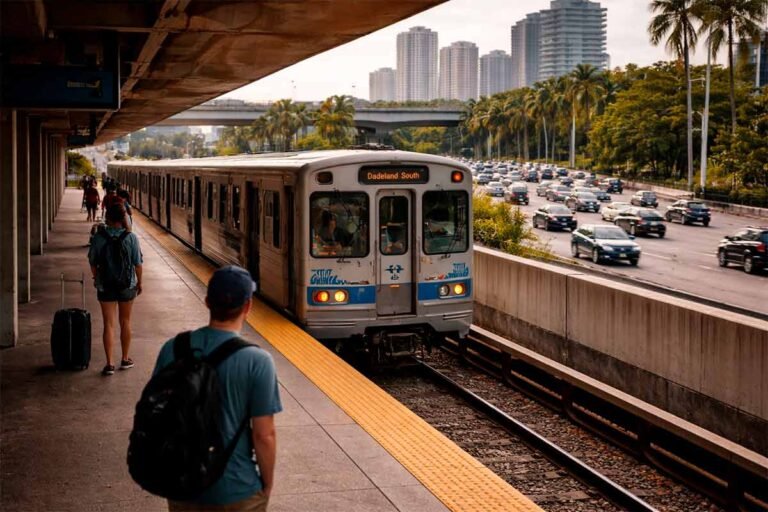
Avoid the $60 airport Uber surge. The Orange Line Metrorail takes 18 minutes from MIA to Brickell and costs $2.25. It is elevated, air-conditioned, and completely ignores the traffic on the Dolphin Expressway. Read when the Metrorail beats traffic to master this route.
The Metromover (The Free Executive Loop)
This free, driverless train circles Downtown and Brickell. It connects you to the Brightline station, the Kaseya Center, and dozens of restaurants. If your destination is within 1 mile (1.6 km) in the urban core, the Metromover is always faster than a car because it never hits a red light.
Freebee and Trolleys
Download the Freebee app. These electric golf carts provide free door-to-door service in zones like South Beach, Coconut Grove, and Coral Gables. It is technically free, but you must tip the driver ($3-$5). Even with the tip, it is the best deal in the city for short-distance “micro-trips.”
Our Miami public transportation guide has the maps and real-time links you actually need.
The Shopping Paradox: Logistics for the “Haul”
People love trunks because they love shopping. But you can handle a high-end shopping trip in Miami without a car with zero stress if you know the logistics.
- Aventura Mall: Take the Brightline train to the Aventura station. It is a 15-minute luxury ride from Downtown Miami. On the way back, if you have too many bags, call an Uber XL. You’ve still saved $100 compared to a car rental and parking fees.
- Sawgrass Mills: This is 35 miles (56 km) away. A round-trip Uber can hit $140. Instead, book a Private Shuttle ($30) from your hotel. These shuttles have luggage bays specifically designed for your shopping bags.
- Design District & Midtown: These areas are walkable within themselves. Use the free Trolley system to jump between them.
Uber & Lyft: Strategic Jumps and Surge Survival
Don’t treat ridesharing as a convenience; treat it as a tool to bridge the gaps where Miami’s transit fails. If you open an app and just hit “Request,” you are paying a “laziness tax.” In the 305, the difference between a smart jump and a blind request is $30 and 40 minutes of your life.
The Two-App Habit
Never rely on just one app. Between South Beach and the Design District, the price gap between Uber and Lyft can hit $15 during a Saturday rush.
- The Move: Check both. Lyft often wins on “long jumps” to the northern districts, while Uber usually has more drivers circling the narrow streets of South Beach.
- The “Wait and Save” Hack: If you aren’t rushing to a reservation, use the “Wait and Save” option. It usually knocks $5 to $8 off the fare—enough to pay for your morning cafecito.
The Bridge Hack (Avoid the I-95 Trap)
The most expensive mistake is calling an Uber for the entire trip from MIA to South Beach at 5:00 PM. You are paying to sit in a parking lot on the expressway.
- The Strategy: Take the Metrorail to the Historic Overtown station first ($2.25). From there, your “jump” across the MacArthur Causeway is shorter and bypasses the worst of the Downtown gridlock. You turn a $55 surge into a $15 ride. Check the Miami Uber cost breakdown to see the math.
The 0.4-Mile Rule (The Sweat Factor)
Forget the “it’s only a 15-minute walk” logic you use in NYC or London. In July, a 15-minute walk in Miami is a workout. By the time you reach the hostess stand, your shirt is ruined.
- The Strategy: We enforce the 0.4-mile (650 meters) limit. If your destination is further than 3 blocks and isn’t on a Trolley route, call the car. The $10 “cool-down fee” is the best investment you’ll make to keep your dinner outfit—and your mood—intact.
Beat the Pickup Loop
In Brickell or the Design District, drivers get stuck in endless one-way loops. If you stand at a major hotel entrance, you might watch your driver struggle with a three-block U-turn for 10 minutes.
- The Pro Move: Walk one block away from the main entrance to a quieter side street. Finding a clear curb for your pickup means you get in the car 10 minutes sooner and avoid the frustration of watching the “2 minutes away” icon never move.
Scenario: The $200 Saturday vs. The $45 Saturday
| Activity | The Rental Car Trap | Miami Without a Car (Smart Navigator) |
| MIA to Brickell | $50 (Rental + Tolls) | $2.25 (Metrorail) |
| Lunch in South Beach | $30 (Parking + Valet) | $22 (Uber Bridge Jump) |
| Wynwood Art Walk | $25 (Pay-by-Phone) | $0 (Free Trolley) |
| Dinner in Edgewater | $40 (Valet + Tip) | $15 (Uber) |
| Hotel Overnight | $55 | $0 |
| Total | $200 | $39.25 |
The difference is $160 per day. Over a trip, that pays for your flights. This isn’t about being “cheap”—it’s about the absurdity of paying $200 a day to be stuck in traffic. Check our final verdict on renting a car in Miami: is it worth it? for the final logic.
Miami Without a Car: Beating the System
Miami sells a car-culture fantasy, but the city’s modern infrastructure favors the navigator who knows how to exploit the grid. When you stop worrying about the “Valet Full” sign or the $50 parking ticket, you finally get to see Miami for what it is: a world-class city that is best experienced when you aren’t the one doing the driving.
Miami Without a Car FAQ
How do I pay for the bus and train in Miami?
You don’t need a physical card. You can use Contactless Pay (Apple Pay, Google Pay, or a tap-to-pay credit card) directly at the Metrorail turnstiles and on all buses. It costs $2.25 per trip.
Is it safe to walk in Downtown Miami at night?
Downtown is safe but can feel deserted after office hours. If you are moving between Downtown and Brickell late at night, use the Metromover (busy and safe) or an Uber. Avoid walking through dark, under-construction blocks alone after midnight.
Can I get to the beach from the airport without a car?
Yes. Take the Route 150 Miami Beach Airport Express. It is a dedicated bus with luggage racks that takes you from MIA to the heart of South Beach for $2.25. It’s the smartest “anti-surge” move you can make.