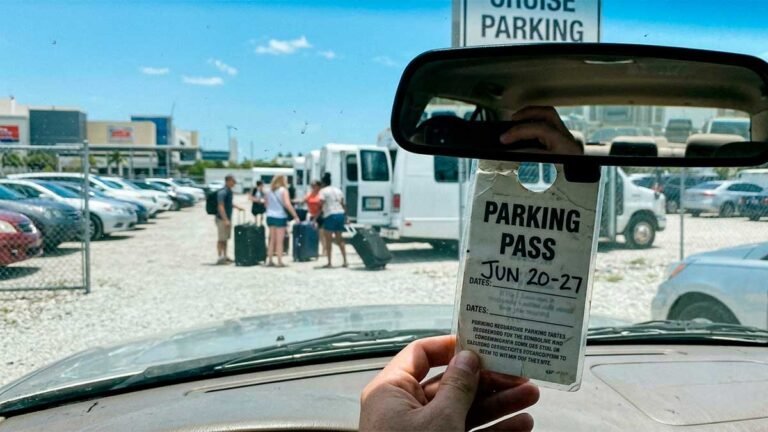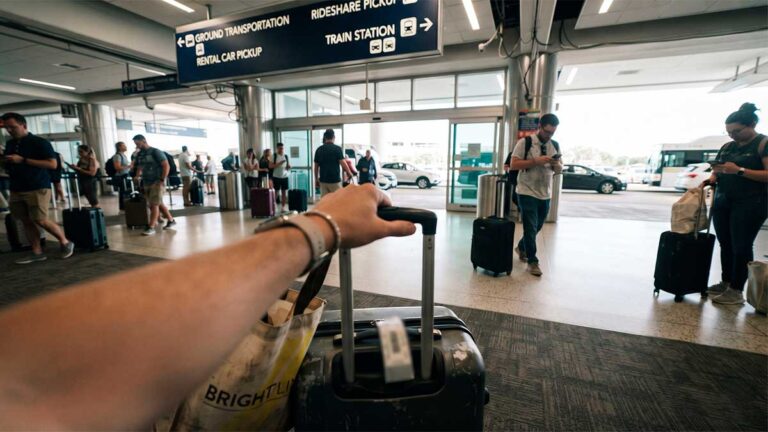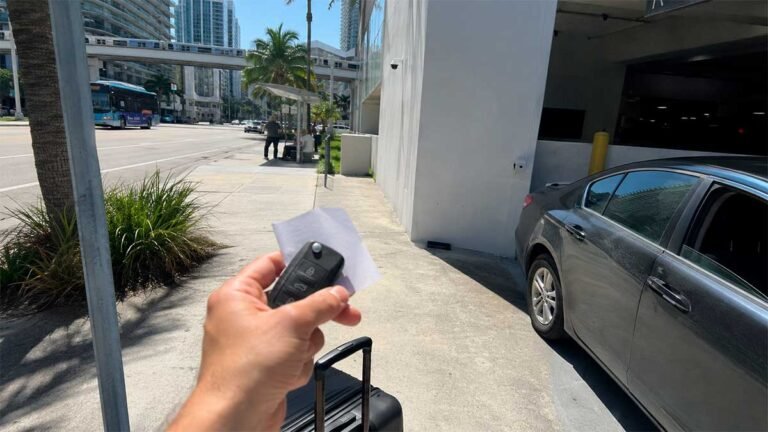

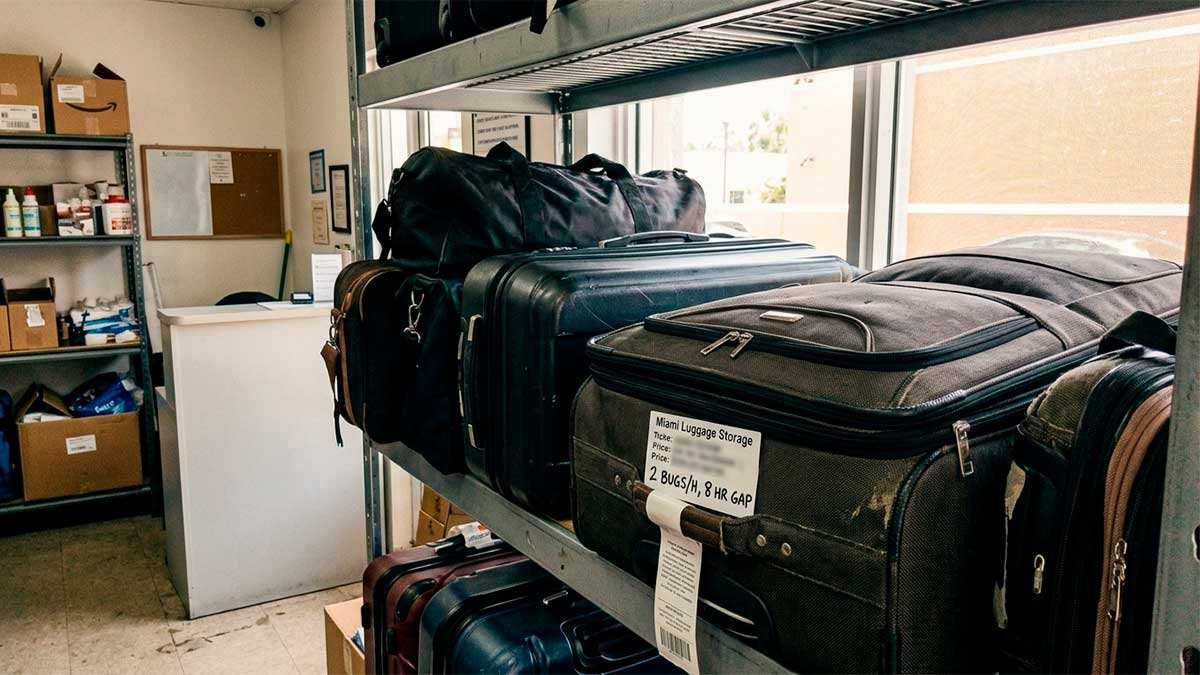
The cruise terminal photos make Miami look like a city built for wandering. What they don’t show is the moment you’re standing outside the terminal at 10 a.m. with two suitcases, a flight that doesn’t leave until 9 p.m., and absolutely nowhere on-site to put your bags. PortMiami doesn’t store luggage. Neither does Miami International Airport in the way most travelers expect, and neither does Brightline’s MiamiCentral station downtown. The gap between checkout and takeoff isn’t a minor inconvenience here — it’s a logistics problem with a real price tag, and most guides only tell you half of what it actually costs to solve.
Why Nobody Hands You a Locker Here
This trips up more travelers than it should, mostly because lockers still exist in plenty of cities and people assume Miami works the same way. It doesn’t. PortMiami sits on its own island, and the port’s own guidance is blunt about it: no on-site baggage storage, full stop, for security reasons. If you’ve just disembarked, your options aren’t on the dock — they’re a short ride away in Downtown or Miami Beach.
MIA isn’t much different. There’s no self-service locker wall the way you’d find in a European train station. The closest thing is Communitel Baggage Storage, a staffed counter operation in Central Terminal E and Terminal H, open 5 a.m. to 9 p.m., where you hand over your bag, show ID and a boarding pass, and pay per size and duration. It works, but it’s a paid service with fixed hours, not a drop-and-go locker.
And the option almost nobody mentions: MiamiCentral, where Brightline trains arrive and depart downtown, has no luggage storage either. If your plan involves the train at any point in the day, that’s one more stop where you can’t just stash a bag and walk off.
The pattern across all three is the same. Miami solved this problem by routing it to private businesses instead of public infrastructure. That’s not a flaw to complain about — it’s just the system you’re working with, and it means your real decision isn’t “where’s the locker,” it’s “which paid option fits my hours.”
Map Your Window Before You Pick a Solution
Here’s the part most luggage storage articles skip entirely: the right move depends almost entirely on how many hours you’re actually killing, not on which app has the prettiest homepage. Whether you’re coming off a ship or out of a hotel room, the math below works the same way — disembarkation and checkout are just two different starting lines for the identical clock-watching problem.
If You Have 2 to 4 Hours
This is the tightest window, and it’s also the one where overthinking costs you the most time. A short-term storage drop near the port or your hotel, paired with a walkable lunch or a quick neighborhood loop, is almost always the right call. Don’t drive anywhere for this window — by the time you deal with parking, you’ve burned a third of your available hours.
A typical hourly rate through an app-based storage network runs somewhere in the $1 to $1.50 per hour range per bag, before fees. For a 3-hour drop, that’s roughly $4 to $5 in base storage, plus a one-time per-bag service fee that usually lands between $1.65 and $2. Budget $6 to $8 total per bag for this window, and don’t plan anything that requires a car.
If You Have 5 to 8 Hours
This is the window that actually deserves a real cost comparison, because it’s where the cheapest-looking option on paper isn’t always the cheapest option in practice — and it’s the gap most cruise-and-fly or checkout-and-fly travelers land in.
Run the numbers like this. Storage app for two bags across roughly 6 hours: base rate around $9 to $12 total, plus service fees near $3.30 to $4 combined, plus rideshare to wherever you’re spending the day and back — call it $25 to $35 round-trip depending on distance from your storage point. Total: somewhere around $40 to $50 for the day, not counting whatever you spend once you’re out exploring.
Compare that to a day room. Select hotels near MIA or in Downtown sell same-day access — a room, a shower, AC, sometimes pool or gym access — for a flat rate that’s often in the same range. One traveler-documented example put a day room at a Miami Beach Courtyard around $69 for the day. At that price, a day room isn’t a backup plan, it’s a competitive option once you factor in the value of a shower and a place to actually sit down instead of bouncing between a coffee shop and a beach chair with nowhere to charge your phone.
Here’s the real answer for this window: if your group is two or more people splitting a day room, the per-person cost usually beats storage-plus-rideshare. If you’re solo and just need your bags off your back for a few hours of walking, app-based storage stays cheaper. The deciding factor isn’t the storage company — it’s whether you value a shower and a bed more than you value the cash difference.
If You Have the Full Day
With 9-plus hours, the math shifts again. At this point, a rental car or a pre-arranged tour with built-in luggage handling starts competing seriously with storage-plus-rideshare, especially if you’re traveling with more than one bag or want to cover real distance — the Everglades, Key Biscayne, multiple Miami Beach neighborhoods — without paying for three or four separate rideshare legs.
PortMiami itself has no rental counters on-site, which catches people off guard. The major agencies run shuttles from downtown offices instead, and those shuttles mostly stop running by early-to-mid afternoon on turnaround days. If you’re in a late disembarkation group and counting on a same-day rental near the port, check shuttle cutoff times before you commit — otherwise you’re paying for a rideshare to the rental office anyway, which erases part of the savings.
What Storage Apps Actually Get You in Miami
The three names that come up constantly — Bounce, LuggageHero, Radical Storage — all do the same basic thing: they turn local shops, cafés, and small hotels into vetted drop points you book through an app. What changes between them is pricing structure, insurance ceiling, and how forgiving they are if your plans shift.
LuggageHero runs on an actual timer — you start it at drop-off, stop it at pickup, and pay for real elapsed time. That’s genuinely useful for the 2-to-4-hour window, where you don’t want to pre-pay for a full day you’re not using. Radical Storage prices by calendar day instead of a rolling 24-hour clock, which sounds minor until you realize a drop-off at 8 p.m. one day and a pickup at 10 a.m. the next can get billed as two separate days, not one overnight stay. Bounce uses a rolling 24-hour window from your actual drop-off time, which tends to work better for late-flight situations where your hours don’t line up neatly with midnight.
Insurance coverage varies more than people expect, too. Bounce includes coverage up to $10,000 per booking with no separate add-on. LuggageHero’s base guarantee sits lower, with an optional paid upgrade that raises the ceiling. Radical Storage’s standard coverage lands in between. If you’re carrying anything genuinely valuable — camera gear, a laptop you can’t easily replace — that gap is worth checking before you pick based on price alone.
Before You Hand Over Your Bags
The discomfort of leaving a suitcase with a stranger doesn’t get talked about enough, and it’s a legitimate hesitation, not an overreaction. A few things actually matter here. Check the location’s review count and rating inside the app before booking, not just the storefront photo — a spot with a few hundred reviews and a 4.7-plus rating is a meaningfully safer bet than a brand-new listing with three reviews. Confirm the host’s posted hours match your pickup time exactly, since a closed storefront when you arrive to collect your bags is the single most common complaint travelers report with these services, particularly with stricter cancellation policies where refunds aren’t guaranteed if a location falls through. And keep your booking confirmation accessible offline — cell service gets patchy in some of the older buildings these drop points operate out of.
None of this means avoid these services. It means treat the verification step the same way you’d treat checking a rental car for damage before you drive off — thirty seconds of caution that prevents the one scenario that actually ruins your day.
The Quick Answer If You’re Short on Time
If you have under 4 hours, use an hourly storage app and stay walkable — don’t add a car into the mix. If you have 5 to 8 hours and you’re traveling with someone, price out a day room near MIA or Downtown before defaulting to storage, since a shared room often costs less per person than storage plus round-trip rideshare. If you have a full day, a rental car or a tour with luggage handling included usually beats piecing together storage and multiple rideshares, as long as you confirm rental shuttle hours don’t cut off before your pickup window.
The Day Room Math Nobody Runs
A day room sounds like an upgrade reserved for people with money to burn, but the actual comparison rarely gets made honestly. Take that $69 Miami Beach example from earlier. Split between two travelers, that’s $34.50 each for a private room, a real shower, AC, and often pool or gym access for the day. Compare that to two people each paying for storage plus their own rideshare legs to the beach and back, and the day room frequently wins on cost alone — before you even factor in the value of not carrying anything for six hours.
The threshold where this flips is usually around the two-traveler mark. Solo travelers rarely come out ahead with a day room unless they specifically want the shower and rest, since splitting a $69-plus rate one way usually costs more than hourly storage. Groups of three or four almost always come out ahead with a day room, sometimes dramatically so once you add up what four separate storage-plus-rideshare legs would run.
Move Smart Through Your Gap Hours
The fastest way to waste part of this window is treating it like an open question instead of a math problem with a clear answer. Count your hours first, then pick the option that fits — hourly storage for short windows, a priced-out day room comparison for the middle stretch, and a car or tour for anything pushing a full day. That single step, done before you ever open a storage app, is what separates a checkout day that feels like dead time from one where you actually got a few more hours out of Miami before your flight pulled you out of it.