
Navigating Miami via rideshare comes down to driver density, surge timing, and neighborhood traffic bottlenecks rather than sticking to a single preferred app. While Uber maintains a larger driver presence in dense urban centers like Brickell and South Beach, Lyft routinely undercuts Uber’s surge pricing during afternoon rainstorms and long-distance airport runs, making a dual-app approach the most reliable strategy to avoid overpaying or waiting on delayed pickups.
Direct Answer: Neither Uber nor Lyft is universally cheaper or better in Miami. Uber wins on driver availability and faster pickup times in high-density corridors like Downtown, Brickell, and South Beach. However, Lyft frequently offers lower surge pricing during peak hours and rainstorms, alongside better rates for long-distance routes like Miami International Airport (MIA) to Fort Lauderdale. The smartest tactic is installing both apps, comparing prices in real time, and avoiding rideshare entirely for short neighborhood hops where free local transit exists.
If you are looking for specific dollar estimates on popular routes or trying to figure out if staying far from the beach ruins your daily travel budget, read our detailed breakdown of Miami Uber costs per day. This guide focuses on platform performance, driver availability, airport logistics, and operational hacks to help you choose the right app for every situation.
The Dual-App Protocol: Why Rideshare Loyalty Costs You Money
Rideshare pricing in South Florida relies on dynamic surge algorithms that react instantly to localized demand spikes. Because Miami is a peninsula-style geography constrained by causeways and narrow oceanfront avenues, a surge event in one neighborhood can dramatically alter pricing on one platform while leaving the other relatively untouched for a brief window.
Uber controls a larger overall market share in Miami-Dade County. This means more active drivers on the road, leading to shorter wait times when requesting a car from residential areas or off-the-beaten-path locations. However, because Uber is the default app for most international tourists and business travelers landing at MIA, its demand queue saturates first during high-traffic events.
Lyft operates with a slightly smaller driver footprint in Miami, but its pricing algorithm reacts differently to sudden spikes. During major events at the Kaseya Center or peak dinner rush in Wynwood, Uber’s surge mechanism scales aggressively. Lyft often takes several minutes to catch up to those same price hikes, creating a temporary pricing gap where Lyft is significantly cheaper for the exact same trip.
Real Miami Scenarios: When to Use Uber vs. Lyft
Wait times and ride costs fluctuate depending on where you stand in the city. Based on regular field observations across major Miami neighborhoods, here is how the two platforms perform across key zones:
| Neighborhood / Zone | Uber Performance | Lyft Performance |
| Brickell & Downtown | Fast pickups (2–4 min). High driver density, but rapid surge spikes during 5:00 PM rush. | Slightly longer wait times (4–7 min). Frequently 15% cheaper during evening rush hour. |
| South Beach & Mid-Beach | Excellent coverage. Drivers are always nearby, but prone to high surge multipliers. | Competitive pricing on causeway trips. Great option for rides heading mainland. |
| Outlying Zones (Doral, Aventura) | Reliable coverage 24/7. Short wait times even early in the morning. | Longer wait times (8–12 min). Better flat-rate pricing for long distances. |
| Event Exits (Stadiums/Clubs) | Massive driver pool, but extreme surge pricing and chaotic pickup zones. | Fewer drivers nearby post-event, but lower peak surge multipliers if you wait. |
Brickell and Downtown Gridlock
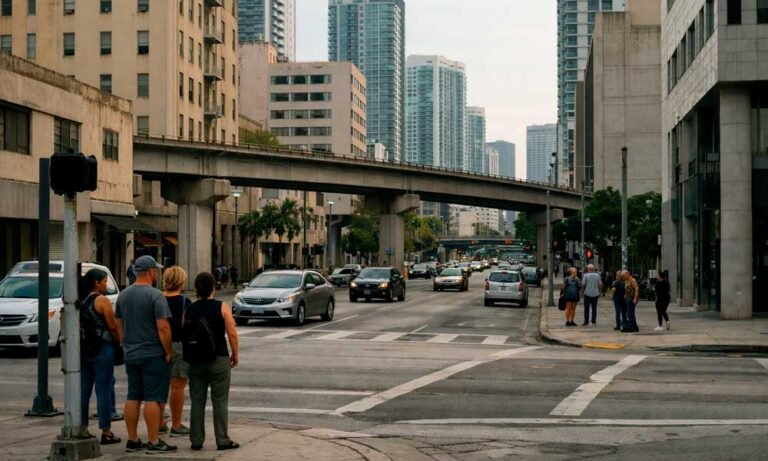
In financial districts like Brickell, street capacity is severely limited during peak hours. Between 4:30 PM and 6:30 PM, vehicles on Brickell Avenue move at a crawl. Uber drivers are plentiful, but their arriving vehicles often get stuck three blocks away in traffic, turning a “3-minute estimated pickup” into a 15-minute wait.
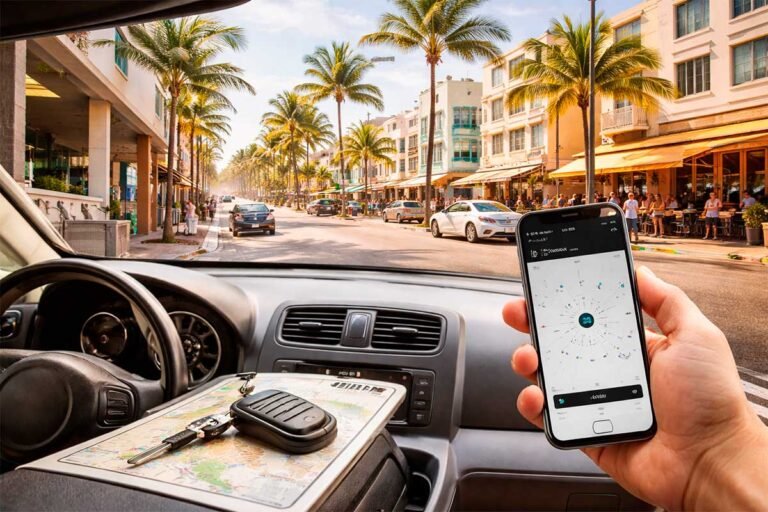
Lyft drivers in Brickell frequently route through side streets or secondary avenues (like SW 2nd Ave) to avoid the main gridlock. If you are standing near Brickell City Centre during rush hour, open both apps and look closely at the driver’s current position on the map—not just the estimated arrival time.
South Beach Nightlife Escapes
On Friday and Saturday nights along Washington Avenue and Collins Avenue, requesting a ride between 11:00 PM and 2:00 AM requires patience. Uber’s density is unmatched here; you will rarely wait more than three minutes for a driver to accept your request. However, drivers frequently struggle to pull up to curb spaces on Ocean Drive or Washington Ave due to strict police enforcement against idling vehicles.
Lyft drivers in South Beach tend to accept rides more cautiously late at night, but they are less prone to accepting a ride and abandoning it midway through due to traffic standstill.
Airport and Cruise Port Logistics: MIA, FLL, and PortMiami
Handling luggage, navigating terminal exits, and finding designated rideshare pickup zones is where many visitors run into unexpected delays.
Miami International Airport (MIA)
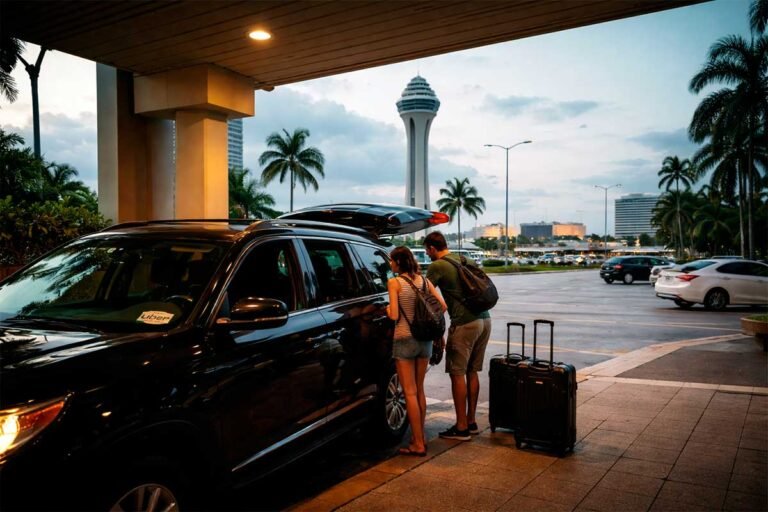
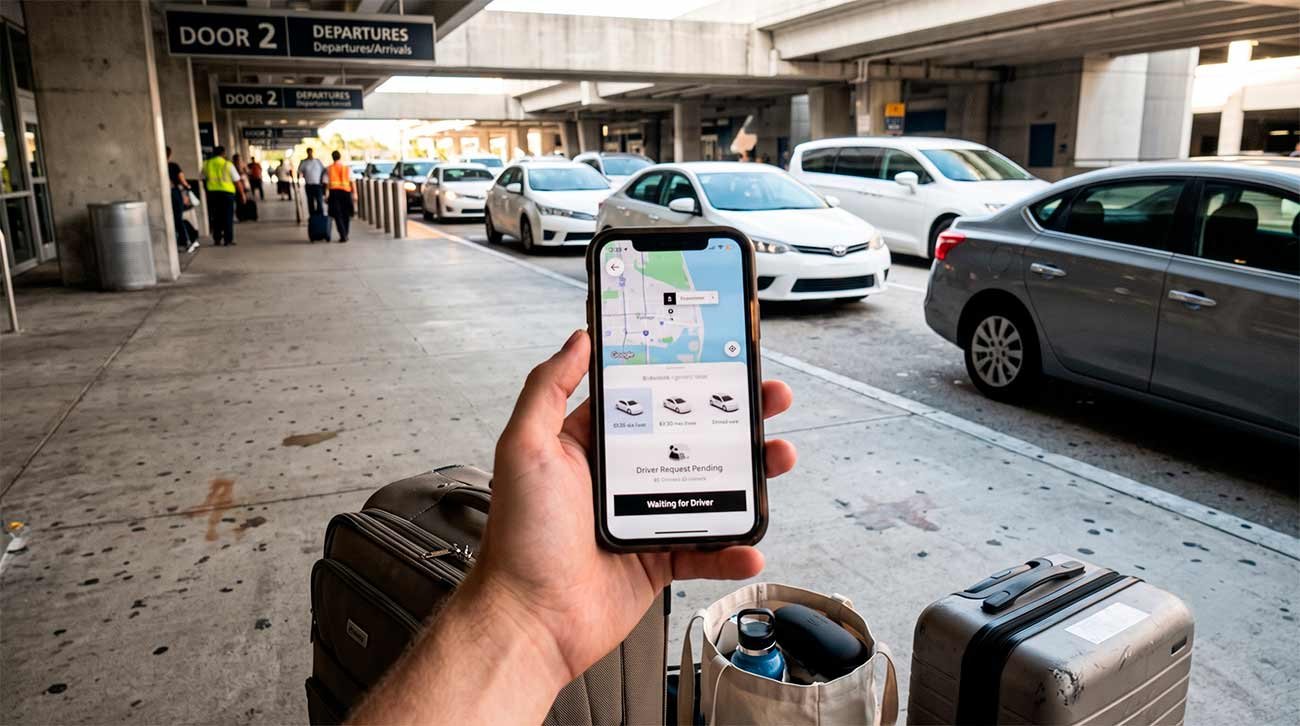
Pickup zones at MIA are located on the Departures Level (Level 2) at the outer curb, designated by numbered door signs (Doors 1 through 33).
- Uber at MIA: Uber has an staging lot directly adjacent to the airport perimeter, meaning once you request an UberX or Comfort ride, a driver is usually assigned within seconds. During peak flight arrival banks (typically 12:00 PM to 4:00 PM), Uber pickup lines get congested, leading to physical gridlock at the curbside doors.
- Lyft at MIA: Lyft pickup operations use the exact same designated curb areas on Level 2. Because fewer arriving passengers default to Lyft, driver assignment can take 2 to 3 minutes longer, but the curb wait is often smoother because Lyft drivers coordinate arrivals slightly better through airport perimeter access points.
Fort Lauderdale-Hollywood International Airport (FLL)
Many budget travelers fly into FLL to visit Miami, located roughly 28 miles (45 km) north of South Beach.
- The Long-Haul Rate Difference: For trips crossing county lines from Broward (FLL) to Miami-Dade, Lyft routinely offers lower base fares than Uber. On standard midday runs, Lyft Standard can be $10 to $18 cheaper than UberX for the exact same interstate route along I-95.
- Pickup Location: At FLL, rideshare pickup zones are located in designated ground transportation centers within the parking garages adjacent to Terminals 1, 2, 3, and 4. Follow the green rideshare signage carefully; requesting your ride before reaching the garage zone often results in driver cancellation fees.
PortMiami Cruise Terminals
PortMiami handles thousands of cruise passengers disembarking simultaneously on Friday, Saturday, and Sunday mornings between 7:00 AM and 10:00 AM.
- The Terminal Bottleneck: Traffic moving past Terminals A through J becomes heavily congested. Drivers on both platforms frequently decline requests heading into the port during peak disembarkation because getting in and out can take up to 45 minutes.
- Platform Superiority: Uber’s sheer volume gives it a massive advantage at PortMiami. While you may encounter surge pricing on Uber morning disembarkations, Lyft driver availability drops off significantly at the port during peak cruise hours. If you need to leave PortMiami quickly to catch a flight at MIA, Uber is the more reliable choice.
Avoiding Real-World Miami Rideshare Traps
Executing a smooth rideshare trip in South Florida requires understanding local enforcement, sudden weather changes, and vehicle sizing.
The “Ghost Arrival” and No-Show Cancellations
In dense nightlife corridors like Wynwood (along NW 2nd Ave) or South Beach, police officers strictly enforce “No Stopping / No Idling” zones. If your driver arrives and cannot legally pull to the curb because cars are double-parked or police are waving traffic forward, they cannot wait for you.
If you are not standing on the curb ready to open the door when the vehicle arrives, the driver will circle the block. In heavy Miami traffic, circling a single block in Brickell or Wynwood can take 10 to 15 minutes. Drivers will routinely cancel the ride as a “no-show” to collect the cancellation fee rather than sit in gridlock trying to reach you a second time.
How to avoid this: Always walk to a designated hotel driveway, open parking lot, or side street (e.g., walking one block west from Ocean Drive to Alton Road or Meridian Ave) before hitting request.
The 4:00 PM Summer Rain Surge
During South Florida’s rainy season (May through October), severe convective storms hit the city almost daily between 3:00 PM and 6:00 PM. These downpours cause instant localized street flooding, particularly in low-lying areas of South Beach, Edgewater, and Downtown.
When rain starts, thousands of pedestrians open rideshare apps simultaneously, triggering extreme surge multipliers (often 3x to 4x base rates). Furthermore, drivers deliberately turn off their apps or reject rides heading toward flood-prone streets to protect their vehicles from water damage.
How to avoid this: Track local radar on your phone. If storm clouds build at 3:30 PM, request your ride before the first raindrops fall, or duck into a cafe and wait 30 minutes. Miami rainstorms pass as quickly as they arrive, and surge rates collapse back to normal within 15 minutes after the rain stops.
The Shopping Bag and Luggage Trap
If you are planning a shopping trip to major retail hubs like Dolphin Mall, Aventura Mall, or Sawgrass Mills, do not assume a standard UberX or Lyft Standard vehicle will accommodate your group plus full shopping bags or large suitcases.
Standard rideshare categories in Miami are frequently compact sedans (such as Toyota Corollas or Nissan Sentras). If you have three passengers carrying four large suitcases from an airport run or outlet shopping trip, the driver will decline the ride upon arrival due to trunk space limitations. You will be stuck paying a cancellation fee and forced to re-order an UberXL or Lyft Extra Comfort.
How to Beat the Algorithm: A Traveler’s Playbook
To minimize rideshare spending while maintaining hassle-free transportation across Miami, apply these tactical rules:
- The Two-Block Walk: Never request a pickup directly at the main entrance of a stadium, concert venue, or major nightlife hub. After an event at the Kaseya Center or a club in Wynwood, walk two or three blocks away from the main perimeter before requesting your car. Getting outside the dense “surge geofence” can drop your fare by 40% instantly and allows your driver to actually pull over without police interference.
- Use Lyft “Wait & Save” Selectively: Lyft offers a “Wait & Save” tier that trades immediate pickup for a reduced fare. This feature is excellent when leaving your hotel for a casual lunch or beach day where timing does not matter. However, never use Wait & Save for airport runs, dinner reservations, or cruise connections. In Miami, the app will continuously reassign your driver if a closer passenger requests a higher-tier ride, extending a 5-minute wait into a 25-minute delay.
- Exploit Free Transit Loops First: Before opening Uber or Lyft for a short 1-mile (1.6 km) trip, check if free local transit covers the route. Downtown and Brickell are connected by the completely free, elevated Miami Metromover. Miami Beach, Coconut Grove, and Coral Gables run free neighborhood Trolleys. For hyper-local electric rides in zones like Mid-Beach, Downtown, and Brickell, the Freebee app provides free rides funded by local business districts.
- Compare Rideshare to Driving: If your trip itinerary involves multiple cross-city journeys per day (e.g., staying near MIA but commuting daily to South Beach and Wynwood), rideshare costs stack up fast. Check our comparative analysis on Miami without a car vs. renting a car to see where the financial tipping point lies for your specific travel style.
Smarter Ways to Navigate Miami Without Overpaying
Choosing between Uber and Lyft in Miami is not an all-or-nothing decision. Uber remains the undisputed king of availability, fleet size, and rapid pickups when you are on a tight schedule or departing busy transportation hubs like PortMiami. Lyft serves as an indispensable financial tool to bypass Uber’s aggressive surge pricing during rainstorms, rush hours, and long interstate drives down from Broward County.
By keeping both apps active on your phone, walking a block away from crowded pickup zones, and relying on free municipal transit options like the Metromover and local Trolleys for short neighborhood moves, you keep your transportation budget fully under control while navigating Miami like a seasoned local.
Frequently Asked Questions
Is Lyft cheaper than Uber from Miami Airport to South Beach?
Rates vary continuously based on real-time demand and causeway traffic. On average, standard midday rates between MIA and South Beach are comparable on both apps (typically $30 to $38). However, during flight arrival surges or afternoon rush hours, Lyft frequently undercuts Uber’s surge pricing by $8 to $15 on this specific route.
Do Uber and Lyft drivers in Miami charge extra for tolls?
Tolls are calculated automatically by the app algorithms and added to your final digital receipt. You do not need to pay cash or hand the driver money for tolls along major expressways like the Dolphin Expressway (SR 836) or Airport Expressway (SR 112). Always verify that your driver uses electronic toll lanes rather than taking unnecessary detours.
Is Uber or Lyft safer for tourists in Miami?
Both platforms enforce identical driver background checks, GPS vehicle tracking, emergency assistance buttons, and digital trip-sharing features in South Florida. Safety differences between the two apps are nonexistent in Miami. Practice standard safety protocol regardless of app choice: match the license plate and driver name before entering the vehicle, and avoid waiting alone on dark side streets late at night.
Can I schedule an Uber or Lyft in advance for an early morning flight at MIA?
Yes, both platforms allow advance ride scheduling. However, scheduling a ride in Miami does not guarantee a driver is reserved exclusively for you far in advance; it simply automates the request dispatch shortly before your scheduled pickup time. In outlying areas, scheduling ahead provides peace of mind, but in central zones like Brickell or South Beach, live-requesting an UberX at 4:00 AM is almost always fast and reliable.