
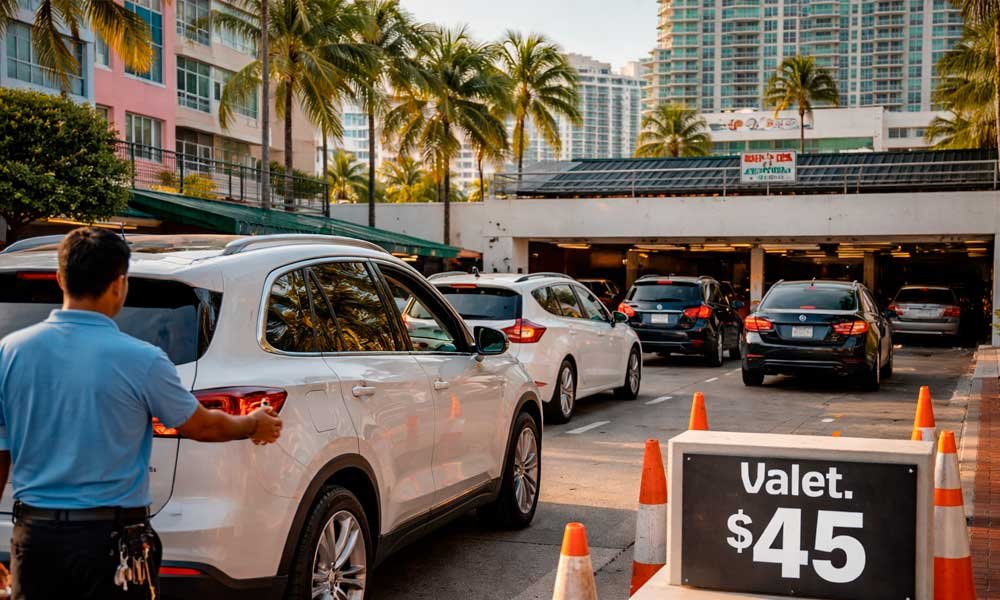
Most travelers calculate rental car price. Few calculate parking.
And in Miami, parking isn’t a small detail — it can quietly reshape your entire transportation budget.
If you rent a car in Miami without understanding parking reality, you’re not just paying more. You’re adding friction to your trip.
This isn’t a warning. It’s a planning guide.
The First Illusion: “I’ll Just Park Near the Hotel”
In many cities, parking is inconvenient.
In Miami, parking is structural.
Depending on where you stay, you may face:
- Mandatory valet
- High nightly garage fees
- Limited street parking
- Strict meter enforcement
- Time limits
- Event surcharges
Parking is not optional in car-heavy zones. It’s built into the system.
Miami Beach Parking Reality
This is where most surprises happen.
Hotel Parking Fees
Many Miami Beach hotels charge:
- $35–$55 per night
- Some higher-end properties: $60+ per night
- Valet-only parking
For a 4-night stay, that alone can exceed $200.
That’s before you drive anywhere else.
Public Garages
City garages exist.
Typical range:
- $20–$40 per day
- Hourly rates that add up quickly
They can fill on:
- Weekends
- Holidays
- Event periods
- Spring Break
Availability is not guaranteed.
Street Parking
Meters are strict.
Time limits are enforced.
Rates vary by zone.
What looks like a “cheap option” often requires:
- Moving the car
- Monitoring time limits
- Walking in heat
- Searching repeatedly
The real cost isn’t just money. It’s interruption.
Downtown & Brickell: High Density, High Fees
Brickell is modern and vertical.
That means:
- Private garages
- Valet dominance
- Limited street space
- Frequent construction
Garage rates here can mirror Miami Beach pricing.
Short stops often cost more than expected because of minimum billing periods.
Wynwood & Design District
Smaller streets.
High visitor volume.
Limited free parking.
Paid lots are common.
Event nights increase congestion.
Circling for space is normal.
Time lost here often exceeds parking fee itself.
The Time Cost Nobody Calculates
Visitors think in dollars.
But parking costs time:
- 10–20 minutes searching
- Walking back in heat
- Waiting for valet retrieval
- Circling one-way streets
- Adjusting plans when lots are full
If you do that twice per day for 4 days, you’ve lost hours.
And those hours are vacation hours.
The Psychological Cost
Parking creates micro-stress:
- “Will I find a spot?”
- “Is this the right zone?”
- “Will I get a ticket?”
- “Is this valet trustworthy?”
- “How long will retrieval take?”
That background pressure changes how you move.
Sometimes it changes where you go.
When Parking Costs Change the Rental Math
Renting a car might cost:
- $45–$70 per day
But parking can add:
- $40–$60 per night (hotel)
- $15–$30 per outing elsewhere
Now your daily mobility cost is no longer just the rental rate.
It becomes:
Rental + Hotel Parking + Destination Parking + Traffic Time
That can quietly double the original expectation.
Airport Parking vs Hotel Parking
Some travelers assume:
“I’ll rent at the airport and everything else will be easy.”
Airport rental is simple.
Parking afterward is not.
Especially if your hotel is in:
- Miami Beach
- Brickell
- Downtown
- High-density tourist zones
Planning this before arrival prevents regret decisions later.
Event Pricing & Surge Periods
Art Basel.
Ultra Music Festival.
Major concerts.
Holiday weekends.
Spring Break.
During these periods:
- Garage prices increase
- Lots fill faster
- Valet queues lengthen
- Retrieval times grow
- Street parking becomes harder
Parking unpredictability compounds traffic unpredictability.
If you haven’t read it yet:
– Miami Public Transportation Guide
Does This Mean You Should Avoid Renting a Car?
Not automatically.
But parking shifts the equation.
If you:
- Stay mostly in one neighborhood
- Walk frequently
- Use Uber occasionally
- Avoid cross-city daily moves
You may not need a car.
If you:
- Explore beyond core zones
- Travel with family
- Visit multiple spread-out areas
- Value control over schedule
A car may still make sense — but with eyes open.
When Parking Is Less of a Problem
- Staying outside Miami Beach
- Hotels with transparent parking pricing
- Exploring one area per day
- Traveling outside peak event periods
- Short stays (1–2 nights)
The more movement you plan, the more parking friction accumulates.
The Smart Mobility Approach
Instead of asking:
“Is parking expensive?”
Ask:
“How many times will I need to park per day?”
And:
“How much time will I spend retrieving or searching?”
Mobility in Miami is about sequencing.
Grouping activities by neighborhood reduces:
- Parking fees
- Traffic exposure
- Time loss
- Energy drain
That’s Move Smart in Miami.
Final Perspective: Parking Is Part of Transportation Strategy
Parking is not a side detail.
It’s a core factor in whether renting a car makes sense.
In Miami:
Cars are convenient.
Parking is the trade-off.
Understanding that before arrival lets you design your trip — instead of reacting to friction once you’re here.
Move Smart doesn’t mean avoiding cars.
It means understanding the full cost of using them.