
Where Hype Meets Reality
Miami sells the ultimate fantasy, we’re just here to audit the bill. While traditional travel guides act as a cheerleader for every overhyped spot in town, we calculate the hard costs and real logistics of your trip—before you waste your time and money. This is where hype meets reality. Welcome to the only no-BS guide designed to help you navigate the city intelligently.
Miami is a masterclass in global marketing. It sells a high-gloss fantasy of neon-lit boulevards and turquoise waters where everything feels effortless.
But for the traveler landing at Miami International Airport (MIA), the reality is a sequence of expensive obstacles. Most guides are written by people who don’t pay their own bills. At Miami The Hype, we analyze the city through the lens of cost-efficiency and time-management.
The Daily Liquidity Formula: The Math Behind the Vacation
The price you see on booking platforms is a fiction. Miami’s tourism economy is built on “drip pricing”—the practice of hiding mandatory costs until you are already committed. To understand your actual spending power, you must use the Miami The Hype Real Daily Rate (RDR) logic.
The Strategy:
- Base Cost: Advertised Room Rate + 13% Tax.
- The Invisible Tax: Resort Fee ($35-$50) + Valet Parking ($45-$70).
- The Consumption Multiplier: Average meal price + 9% Sales Tax + 20% Auto-Gratuity.
By the time you factor in the check-in bottleneck and the valet rates, a “cheap” $180 room in South Beach is actually costing you $320 per night. If you don’t calculate this before you land, you aren’t on vacation; you are on a financial recovery mission.
How long does it take from MIA airport to Miami Beach in rush hour?
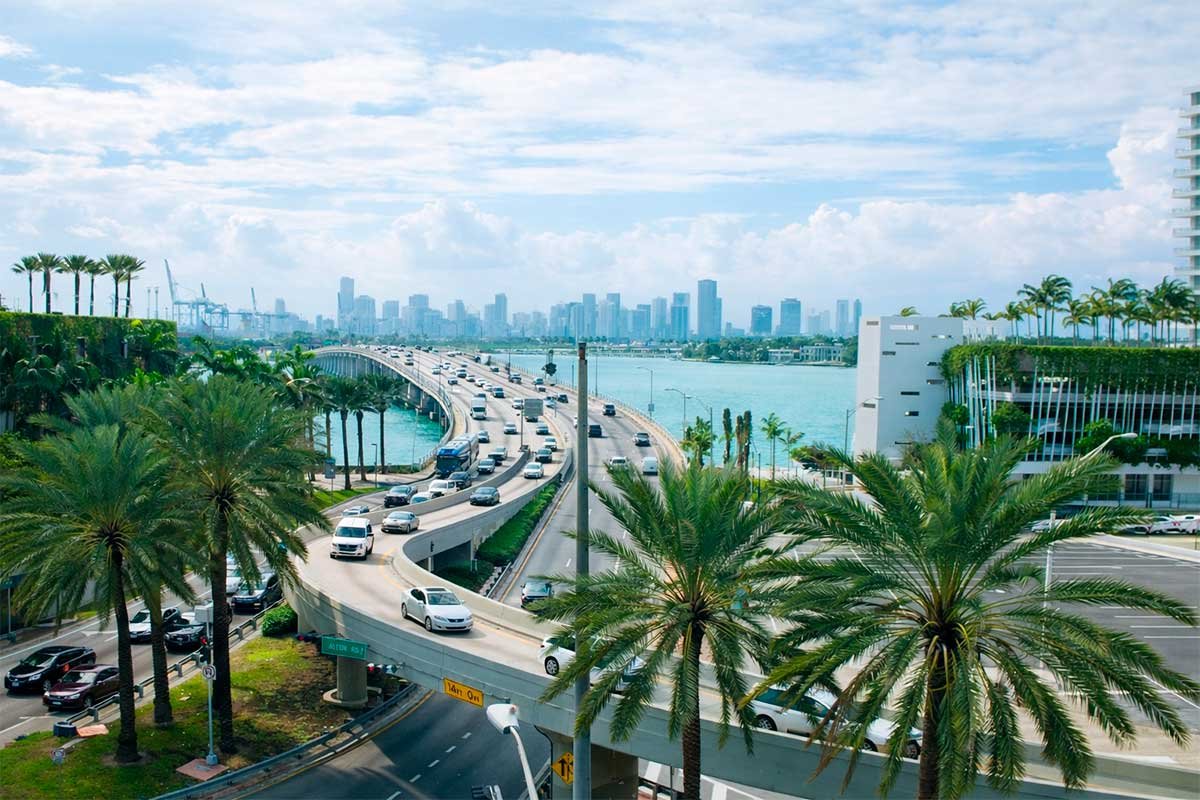
Our data shows thousands of travelers are searching for this exact answer, yet most sources give you an optimistic “20 minutes.” That is a lie. MIA is only 10 miles (16 km) from South Beach, but the MacArthur Causeway is a logistical pressure point that ignores distance.
The MacArthur Causeway Battle
If your flight lands between 3:30 PM and 7:30 PM, you are entering the “Red Zone.” The I-95 South and the 836 (Dolphin Expressway) are not highways during these hours; they are saturated parking lots.
- The 90-Minute Commitment: If you are crossing the water during peak afternoon hours, expect the drive to take at least 1.5 hours.
- The Express Lane Trap: The I-95 Express lanes use dynamic pricing. You might pay $15 for the privilege of sitting in the same exhaust fumes as the local lanes because the bottleneck happens at the merge, not the stretch.
- The Smart Move: If you land in the afternoon, stay west for dinner. Explore the Grapeland Heights area or grab a coffee near Blue Lagoon. Crossing the water at 8:00 PM will save you an hour of life and $40 in Uber surge pricing.
Check our updated Best Time to Drive in Miami to see our day-by-day congestion heat map.
The Car-Free Dilemma: Best area to stay in Miami without a car
Can you survive Miami without a car? Yes, but only if you choose your base of operations with surgical precision. Staying in Doral or certain parts of Coconut Grove without a vehicle will result in $150 of weekly Uber friction.
Neighborhood Walkability & Transit Footprint
- Brickell (The Urban Core): This is the only area where you can truly live a car-free life. The Metromover (a free automated train) connects you to Downtown and the Kaseya Center. Use our Metrorail Miami Traffic guide to understand how to bypass the I-95 entirely.
- South Beach (Below 17th St): Highly walkable. The local Trolley is free and frequent. However, if your goal is to visit the outlets, the logistics change instantly.
- The “Island” Districts: Wynwood and the Design District are walkable once you are there, but they are disconnected. Walking from Brickell to Wynwood is a 3-mile (4.8 km) trek through heavy construction and 85°F (29°C) humidity.
If your itinerary is “Beach + Brickell,” skip the rental. If your itinerary involves the “Shopping Wars,” you need wheels. Just budget $50 per night for the privilege of leaving the car stationary at your hotel.
The Mall Wars: Strategic Shopping vs. Inventory Fatigue
Miami is a global shopping hub, but tourists often lose an entire day at the wrong venue. The choice between Aventura and Sawgrass isn’t about the number of stores; it’s about Inventory Churn.
Comparison: Aventura Mall vs. Sawgrass Mills vs. Dolphin Mall
| Feature | Aventura Mall | Sawgrass Mills | Dolphin Mall |
| Vibe | Luxury / Current Season | Outlet / Deep Discount | Tourist / Convenience |
| Travel Time | 30 mins from Beach | 60+ mins from Beach | 25 mins from Beach |
| Inventory Churn | High (New Arrivals) | Brutal (Volume sales) | Moderate |
| Best For | Apple, Zara, Louis Vuitton | Nike, Luggage, Clearance | Last-minute gifts |
Sawgrass Mills is a 35-mile (56 km) commitment. It is an outlet beast where major brands (Nike, Adidas, Polo) often manufacture specific “Outlet Lines” that never saw a retail shelf. If you want high-quality materials, stick to the retail inventory at Aventura Mall vs Sawgrass Mills. If you want volume and don’t mind the “past season” label, prepare for a 10-hour day in Sunrise.
Visiting Sawgrass Mills without a car can be done, but the real cost often surprises tourists.
Pro Tip: Before you drive north, check our analysis on Miami Outlets vs Discount Stores. Sometimes a Ross or Marshalls in Midtown has better luggage inventory than the crowded stores at Dolphin Mall vs Sawgrass Mills.
Is Miami more expensive than New York?
Our data shows travelers are increasingly comparing the 305 to the Big Apple. While Manhattan has higher base prices for real estate, Miami’s service economy has caught up through aggressive drip pricing.
- The Auto-Gratuity Trap: In NYC, tipping is expected. In Miami Beach, it’s often mandatory. Check the “Subtotal” line on your bill for “Service Charge” or “Gratuity.” If it’s there, you have already tipped 18% to 20%. Adding more is a gift to the house, not a requirement.
- Transportation Costs: In NYC, the subway is $2.90. In Miami, your “subway” is an Uber that surges to $40 the moment a light rain starts.
When comparing Miami vs New York, you’ll find that Miami feels more expensive because the costs are less predictable.
The Culture Cost: Is Miami Still the Same City?
Most visitors arrive expecting a simple mix of palm trees and Latin music, only to be hit with prices that rival Manhattan. Why? Because the Miami built by immigrants is currently being aggressively repriced by new domestic wealth.
The “Citadel Effect,” skyrocketing insurance, and the everyday 7% tax trap aren’t just hurting your vacation budget—they are completely rewriting the city’s cultural map and pushing out the workforce that keeps it running.
Read our deep dive: Is Miami Still America? The 2026 Price, Culture and Reality Check to understand the real math behind the changing soul of the city.
The “Marketing” Trip vs. The “Miami The Hype” Trip
The Marketing Trip (The Trap):
- Stays in a “deal” hotel in Doral to save $50/night.
- Rents a car at MIA airport.
- Drives to the beach daily, spending 3 hours in traffic and $60 on parking.
- Eats every meal on Ocean Drive without checking for the auto-tip.
- Result: High stress, exhausted budget, zero “real” Miami experience.
- Stays in Brickell or a boutique hotel in Mid-Beach.
- Skips the rental car (Best Areas to Stay in Miami Without a Car); uses the Trolley and Ubers strategically.
- Does a deep-dive What to Buy in Miami session at Aventura Mall on a Tuesday morning.
- Read our section What Not to Buy in Miami
- Allocates the saved parking money ($300/week) to a high-end dinner in Sunset Harbour where locals actually eat.
- Result: 15 hours of extra vacation time and a bank account that isn’t in the red.
Frequently Asked Questions
Is Miami safe for tourists in 2026?
Generally, yes. However, the most common “theft” is financial. Always verify your Uber driver’s plate and never leave valuables in a rental car—even for a “quick look” at the beach. For a deeper look at neighborhood logistics, see our Is Miami Safe? report.
How much should I budget per day in Miami?
A realistic Miami Daily Budget for a mid-range traveler is $250 per person (excluding lodging). This covers decent meals, a few Ubers, and minor shopping.
Should I stay in a Hotel or an Airbnb?
With the 2026 regulations and “cleaning fees,” the Miami Hotel or Airbnb debate has shifted back to hotels. Unless you are a large group needing a kitchen, hotels offer more security and predictable costs.
Is public transport enough, or do I need to rent a car?
Unless you plan to stay entirely within walkable pockets like South Beach or Brickell—where you can use the free Metromover—relying solely on buses isn’t ideal. Miami is massive and notoriously spread out, so Ubers or a rental car are usually necessary. To avoid surprises with surge pricing or parking fees, check out our realistic breakdown of how much you’ll spend on getting around before deciding how to navigate the city.
Don’t Let the Neon Blind You
Miami is a city that requires a strategy. If you wing it, the city will eat your budget in 48 hours. Focus on the logistics, respect the traffic patterns, and always, always read the fine print on the bill. You aren’t here to fund a promoter’s lifestyle; you are here to enjoy the 305 on your own terms.
🧭 Latest Miami Travel Guides and Tips: Explore the newest Miami The Hype content in one place