
Miami is a premier global destination, a place built entirely around a high-yield lifestyle, stunning shorelines, and world-class culture. However, because it operates as a high-cost ecosystem, many travelers mistakenly assume they need an unlimited bank account to fully enjoy it. The secret to keeping your cash in your pocket while experiencing the absolute best of this city comes down to beating the system from the inside. Saving money here is not about cutting corners, sleeping in sketchy places, or skipping top-tier meals. It is a game of geographic positioning and tactical planning. If you understand how the city’s layout behaves, you can easily keep your budget intact while living large.
To unlock a high-value vacation, you have to treat Miami as an interconnected logistics puzzle. Most visitors compartmentalize their planning: they look for a random lodging deal, check out generic transit options, and list a few sights to see. Local data shows that this disjointed approach is exactly how people bleed cash. Your hotel location directly impacts your daily movement, and your transportation style determines whether your funds go toward fantastic coastal dining or get swallowed up by hidden surcharges and administrative fees. By aligning your geography with your lifestyle goals, you can experience a legendary vacation without overpaying.
How to Save Money in Miami
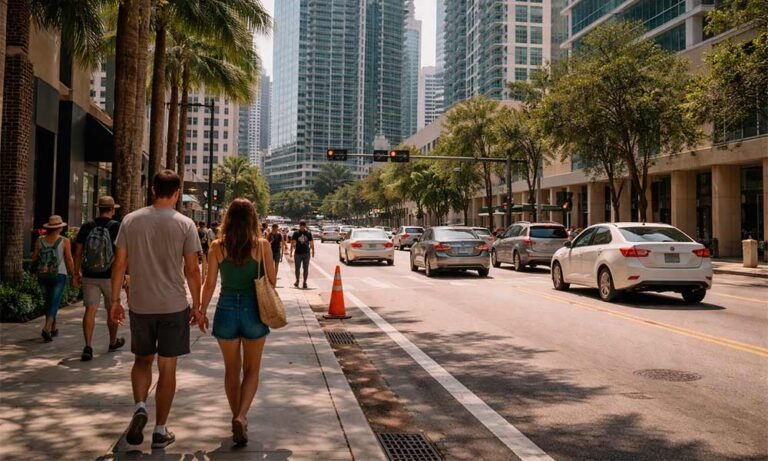
To save the most money on a Miami vacation, you must treat accommodation and transportation as a single, combined financial system. Avoid the common trap of booking cheap suburban hotels in areas like Doral, which look inexpensive online but end up costing you more due to long highway commutes and surging rideshare fees. Instead, stay in walkable core neighborhoods that match your plans—the barrier island for beach trips or along the free Metromover rail loop on the mainland for urban culture trips. Always check itemized restaurant receipts for an automatically included 18% service charge to protect yourself from accidental double tipping, and skip expensive hotel valet parkers by using municipal parking garages that charge only $2.00 an hour.
The Neighborhood Anchor: Staying Where the Fun is Free
When looking at room options online, the automated search engines immediately try to push you toward inland residential enclaves like Doral, Fontainebleau, or the commercial strips directly bounding Miami International Airport. These western suburbs consistently show enticing price tags, often listing clean, high-rated rooms for $100 a night. Meanwhile, boutique properties right in the middle of South Beach or along the Brickell corridor sit at $190 to $220.
Choosing the suburban room looks like an instant win that keeps hundreds of dollars in your wallet. In practice, however, this choice sets off a negative financial chain reaction that drains your savings and robs you of actual vacation time.
| Expense & Impact | Suburban (Doral/Airport) | Central (Beach/Brickell) |
| Base Room Rate | $110 / night | $190 / night |
| Daytime Transit | $60 (Two long Uber rides) | $0 (Walking / Free loops) |
| Nighttime / Surge | $50 (Late return commute) | $15 (Short local ride) |
| Time Wasted | 2+ hours daily in traffic | Zero time lost |
| Real Daily Total | $220 | $205 |
If your goal is to lounge on the sand, see the murals in Wynwood, and grab cocktails in a high-energy urban neighborhood, living out west adds a massive hidden tax to your day. A standard flat map makes the distance look short, but it ignores local infrastructure realities. Traveling 15 miles (24 km) from a western suburb to the ocean during high-demand windows takes anywhere from 45 to 70 minutes each way.
Without a personal vehicle, you are entirely reliant on on-demand rideshare applications. A ride that runs $20 on a quiet Tuesday morning easily triples at 5:30 PM when the major causeways freeze up. By the time you pay for your morning trek to the coast, your mid-day jumps, and your late-night return, you have handed over more cash to transportation apps than you saved on the room.
Choosing the wrong geographic anchor is where most travelers accidentally ruin their budget. To see exactly how these regional borders shift your daily costs, check out our breakdown on Miami vs Miami Beach: The Costly Booking Error. If your priority is the ocean, secure a room on the barrier island so you can walk to the beach for free. If you want art, fashion, and design, position yourself tightly along the mainland mass-transit loops.
Mastering the Room Invoice: How to Neutralize Surprise Fees
Finding great accommodation value requires looking past the bold print on the search results page. The hospitality market here uses a highly fragmented pricing strategy to make baseline rates look lower than they are, shifting major expenses to the final checkout statement. To protect your funds and accurately compare choices, you must manually calculate the true nightly footprint before booking:
| Mandatory Fee | Average Cost | Budget Impact |
| Base Room Rate | Varies (Online Decoy) | Your initial baseline price |
| Resort / Amenity Fee | $25 to $55 / night | Daily mandatory checkout surprise |
| Valet Parking Asset | $45 to $65 / night | Required urban vehicle storage tax |
| Hospitality Taxes | 11% to 13% | Added directly to your total bill |
The most frequent budget surprise is the mandatory resort fee, which properties add to cover standard items like Wi-Fi, fitness room access, or pool towel use. If you bring a vehicle to a dense beachfront hotel, you meet the second major expense: valet-only parking mandates. Because coastal real estate is strictly limited, hotels utilize compact off-site structures and charge guests an average of $50 per night just to park. When you stack these line items together, an apparent $140 bargain easily becomes a $230 daily bill.
| Property Style & Location | Added Daily Surcharges (Resort Fee + Valet) | Actual Daily Investment |
| Beachfront Strip Hotel (South Beach) | + $40 Resort Fee + $55 Nightly Valet | $235 / night (Before base taxes) |
| Mainland Design District Condo | + $0 Resort Fee + $0 (No car / Walkable hub) | $180 / night (Before base taxes) |
You can easily bypass this structure by modifying how you shop for rooms. Look for independent boutique accommodations a couple of blocks inland from the immediate shoreline, or opt for contemporary short-term residential apartments on the mainland, which routinely drop resort fees entirely.
If a property you love charges a mandatory amenity fee, evaluate whether you can leverage it to your advantage. If that $35 daily charge includes premium beach loungers, umbrellas, and bicycle use that you would otherwise rent on the sand for $15 an hour, the fee pays for itself. If it only covers a generic welcome drink and local phone calls, look for a more transparent establishment.
Renting a Car vs. Rideshare: The Exact Value Tipping Point
Deciding how you will move around the city is a straightforward mathematical equation based on your personal itinerary. Promotional sites often tell you that renting a vehicle is the only way to save money, highlighting base rates as low as $25 a day online. What they gloss over are the secondary infrastructure costs that quickly pile up when you operate a vehicle in a car-focused environment.
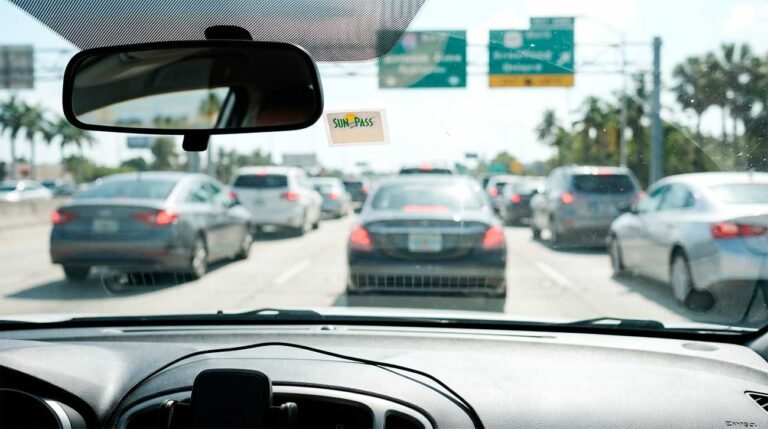
The moment you clear the airport exit, you enter a completely digital toll network (All-Electronic Tolling). Major local corridors like the Dolphin Expressway do not have physical cash booths; they utilize automated cameras that scan license plates.
Rental agencies take advantage of this setup by adding an administrative convenience fee of $5 to $11 for every single day of your rental window just to keep a toll account open for you, even if you only trigger a single $1.25 camera toll that day. Combined with a $50 nightly hotel valet fee and fuel, that $25 rental vehicle actually costs your budget closer to $95 a day before you even factor in destination parking.
Furthermore, leaving a vehicle outside of your hotel requires constant attention. If you drive to Wynwood or the Design District, you must use the PayByPhone app to secure a street spot, which runs between $3.25 and $5.00 per hour.
Local parking enforcement operates with extreme efficiency. If you accidentally park in a neighborhood permit zone, block an alleyway by an inch, or let your digital countdown expire by five minutes, private towing crews will hook your vehicle immediately. Getting a towed car back requires an immediate payment of $250 or more, plus hours of logistical frustration in an impound lot, entirely halting your vacation enjoyment.
| Daily Transit Path | Cost Breakdown | Real Daily Total |
| Vehicle Rental Path | Base ($25) + Hotel Valet ($50) + Tolls ($10) + Meters ($15) | $100 / day |
| Smart Rideshare Path | Two Local Off-Peak Runs ($30) + Free Trolley Loops ($0) | $30 / day |
If your plan for the day centers around exploring a distinct, high-density area like South Beach, Brickell, or Wynwood, a rental car is a financial drain. You are essentially paying nearly $100 a day for a vehicle to sit empty in a dark garage while you explore on foot.
Rideshares offer massive savings when you organize your days geographically, allowing you to pay only for the exact ground you cross. For an updated look at how these rates change throughout the year, dive into our full guide on Miami Uber Prices 2026.
Outsmarting Traffic Corridors and Surge Algorithms
If you choose to skip the rental vehicle and use rideshare apps, you can easily save a fortune by learning how to time your movements around local commuting patterns. The city’s geography relies on a few key highway arteries, which creates highly predictable bottlenecks. To see how these patterns develop, look at our breakdown of Why is Miami Traffic So Bad alongside our current operational guide for Miami Rush Hour Times 2026.
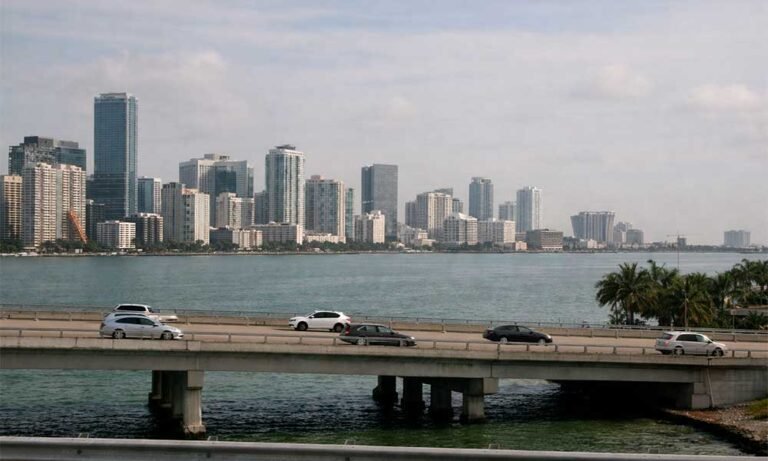
The most severe delays occur on the east-west causeways stretching across Biscayne Bay, specifically the MacArthur and Julia Tuttle bridges. Between 7:30 AM and 9:30 AM, thousands of hospitality and corporate employees cross from the mainland to the beach. Between 4:30 PM and 7:00 PM, that massive flow of vehicles runs completely in reverse.
When these bridges clog, rideshare algorithms experience an immediate driver shortage on the correct side of the water and trigger high multipliers to manage demand. A trip across the bay that normally costs $18 can spike to $48 or $55 in a matter of minutes at 5:45 PM.
Trying to cross the bay during these commuting peaks means you are paying a heavy premium just to sit completely motionless on a bridge. You can easily outsmart this system by modifying your schedule: explore mainland neighborhoods in the afternoon, plan your beach time for earlier in the day, or hang out at a local happy hour spot until the commute clears and rates return to baseline.
Utilizing Free Municipal Transit Networks
While major corporate travel sites give blanket advice to take public transit everywhere, anyone who actually lives here knows that is a recipe for a frustrating vacation. The city’s public transportation network is highly specialized; it is brilliantly efficient for localized urban travel, but it fails completely if you try to use it for spontaneous, long-distance cross-town trips.
The single best transit resource in the entire city is the Metromover. This is an automated, elevated, completely driverless rail system covering three distinct loops through Downtown, Brickell, and the Omni commercial core. It runs every few minutes from 5:00 AM until midnight, and it is 100% free for everyone.
If your lodging sits near a Metromover station in Brickell, you can access the entire financial hub, the waterfront parks, Bayside Marketplace, and the Kaseya Center without ever stepping into a car, paying a toll, or wasting money on parking. It is smooth, fast, air-conditioned, and glides right over street-level gridlock.
| Transit Option | Cost & Catch | Best Used For |
| Metromover Rail | 100% Free / Reliable rail that completely skips street gridlock | Gliding through Brickell and Downtown loops |
| Municipal Trolleys | 100% Free / Clean streetcars but stuck in standard traffic | Short, casual jumps within a single neighborhood |
| The Water Barrier | Paid only / No free rail options cross Biscayne Bay | Crossing to the beach via express bus or Uber |
For neighborhoods outside the elevated rail grid, the local cities operate independent Free Trolley networks. These vehicles are clean, fully air-conditioned, and cost absolutely nothing to board. The South Beach Trolley lines are incredibly useful for moving along major avenues like Washington or Alton Road without opening your wallet.
The main drawback is that these trolleys operate on open public streets without dedicated lanes, meaning they get stuck in the exact same bumper-to-bumper traffic as regular cars. If you take a trolley during rush hour, you keep your cash but pay for it with your time. Use the free trolleys for casual, short-distance jumps within a single neighborhood, but opt for a rideshare if you are trying to make a strict timed reservation.
Restaurant Billing Layouts: Beating the Double-Tip System
Dining out along the coast features a specific financial layout that catches thousands of tourists off guard every single day. Because the regional market welcomes millions of international visitors who are unfamiliar with the standard American practice of leaving a 15% to 20% tip for service, the vast majority of restaurants on Ocean Drive, Lincoln Road, and Española Way have altered how they build their checks.
They automatically build an 18% or 20% gratuity directly into the subtotal of your bill. This line item is rarely pointed out by servers; it prints out quietly near the bottom of the paper under terms like “Service Charge,” “Gratuity,” “SC,” or “Service Fee.”
| Bill Line Item | Listed Price | Smart Check & Action |
| Food & Drinks Subtotal | $33.00 | Baseline cost of your meal |
| Local Sales Tax (7%) | $2.31 | Mandatory municipal tax assessment |
| Service Charge / Gratuity (18%) | $5.94 | Stop here: The tip is already included! |
| Total Balance Due | $41.25 | The absolute final amount you owe |
| Additional Tip Screen Prompt | Leave Blank | Do not select 20% on the card reader screen! |
When your waiter brings the handheld digital payment terminal to slide your card, the screen will automatically display the standard tip buttons offering choices for 18%, 20%, or 25%. If you do not inspect the itemized paper slip first, you will likely tap one of those screen options, accidentally layering a second 20% tip on top of the 18% gratuity already built into the food costs.
Paying double tips out of pure distraction can easily inflate your daily food budget by $50 to $80 over a weekend. Make it a strict habit to read every single line item on a bill before processing your card, and look at digital screen prompts with extreme skepticism.
To keep your dining budget balanced while still enjoying the legendary local food scene, learn how to mix high-value local insider secrets with your upscale outings:
- The Publix Deli Counter: Publix is the premier regional grocery chain, and every location houses a full-service hot deli counter. Their staff builds massive, custom-made submarine sandwiches (famously called “Pub Subs”) using premium ingredients for roughly $9 to $12. A single whole sub is physically large enough to serve as a massive lunch for two adults. You can grab a sub, pack it into a cooler bag, head to the beach, and skip the overpriced $25 boardwalk cafes entirely.
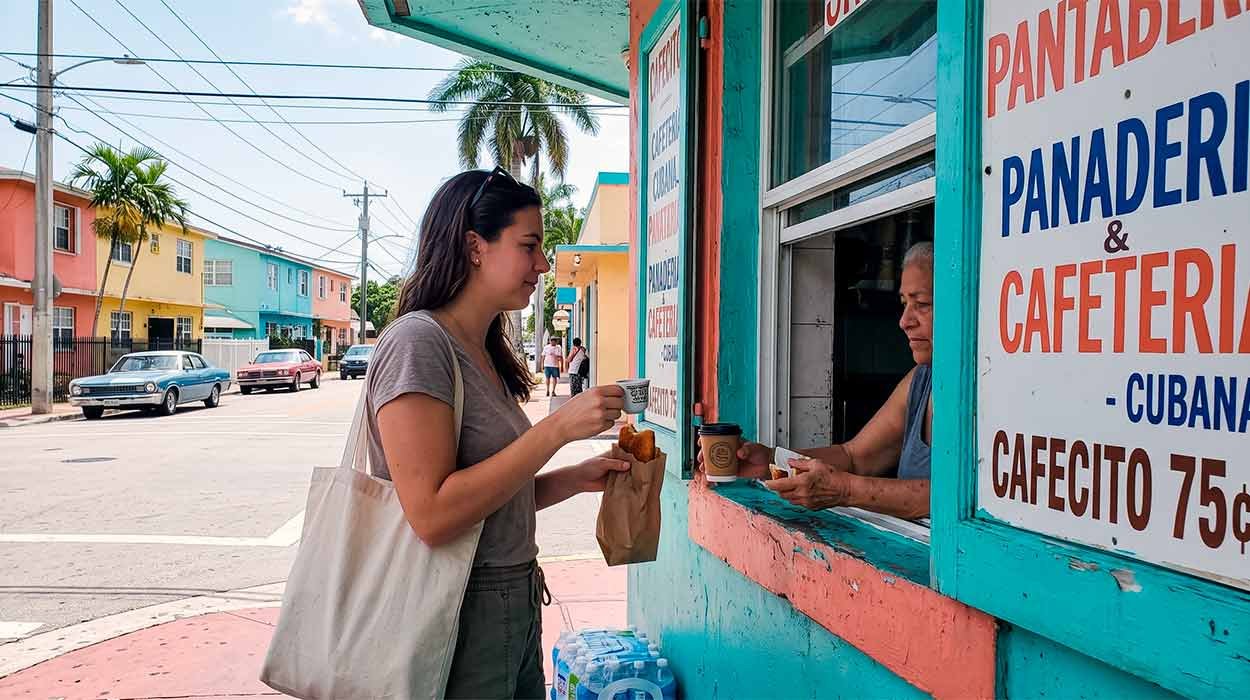
- Ventanita Coffee Culture: For an authentic, high-value breakfast experience, bypass hotel dining rooms and look for ventanitas—the walk-up service windows attached to Cuban bakeries and cafes throughout Little Havana and casual side streets in Miami Beach. Here, you can get a powerful, sweet Cuban espresso (cafecito) and a couple of warm, savory pastries filled with cheese or guava (pastelitos) for under five dollars, giving you an authentic cultural experience for a fraction of restaurant prices.
- Happy Hour Optimization: The top award-winning culinary venues in Brickell, Coral Gables, and Sunset Harbour utilize highly aggressive happy hour menus to fill their tables between 4:00 PM and 7:00 PM on weekdays. Premium spots offer fresh oysters, high-end sushi rolls, wagyu sliders, and signature cocktails at a 50% discount during these early windows. If you shift your main meal of the day to the late afternoon, you can dine at elite venues for the same cost as a basic casual diner later in the evening.
Strategic Spending Blueprints Built for Your Travel Style
The Carless Pair Strategy (3-Day Urban Core Experience)
This framework maximizes geographic efficiency, using the city’s infrastructure to eliminate expensive car rentals and heavy transit costs.
- Where to Stay in Miami: Base yourself in a modern boutique hotel or high-rise rental unit inside the Brickell or Downtown district, ensuring you are within a two-block walk of a free Metromover station.
- How to Move: Rely entirely on the 100% free elevated Metromover loops to travel between your room, the shopping plazas, and the waterfront park districts. For trips to the Wynwood arts zone, request an on-demand rideshare during off-peak morning or mid-day hours. To head over to the beach, take a quick rideshare ride across the Venetian Causeway.
- Financial Reality: You allocate $0 to car rentals, $0 to daily hotel valet fees, and your total daily transit costs stay below $25 for the entire stay.
The Family of Four Playbook (7-Day Beach & Activity Run)
This framework scales your spending effectively across a larger group, where group logistics make a vehicle necessary.
- Where to Stay: Avoid cramped beachfront hotel rooms. Instead, look for multi-room condo suites in Mid-Beach, North Beach, or Surfside, which provide significantly more square footage per dollar and quieter, cleaner stretches of sand.
- How to Move: Because you are moving a full group across long distances, secure a mid-sized vehicle directly from the airport terminal counter. Use this car for dedicated day trips to far-off regional highlights, like the sprawling Sawgrass Mills outlet mall or the alligator trails in the Everglades.
- Cost Mitigation: Filter your accommodations to ensure your rental unit includes a designated, free parking space, saving you up to $350 in valet fees for the week. When driving down to explore South Beach for the day, drive straight past the private hotel valet stands and pull into the large municipal public garages run by the city (such as the public decks on 7th or 13th Street), which charge a flat rate of just $2.00 per hour.
The Solo Explorer Setup (5-Day Flexible Cultural Immersion)
This framework focuses on absolute cost flexibility, taking advantage of local culture without paying premium prices.
- Where to Stay: Book a private room or shared space inside an independent boutique hostel or guesthouse located within the historic Art Deco corridor of South Beach, a few blocks inland from the premium oceanfront strip.
- How to Move: Utilize your own feet and the municipal Free Trolley networks to cruise the entire length of the barrier island for zero cost. For medium distances along the beach boardwalks, unlock a public Citi Bike share bicycle via an app for a few dollars an hour.
- Budget Alignment: Stock up on core essentials like bottled water, snacks, and high-SPF sunscreen at a standard mainland Target or Walmart on your very first afternoon, completely avoiding the highly inflated prices of the convenience stores right on Ocean Drive. Use local ventanitas for your daily caffeine, grab hearty lunches from the Publix deli counter, and save your main budget to enjoy authentic neighborhood happy hours.
- The Solo Traveler’s Tax: Why Miami Charges You Extra to Be Alone
Tactical Answers to Critical Planning Questions
Is it cheaper to book an independent vacation rental or a hotel room?
The answer comes down to the duration of your stay and your vehicle storage needs. For brief visits under three nights, traditional boutique hotels are generally more economical because vacation rentals tack on large, one-time cleaning and processing fees that distort the nightly cost of a short trip. For stays lasting five days or longer, an apartment rental offers superior value because it regularly includes a designated parking space—saving you up to $350 in valet fees—and provides a full kitchen where you can prepare casual meals instead of paying high restaurant prices for every single breakfast and lunch.
Can you easily enjoy a complete Miami itinerary without a vehicle?
Yes, you can easily experience a world-class vacation without a car if you intentionally base your stay inside dense, self-contained walkable areas like South Beach, Brickell, or Downtown. By taking advantage of the 100% free elevated Metromover rail on the mainland, utilizing the complimentary neighborhood trolleys, and scheduling your rideshare trips outside of peak morning and evening rush hours, you can travel comfortably while completely eliminating the expenses of vehicle rentals, highway tolls, and nightly hotel valets.
Which shopping outlet center delivers the best value for your money?
While the Dolphin Mall sits much closer to the urban center and the airport terminal, the Sawgrass Mills mall out in Sunrise provides significantly deeper overall discounts and a massive inventory of factory clearance outlets. If your vacation goals include serious shopping, the lower pricing structures and pure scale of clearance options at Sawgrass Mills easily justify the 45-minute drive and the transportation costs required to get there.
What is the absolute most affordable time of year to visit?
The most affordable window to visit is during the late summer and early autumn months, specifically from August through October. Because this period features high tropical humidity and aligns with the most active phase of the Atlantic hurricane season, luxury hotels slash their standard nightly rates by 45% to 50%, and local dining spots offer deep discounts via fixed-price promotional menus. The trade-off is a high likelihood of daily afternoon rainstorms, making comprehensive travel insurance an absolute necessity for your trip.