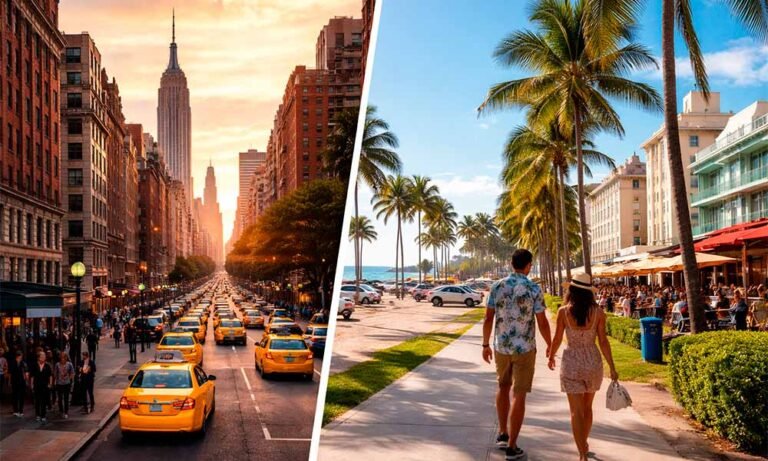

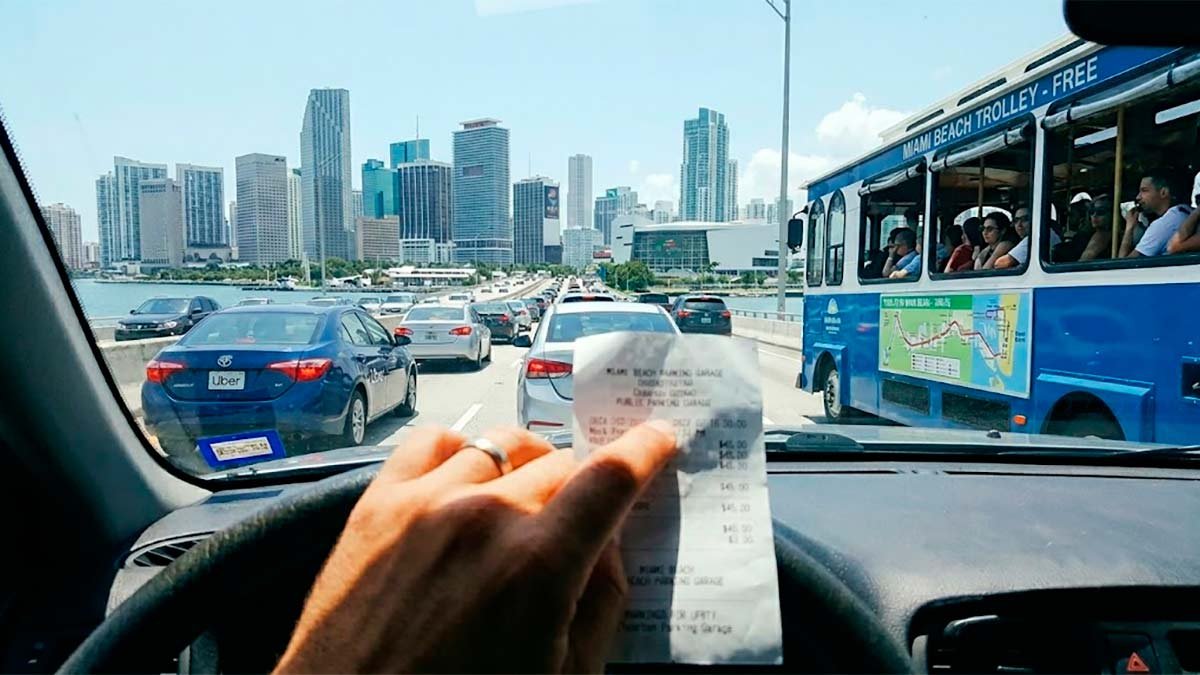
Choosing between Miami and Miami Beach is a structural travel decision that dictates your entire trip budget, transportation logistics, and daily experience. While they share a region, Miami is a massive commercial mainland metropolis dependent on highway infrastructure, whereas Miami Beach is a dense, barrier island municipality focused entirely on walkable coastline and leisure. Booking a hotel on the mainland to save on room rates frequently backfires when you calculate the daily drain of highway tolls, mandatory valet parking fees averaging $45 per night, and heavy traffic delays across the bay bridges. Conversely, staying on the island without a car limits your mobility to local transit like the trolley system, making mainland excursions expensive via rideshares. Understanding this geographic and financial divide prevents severe logistical friction, ensuring you align your accommodation choice directly with how you plan to navigate the region.
Most travelers who get this wrong don’t realize it until they’re standing at their hotel window wondering where the ocean went. Miami and Miami Beach are two entirely separate cities — different governments, different tax rates, different street grids, and a body of water between them called Biscayne Bay. Booking the wrong one doesn’t just cost you a view. It can quietly drain $200 to $400 from your trip budget in rideshares, parking fees, and time you’ll never get back.
This is the one decision you make before you land that affects everything else.
They’re not even on the same land mass
Miami is a mainland city. Miami Beach is a barrier island. That’s the geographic reality that every tourism brochure glosses over with a sunset photo. Mainland Miami includes the urban neighborhoods most locals actually live and work in: Downtown, Brickell (the financial district), Wynwood (the arts and nightlife corridor), Little Havana, Coconut Grove, and the Design District. It’s the sprawling metro of about 440,000 people, with highways, a rail system, and the full infrastructure of a major American city.
Miami Beach sits roughly 3 miles (5 km) east of Downtown, on a narrow island about 9 miles (14.5 km) long and 1 mile (1.6 km) wide. It has its own mayor, its own police force, and its own building codes. When you’re on Collins Avenue watching someone valet park a Lamborghini for $65, you are in a completely different jurisdiction than when you’re eating croquetas at Vicky Bakery in Little Havana.
The confusion runs even deeper because Miami Beach itself has three distinct sections:
- South Beach — the southern 2.5 miles of the island, home to the Art Deco Historic District, Ocean Drive, and the nightlife scene most people associate with “Miami.”
- Mid Beach — quieter, more upscale, anchored by luxury hotels like the Faena along Collins Avenue.
- North Beach — mostly residential, wide uncrowded beaches, and hotel rates that run significantly lower than South Beach.
South Beach is not Miami Beach. Miami Beach is not Miami. All three names refer to different things, and mixing them up is the fastest way to book a hotel that puts you 5 miles (8 km) from everything you actually planned to do.
The causeway math nobody shows you
The physical distance between Downtown Miami and South Beach is about 5 to 6 miles (8 to 10 km). On a map, that looks like nothing. On a Friday evening in season, that’s potentially 45 minutes to an hour of your life sitting on the MacArthur Causeway or the Julia Tuttle Causeway — the two main bridges connecting the island to the mainland. Uber and Lyft surge pricing kicks in hard on causeway crossings during events, rush hour, and weekends.
| Scenario | Estimated cost |
|---|---|
| 2 round trips/day by rideshare (in traffic) | $30–$55 per round trip |
| 4-day total (8 round trips) | $240–$440 in rideshare fees |
| Rental car + Miami Beach garage parking | $25–$65/day |
| Mandatory hotel resort fee (Miami Beach) | $35–$55/night, per stay |
That resort fee line matters. Nearly every beachfront hotel in Miami Beach charges a mandatory daily resort fee on top of the room rate — and it typically covers things you may not use, like beach chairs, pool access, and Wi-Fi that should be free anyway. On a 4-night stay, that’s an invisible $140 to $220 added to your bill before you’ve ordered a single drink.
Two different trips: the honest comparison
| Factor | Mainland Miami | Miami Beach |
|---|---|---|
| Beach access | Requires crossing the bay | Walk out the front door |
| Hotel value | More square footage, no resort fees | Premium for proximity, resort fees common |
| Walkability | Neighborhood-specific | Strong in South Beach and Mid Beach |
| Parking | Manageable and cheaper | Expensive, limited, aggressively enforced |
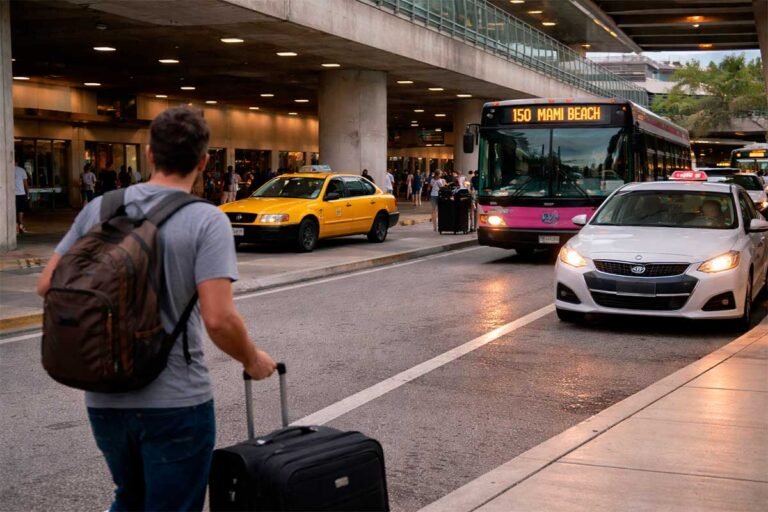
| Airport to hotel | 15–25 min from MIA | 30–50 min from MIA (traffic-dependent) |
| Local transit | Metromover, Metrorail, Tri-Rail | Free city trolley, CitiBike, walkable |
Miami Beach operates a free trolley system — 7 days a week, roughly 8 a.m. to 11 p.m., with multiple routes covering South Beach, Mid Beach, and the shopping corridor along Lincoln Road. If you’re staying on the island, you can genuinely go car-free for most of your trip. That’s a real financial advantage that doesn’t get enough attention. The mainland doesn’t have that. Brickell is walkable. Wynwood is walkable. But getting between Wynwood and Little Havana and then down to Coconut Grove requires either a car or a series of transit transfers that most tourists won’t manage well.
What you actually lose when you choose wrong
Scenario A — The costly mistake
You book a boutique hotel on Collins Avenue — $280/night plus a $45 resort fee. Day one on the beach is perfect. Day two, you decide to check out Wynwood Walls. Uber: $28 each way. You grab dinner, it’s 10 p.m., and a concert just ended at Kaseya Center on the mainland. Uber back to Miami Beach: $38 with surge. That’s $66 to cross the bay twice. Multiply that by three days of mainland exploration and you’ve spent close to $200 on transportation for a trip you thought was a beach vacation.
Scenario B — The “central” trap
You book a high-rise in Brickell for $195/night — no resort fee, full city view, free Metromover nearby. But every single time you want sand, you’re either in an Uber for 25 minutes or paying $45 to park in a Miami Beach garage for the afternoon. After three beach days: $135 in parking plus rideshare, on top of the logistical drain of planning every beach outing like a supply chain operation.
The smart move: Decide upfront which of these two things is the actual center of your trip — the beach, or the city. Then book accordingly and day-trip to the other side once or twice with realistic expectations about crossing time.
Miami Beach vs. South Beach: one more confusion to clear up
South Beach is a neighborhood within Miami Beach, not a synonym for it. When people say “I want to stay in South Beach,” they mean the area from the southern tip of the island up to roughly 23rd Street — the strip with Art Deco hotels on Ocean Drive, the famous Lummus Park beachfront, and the densest concentration of clubs, bars, and restaurants on the island.
North of that is Mid Beach (roughly 24th to 63rd Street) and North Beach (above 63rd). Both are still Miami Beach — same island, same city government — but they have noticeably different prices, crowds, and energy. A hotel in North Beach can run $80 to $100 less per night than a comparable room in South Beach, with beaches that are wider and far less packed. If your budget is tight and the specific vibe of Ocean Drive isn’t a priority, booking in North Beach and taking the free trolley south is one of the most underused money moves in Miami travel.
Which side is right for your trip
Stay in Miami Beach if…
- The beach is the main reason you’re going to South Florida
- You want to walk everywhere and minimize transportation decisions
- It’s your first trip and the Art Deco, South Beach energy is part of what you came to see
- You’re okay paying a premium for convenience and have already factored in resort fees
Stay on the mainland if…
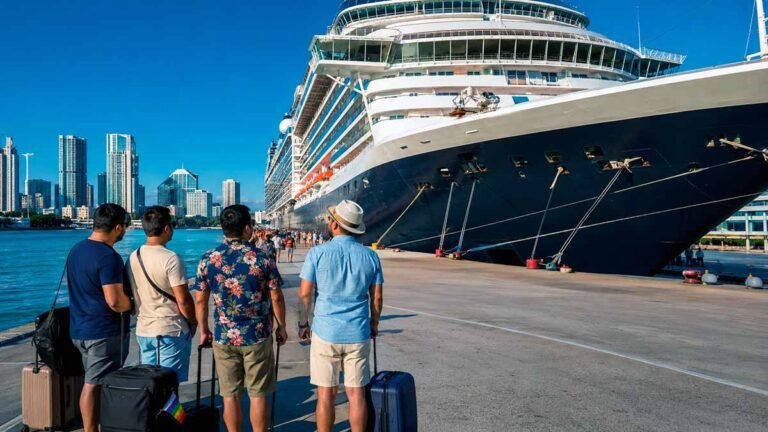
- Your itinerary is built around food, art, nightlife, or a cruise departure from PortMiami
- You’re renting a car and need easier access to the Everglades, Key Largo, or Fort Lauderdale
- You want better hotel value and more square footage for the same nightly rate
- You’re attending an event at Kaseya Center, Hard Rock Stadium, or the Convention Center
The real difference, in one sentence
Miami is a city where people live, work, and build businesses. Miami Beach is a resort town that happens to be incorporated as a city. Both are worth your time. Neither one is a substitute for the other. Once you’ve made this call, the next question is which specific neighborhood actually fits your budget and travel style — and that’s where the decision gets more interesting.
Frequently asked questions
Is Miami Beach part of Miami?
No. Miami Beach is a separate incorporated city within Miami-Dade County. It has its own government, police department, and municipal services. The two cities are connected by causeways across Biscayne Bay.
How far is Miami Beach from Miami?
Downtown Miami to South Beach is approximately 5 to 6 miles (8 to 10 km) by road. The drive takes 12 to 45 minutes depending on traffic — causeway congestion during peak hours is a real factor in your daily itinerary costs.
Is it cheaper to stay in Miami or Miami Beach?
Mainland Miami generally offers better value — more space, fewer hidden fees, and no mandatory resort charges. Miami Beach hotels command a beach proximity premium and typically add $35 to $55 per night in resort fees on top of the room rate.
Is South Beach the same as Miami Beach?
No. South Beach is the southernmost neighborhood of Miami Beach, roughly from the tip of the island to 23rd Street. Miami Beach also includes Mid Beach and North Beach, both of which are quieter and significantly less expensive than South Beach.