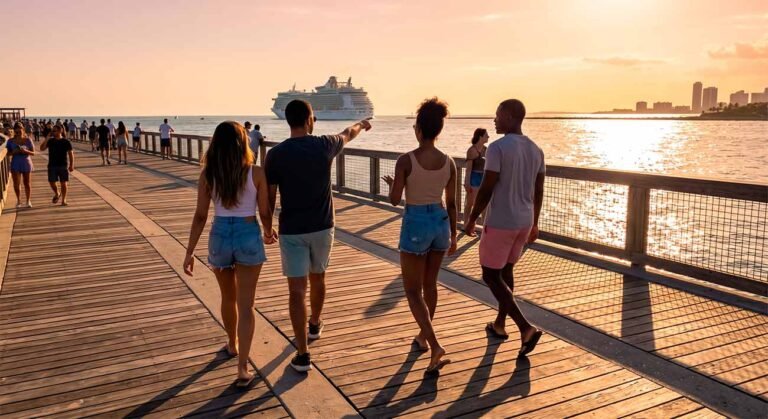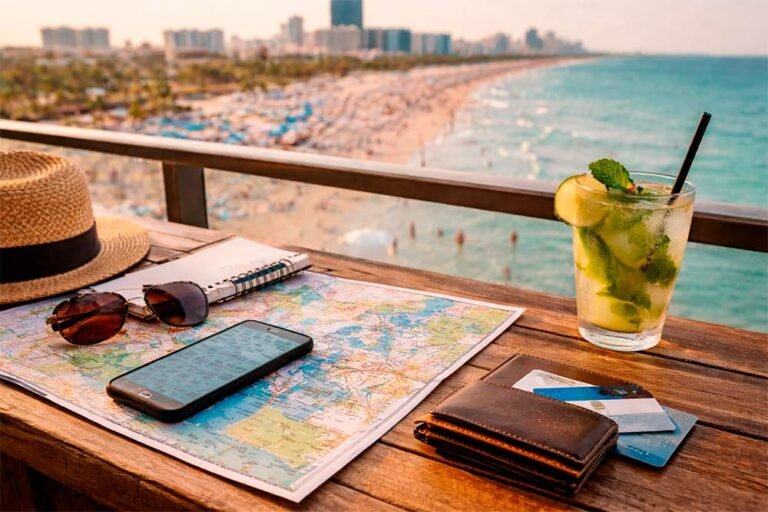

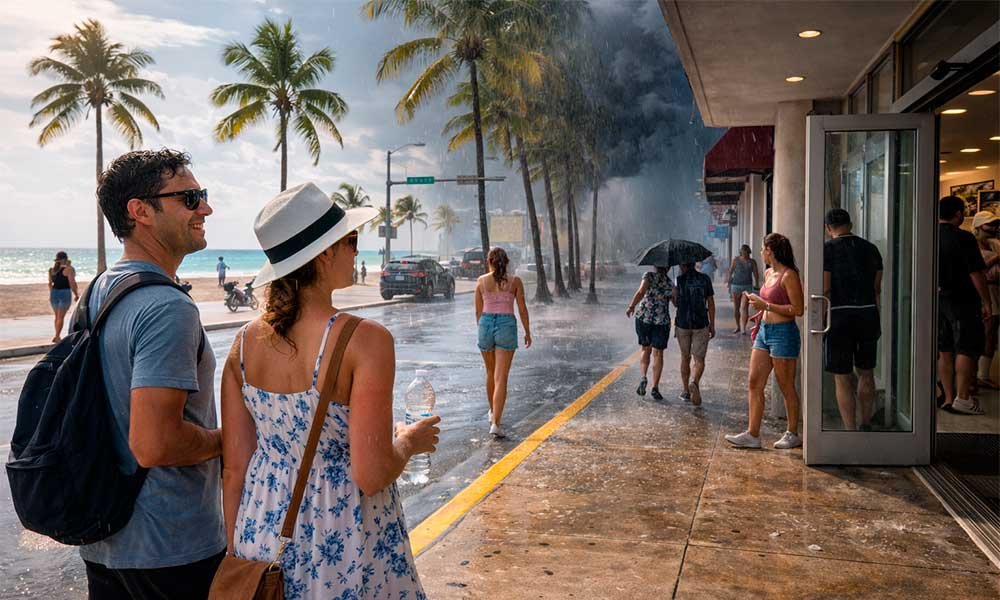
The real Miami weather mistake is treating the forecast like a small packing detail instead of a budget issue. A sunny icon can still mean brutal humidity, sudden thunderstorms, rideshare surges, canceled outdoor plans, or the need to buy something you should have packed. The real cost is not always obvious at first. It shows up when walking becomes unrealistic, when a beach day turns into paid indoor activities, when cold indoor AC forces an extra clothing purchase, or when a storm pushes your schedule into backup mode. This is why Miami weather belongs in the same planning conversation as hotels, transportation, and daily spending. You do not need to fear the climate, but you do need to build your trip around how Miami actually feels and behaves, not how it looks in vacation photos.
Most people think Miami weather is simple: hot, sunny, beach-friendly. That assumption is where the mistake begins.
Yes, Miami is warm most of the year. But the real issue isn’t just temperature. It’s intensity, unpredictability, and how quickly weather can turn into a financial problem if you’re not prepared.
This isn’t about comfort. It’s about avoiding unnecessary expenses.
The Heat Isn’t Just Heat — It’s Humidity
On paper, 90–95°F (32–35°C) doesn’t sound extreme if you’re from southern Europe, Latin America, or Brazil.
In reality, Miami’s humidity changes everything.
The “feels like” temperature (heat index) regularly climbs above 100°F (38–40°C). The air is thick. Sweat doesn’t evaporate easily. Walking 20 minutes in direct sun around Miami Beach, Wynwood, or Brickell at noon can feel exhausting.
Visitors often think:
“I’m used to summer.”
Miami summer is different.
Common consequences:
- Dehydration
- Headaches
- Fatigue
- Needing frequent Uber rides instead of walking
- Cutting outdoor plans short
That last point matters financially. If you planned a full day outdoors and end up retreating into indoor spaces (malls, cafés, attractions), you often spend more than planned.
The heat doesn’t just drain your body. It changes your spending behavior.
The AC Shock Nobody Talks About
Here’s something many tourists underestimate: indoor air conditioning in Miami can feel like winter.
Malls, restaurants, supermarkets, pharmacies, hotels, rideshares, and even the airport often maintain very cold indoor temperatures. A 20–25°F (10–15°C) drop from outside to inside is common.
It’s completely normal to walk in sweating and leave shivering.
If you didn’t pack a light layer, you’ll likely end up buying one — often in a tourist-heavy area, where prices aren’t great.
I’ve personally had to buy a jacket at night because I underestimated the contrast. Two days later, it was 95°F again. That jacket became an unnecessary expense.
This is one of the quiet Miami costs people don’t factor in.
Smart move: always pack one light layer, even in summer.
“It’s Always Summer” — Not Exactly
Miami is warm year-round, but it’s not tropical fantasy 365 days a year.
Between December and February, cold fronts occasionally push nighttime temperatures down to 50–59°F (10–15°C). Add wind near the water, and it feels colder.
You won’t need a heavy winter coat.
But assuming you’ll only need shorts and tank tops is risky.
The financial mistake here is small but common:
- Buying last-minute sweaters
- Paying inflated prices near beaches
- Being uncomfortable during evening plans
Mild winter doesn’t mean no layering required.
Hurricane Season: The Risk Most People Ignore
Official hurricane season runs from June 1 to November 30, according to the National Hurricane Center.
Peak activity typically occurs between August and October.
Important: not every storm hits Miami directly.
But tropical systems — even offshore — can cause:
- Flight delays
- Canceled boat tours
- Closed beaches
- Heavy rain for days
- Strong winds
- Temporary flooding
I’ve been in Miami while a hurricane was passing through the region. It wasn’t catastrophic. But I stayed inside my hotel for two days. Heavy rain. Strong wind. Limited movement.
If you don’t have local guidance, that situation becomes stressful quickly.
And expensive.
Possible costs:
- Extra hotel nights
- Rebooked flights
- Lost tour deposits
- Surge-priced rides
- Emergency supplies bought at convenience-store prices
If you’re traveling during hurricane season, monitor forecasts from official sources like the National Hurricane Center. Don’t rely on social media speculation.
And consider travel insurance — especially for late summer and early fall trips.
Summer Storms Are Fast and Aggressive
Even outside named storms, Miami has frequent summer thunderstorms.
These are not light drizzles.
They are:
- Sudden
- Intense
- Accompanied by lightning
- Capable of flooding intersections within minutes
Outdoor plans can collapse quickly.
Boat rentals get canceled.
Beach days end abruptly.
Walking tours become impossible.
If your itinerary is rigid and packed with prepaid outdoor activities, you risk losing money.
The smarter approach is flexibility.
Weather Affects Transportation More Than You Think
Rain changes transportation dynamics:
- Uber and Lyft surge pricing increases
- Traffic worsens
- Public transport becomes slower
- Parking garages fill faster
- Flood-prone streets may temporarily close
If you’re deciding whether you need a car, weather plays a role. In extreme heat or heavy rain, walking becomes unrealistic.
That often shifts your spending toward rideshares.
Weather indirectly impacts your transportation budget.
The Real Cost of Underestimating Miami’s Climate
Most travelers don’t lose money in dramatic ways.
They lose it in small, accumulated expenses:
- $40–$80 for a jacket
- $20 for an overpriced umbrella
- $60 surge ride during a storm
- $150–$300 extra hotel night
- Lost attraction tickets
- Rebooking fees
It adds up quietly.
The mistake isn’t dramatic. It’s gradual.
How to Plan Realistically (Without Overthinking It)
You don’t need to avoid Miami.
You need to prepare correctly.
Smart preparation checklist:
- Pack breathable clothing
- Bring one light jacket or long-sleeve layer
- Use high-SPF sunscreen
- Stay hydrated constantly
- Avoid scheduling every day around outdoor exposure
- Have at least one indoor backup activity
- Monitor forecasts if traveling June–November
- Consider travel insurance during hurricane season
Miami rewards flexibility.
It punishes rigid expectations.
Final Reality Check
Miami is incredible — beaches, diversity, nightlife, food, shopping.
But it’s not a simple climate.
It’s intense.
It’s humid.
It’s sometimes disruptive.
And it absolutely influences how much you spend.
The real mistake isn’t the heat.
It isn’t the rain.
It isn’t hurricane season.
The mistake is assuming it won’t affect you.
Check the National Hurricane Center Before and During Your Trip
If you’re traveling between June and November, make it a habit to check the official updates from the National Hurricane Center before your trip and even during your stay.
It’s the U.S. government’s official authority for tracking tropical storms and hurricanes, and their forecasts are clear, map-based, and updated frequently.
Don’t rely on social media posts, hotel rumors, or exaggerated news headlines.
A quick check on the National Hurricane Center’s website can help you understand whether a system is actually heading toward South Florida or just being sensationalized — and that clarity alone can save you from unnecessary cancellations, panic bookings, or costly last-minute changes.