
Miami is American. Nobody needs to pretend otherwise. It uses dollars. It follows U.S. law. It sits inside Florida. Its airports, roads, banks, courts, schools, police departments, taxes, and property records all belong to the American system.
But spend more than a weekend here and the obvious starts to show. Miami does not feel like the America many visitors expect.
Not because it is fake. Not because it is “less American.” And not because of some lazy postcard idea about Latin music, palm trees, Cuban coffee, and South Beach nightlife.
Miami feels different because immigration did not simply influence the city. Immigration built the Miami people actually experience: the language, the food, the work rhythm, the neighborhood identities, the politics, the service economy, the family networks, the money flows, and even the way people read a restaurant bill.
And now the harder truth: the city built by immigrants is becoming harder for many immigrants — and many ordinary workers — to afford.
That is the real Miami story hiding behind the skyline.
The Reality Check: Miami Is Not Just “Diverse”
A lot of U.S. cities call themselves diverse. In Miami, that word is too soft.
Miami-Dade County is not just a place with immigrant communities. It is a county where immigrant life is close to the center of daily life.
According to U.S. Census QuickFacts, 54.5% of Miami-Dade residents are foreign-born. Across the United States, the figure is 14.1%. In Miami-Dade, 75.3% of people age 5 and older speak a language other than English at home. Nationally, that figure is 22.3%.
| Reality | Miami-Dade | United States |
|---|---|---|
| Foreign-born residents | 54.5% | 14.1% |
| Other language spoken at home | 75.3% | 22.3% |
That table explains why Miami can feel familiar and foreign at the same time.
In many American cities, immigration is one layer of the local story. In Miami, immigration is the base layer. You hear it at Publix. You see it in Doral restaurants. You feel it in Little Havana politics. You notice it in Hialeah businesses, Little Haiti churches, Brickell service jobs, Coral Gables professional offices, and the quiet family networks that often matter more than anything you can find on Google Maps.
So when someone asks, “Is Miami still America?” the honest answer is simple:
Yes. But Miami is one of the least typical versions of America you can visit.
The Math: The Real Miami Pressure Formula
Miami’s identity is cultural. But Miami’s pressure is financial.
Here is the formula that explains why the city feels exciting for visitors, profitable for luxury investors, and exhausting for regular workers:
Real Miami Pressure = Housing Cost + 7% Sales Tax + Tips + Service Charges + Transportation + Insurance + Legal Uncertainty + Income Gap
That is not theoretical.
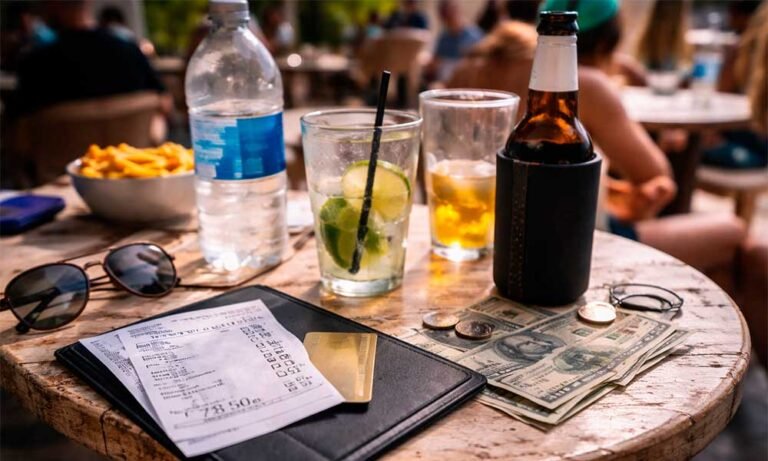
A $100 dinner in Miami is rarely a $100 dinner.
| Starting bill | Common add-ons | Real total |
|---|---|---|
| $100 | 7% sales tax + 20% tip | About $127 |
| $100 | 20% service charge + tax | About $128+ |
| $100 | Tax, tip, parking | Often $140+ |
Miami-Dade’s combined sales tax rate is generally 7%, and Florida law requires restaurants to disclose operations charges and separately show gratuity, operations charges, and sales tax on receipts when those charges apply.
That matters because Miami has a habit of hiding the full price until you are already inside the transaction.
- The hotel rate looks manageable. Then comes the resort fee.
- The restaurant looks reasonable. Then comes the service charge.
- The neighborhood looks close. Then comes the rideshare surge.
- The condo looks profitable. Then come insurance, maintenance, repairs, and special assessments.
- The city looks glamorous. Then you realize many of the people keeping it running live far from the glamour.
This is where immigration, money, and daily life meet.
Miami is not expensive only because rich people moved in. It is expensive because the city runs on layers of labor, land pressure, insurance pressure, tourism demand, global capital, and local wages that often do not match local prices.
Miami Was Built by Immigration, Not Just Influenced by It
Miami did not become this way by accident.
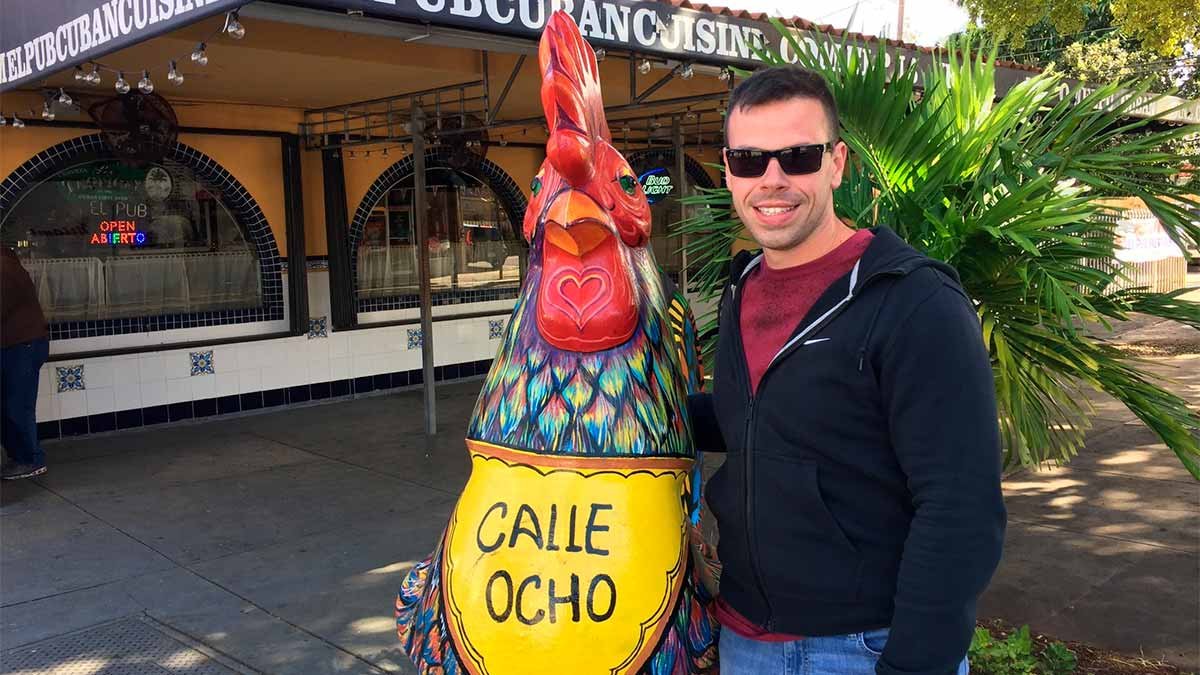
The Cuban exile story changed the city after the 1960s. But that story is not only about nostalgia, cafecito, Versailles, or Calle Ocho.
It is about people arriving after political rupture and building new lives with urgency. It is about banks, small businesses, Spanish-language media, radio, family money, anti-communist politics, real estate, and a Cuban-American identity powerful enough to change the direction of an American city.
That is why Little Havana is not just a tourist stop. It is memory, politics, business, and performance at the same time.
But Miami did not stop with Cuba.
Haitian, Colombian, Venezuelan, Nicaraguan, Dominican, Brazilian, Argentine, Peruvian, Honduran, Mexican, and other communities added more layers. Some people arrived with capital. Some arrived with professional degrees that did not transfer cleanly. Some arrived with family already here. Some arrived after violence, economic collapse, dictatorship, instability, or simple exhaustion. Some came for opportunity. Some came because staying home stopped being a real option.
No group is one story.
That is why the phrase “Latin Miami” can be useful, but also lazy. Miami is not Latin in one simple way. It is Cuban in some rooms, Venezuelan in others, Haitian in others, Colombian in others, Brazilian in others, Argentine in others, and mixed in ways that do not fit a travel brochure.
The city is not a clean cultural label. It is a stack of arrivals.
Spanish Is Not Decoration Here
In some U.S. cities, Spanish is treated like a second layer. Something visible in restaurants, neighborhood signs, or specific parts of town.
In Miami, Spanish is often part of how the city gets things done.
You hear it in real estate offices, medical clinics, restaurants, banks, construction crews, beauty salons, legal offices, supermarket aisles, political ads, condo conversations, and private WhatsApp groups where half the city seems to conduct business before anything appears on a website.
For visitors, Spanish may feel like atmosphere.
For residents, it is practical.
It can help you rent an apartment, hire a contractor, order food, deal with a mechanic, understand a bill, talk to a landlord, find a doctor, or avoid getting treated like the least informed person in the room.
That is one reason Miami can be disorienting for people expecting a standard U.S. city with better weather.
In Miami, English may be the official language of many systems. But it is not always the emotional language of the room.
The City Has Two Migration Stories Now
Miami’s older story is international immigration.
Cuban exiles. Caribbean arrivals. Latin American families. Asylum seekers. Entrepreneurs. Restaurant workers. Domestic workers. Contractors. Students. Small business owners. People using Miami as a bridge between the United States and the rest of the hemisphere.
The newer story is different.
It is domestic wealth.
People and companies from New York, Chicago, California, and other expensive U.S. markets moved money, headquarters, homes, and tax strategies into South Florida. Citadel now lists Miami as its global headquarters at 830 Brickell Plaza, and its planned Brickell headquarters has become a symbol of Miami’s financial rebranding.
These two migration stories do not change the city in the same way.
| Migration force | What it changes | Where you feel it |
|---|---|---|
| International immigration | Language, labor, food, family networks | Little Havana, Hialeah, Doral, Little Haiti |
| Domestic wealth | Real estate, luxury demand, finance jobs | Brickell, Miami Beach, Coconut Grove |
| Both together | Prices, politics, traffic, class pressure | Almost everywhere |
The New Yorker buying in Brickell is not changing Miami the same way a Cuban exile family, a Venezuelan asylum seeker, a Haitian worker, a Colombian restaurant owner, or a Brazilian contractor did.
That is not an insult. It is a different kind of pressure.
One force often builds the everyday city.
The other often reprices it.
The Citadel Effect vs. the Little Havana Reality
There are at least two Miamis now.
One Miami is sold to hedge funds, founders, tax refugees, luxury buyers, private school families, and people who see Florida as a cleaner financial spreadsheet. This is the Miami of glass towers, waterfront renderings, members-only wellness clubs, high-end restaurants, private banking, and condos marketed almost like investment products.
The other Miami is held together by immigrant workers, small businesses, family kitchens, service labor, local churches, older apartment buildings, long commutes, informal referrals, and people who know exactly how expensive the city has become because they feel it every month.
You can see the split without a research report.
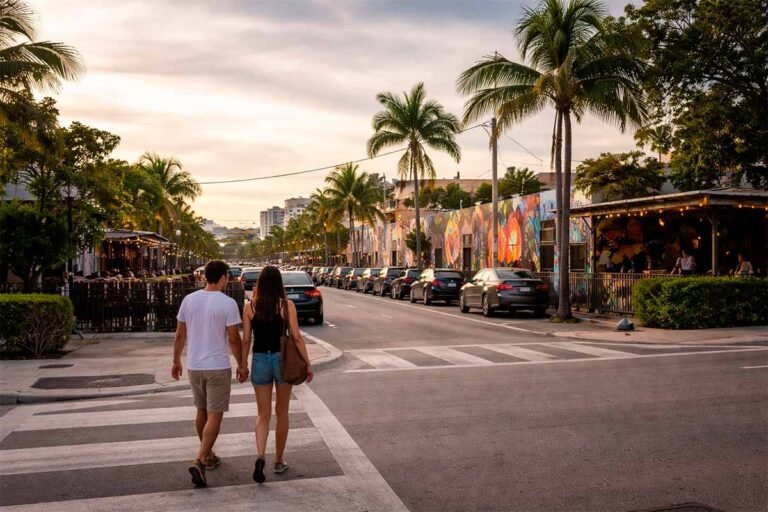
Start in Brickell, where money has vertical confidence. Drive west toward Calle Ocho/SW 8th Street, and the city becomes older, louder, more political, more immigrant, more lived-in. Keep going toward Flagler Street, Doral, Hialeah, Sweetwater, or Little Haiti, and Miami stops looking like a luxury postcard and starts looking like a working immigrant economy under pressure.
That is the real city.
Miami’s luxury image depends on people who often cannot afford to live near the luxury they maintain.
The Hidden Labor That Makes Miami Look Easy
Miami sells ease.
The pool is clean.
The hotel room is ready.
The valet opens the door.
The condo lobby smells expensive.
The restaurant turns tables quickly.
The landscaping looks controlled.
The event happens on time.
The short-term rental gets cleaned before the next guest arrives.
That ease is labor.
And in Miami, a lot of that labor is immigrant labor: documented, undocumented, temporary, permanent, newly arrived, second-generation, bilingual, underpaid, ambitious, tired, or all of the above.
This is where the immigration debate stops being abstract.
If immigration slows, Miami does not simply become “less crowded.” The pressure shows up in places visitors and residents actually feel.
| Where people feel it | What may sit underneath |
|---|---|
| Higher restaurant prices | Labor, rent, insurance, food costs |
| Hotel service gaps | Staffing pressure |
| Expensive repairs | Skilled labor shortage |
| Slower construction | Labor and material costs |
| Higher condo fees | Insurance, maintenance, repairs |
The city can talk about immigration like a political issue, but the bill arrives through ordinary life.
- A dinner costs more.
- A repair takes longer.
- A hotel runs leaner.
- A condo project gets delayed.
- A small business cuts hours.
- A worker moves farther away.
Miami does not run on fantasy. It runs on people.
Immigration Courts Are Part of Miami’s Reality Too
Travel content usually avoids this part because it does not fit the beach image.
But you cannot understand Miami only through restaurants, hotels, real estate, and nightlife. You also have to understand immigration courts, asylum cases, deportation proceedings, legal waiting, work permits, attorney fees, fear, and families building lives while the legal system moves slowly.
Miami-Dade County had 143,817 pending deportation cases in February 2026, the highest number of any U.S. county, according to TRAC.
That number is not a political slogan. It is a local reality.
Behind some restaurant kitchens, rideshare trips, construction sites, cleaning crews, delivery routes, and family businesses, there may be someone waiting for a hearing, a work authorization, an asylum decision, or a lawyer they can barely afford.
That uncertainty affects how people work, where they live, what they spend, whether they open businesses, and whether they feel safe planning five years ahead.
For visitors, Miami may look like a city of beaches and shopping.
For many residents, it is also a city of paperwork.
The Recent Slowdown Changes the Story
For years, the Miami assumption was simple: people keep coming.
That is no longer the whole story.
Miami-Dade lost an estimated 10,115 residents between July 2024 and July 2025, one of the largest county-level population drops in the country, according to reporting based on Census data. Rising housing costs, stagnant wages, and slower migration are part of the pressure.
That does not mean Miami is dying. That would be a lazy take.
Miami can lose working families and still attract wealth. It can lose residents and still build luxury towers. It can price out teachers, cooks, drivers, cleaners, nurses, and service workers while still selling itself as a global success story.
That is the strange part.
A city can be booming for capital and breaking for ordinary people at the same time.
The Tourist Trap Scenario vs. the Smart Move Scenario
Here is how two people can visit the same Miami and experience two different cities.
Scenario 1: The Tourist Trap Version
A first-time visitor books South Beach because it looks like the obvious Miami choice.
The room rate looks high but manageable. Then the real bill starts.
- Resort fee.
- Valet.
- $24 cocktails.
- Automatic service charge.
- Rideshare surges.
- A restaurant bill where tipping twice is easier than asking an uncomfortable question.
- Traffic across Biscayne Bay that turns “we’ll just go to Brickell” into a bad plan.
The visitor hears Spanish everywhere and treats it like background music. They see Little Havana as a stop between lunch and photos. They think Brickell is “modern Miami” and South Beach is “real Miami.” They leave saying Miami is fun but overpriced.
They are not completely wrong.
But they paid for the most expensive, least informed version of the city.
Scenario 2: The Smart Move Version
A sharper visitor treats Miami as several different cities sharing one map.
They understand that South Beach, Brickell, Doral, Hialeah, Little Haiti, Wynwood, Coconut Grove, Coral Gables, Sunny Isles, and Aventura do not operate the same way.
They stay where the logistics match the trip, not where the postcard tells them to stay.
They use Metromover in Downtown and Brickell when it actually helps. They know the City of Miami trolley can be useful in specific areas, with routes serving places such as Brickell, Biscayne, Coral Way, Little Havana, Little Haiti, Coconut Grove, Flagami, and others — but they also know the City of Miami trolley does not go to Miami Beach.
They read the bill before adding another tip.
They know that a service charge is not a personality test. It is a charge.
They understand that Doral is not just “far.” It is part of the Venezuelan and Latin American business reality of Miami. They know Little Havana is not a theme park. They know Hialeah is not a joke. They know Brickell is not the whole city.
They still spend money.
But they spend with less illusion.
That is the Miami The Hype approach: not avoiding Miami, just refusing to buy the fake version.
What Visitors Actually Notice
Most visitors will never read Census tables before landing at Miami International Airport.
They notice the truth in smaller ways.
They notice Spanish is more useful than expected.
They notice a restaurant in Doral can feel closer to Caracas than Orlando.
They notice Brickell feels more like a money district than a beach city.
They notice Miami Beach prices can feel disconnected from the worker economy that supports them.
They notice Little Havana carries real political memory beneath the tourist layer.
They notice the city changes quickly from one neighborhood to the next.
They notice that “Miami” is not one thing.
- South Beach sells fantasy.
- Brickell sells money.
- Doral sells networks.
- Hialeah sells survival and ownership.
- Little Haiti carries memory and pressure.
- Coconut Grove sells old wealth and shade.
- Coral Gables sells order.
- Sunny Isles sells vertical money by the water.
- Aventura sells malls, condos, and convenience.
None of these places fully explains Miami alone.
Together, they show why the city feels so hard to define.
- Miami or Los Angeles: Better Shopping, More Luxury, Better Beach Vibe?
The Cost-Benefit Reality: What This Means for Your Wallet
Miami’s immigration story is not only cultural. It affects what you pay.
A city with global money, limited prime land, high insurance costs, tourism demand, luxury branding, service dependency, legal uncertainty, and long commutes will not behave like a cheap beach town.
| Cost area | What to watch | Why it matters |
|---|---|---|
| Restaurants | Tax, tip, service charge | Bills rise fast |
| Hotels | Resort fee, valet, location | Cheap rates can mislead |
| Transportation | Parking, rideshare, tolls | Distance gets expensive |
| Housing | Rent, insurance, fees | Workers move farther out |
| Services | Cleaning, repairs, labor | Shortages raise prices |
The lesson is simple: do not judge Miami by the sticker price.
A $180 hotel room can become a $260 night after fees and parking.
A $100 dinner can become $127 before parking.
A “walkable” stay can become rideshare-heavy if the neighborhood does not match the itinerary.
A cheap rental car can become expensive once parking enters the picture.
Miami is not always overpriced.
But Miami is very good at showing you one price and making you pay another.
Is Miami Still America?
Yes.
But it is not the America many visitors expect.
Miami is one of the clearest examples of what America becomes when immigration, money, language, inequality, tax strategy, legal uncertainty, climate pressure, tourism, and global desire all collide in one coastal city.
It is not less American because it feels Latin, Caribbean, bilingual, immigrant-built, or politically intense. That is too simple.
Miami may be one of the most honest mirrors of America right now: a city built by people trying to start over, increasingly repriced by people who can afford to arrive late.
The real question is not whether Miami is still America.
The real question is whether the new Miami still has room for the people who made Miami work.
FAQ
Why does Miami feel so different from the rest of the United States?
Miami feels different because immigration shaped its language, neighborhoods, food, labor market, politics, small businesses, and daily life more deeply than in most U.S. cities. Miami-Dade’s foreign-born population share is far above the national average.
Is Miami more Latin America than America?
Miami is legally and politically American, but many parts of the city feel strongly connected to Latin America and the Caribbean. That shows up in Spanish-language business, food, media, family networks, politics, and neighborhood identity.
Is Miami becoming too expensive for immigrants?
For many working- and middle-class immigrants, yes. Housing, insurance, transportation, restaurant costs, service fees, and long commutes make Miami harder to afford, especially for people working in hospitality, construction, cleaning, delivery, restaurants, and other service-heavy jobs.
Is immigration still important to Miami’s economy?
Yes. Immigration remains central to Miami’s labor force, small business culture, food, language, hospitality, construction, service economy, and neighborhood identity. Even when wealthy domestic migration gets more attention, immigrant labor and immigrant-owned businesses still help keep the city functioning.