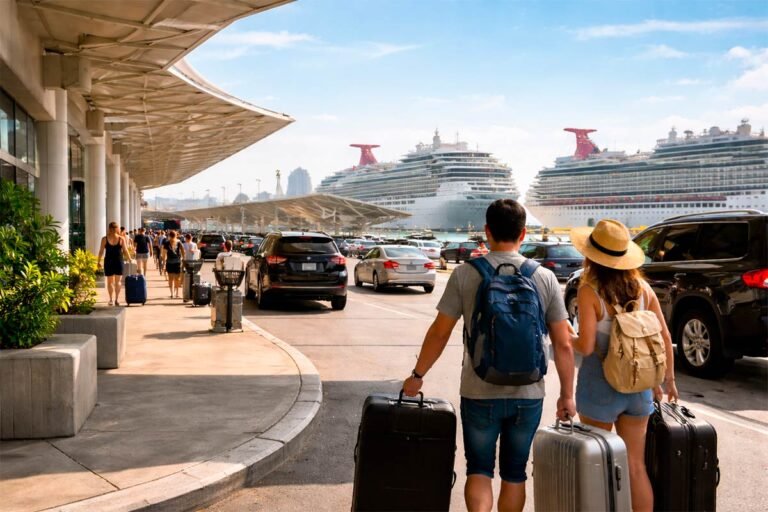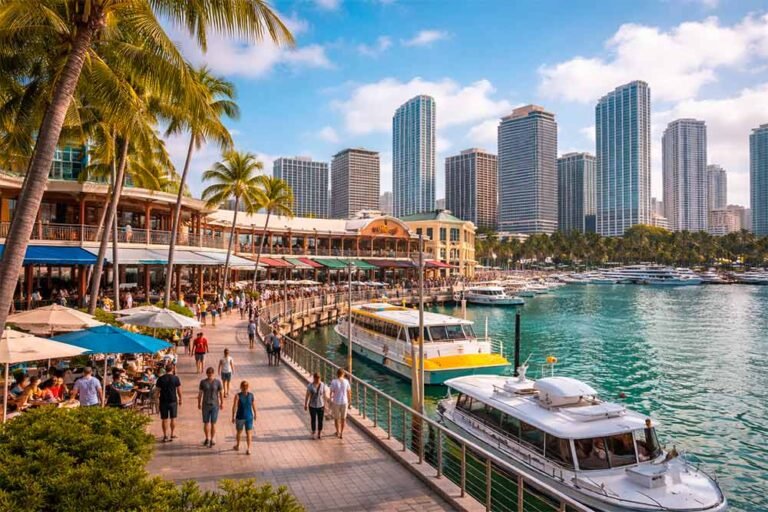

A realistic Miami nightlife budget requires factoring in multi-layered regional expenses that extend far beyond baseline ticket entry fees. Grouping standard venue dynamics across prime districts like Brickell, Wynwood, and South Beach reveals that an average individual night out typically scales from $150 to upwards of $600 depending on consumption and transportation choices. Navigating these entertainment corridors efficiently requires a firm understanding of structural venue line items, including mandatory Florida sales tax, automatic 18% to 22% venue service charges, and fluctuating local infrastructure dynamics. Valet parking zones routinely spike significantly during peak weekend hours, while late-night zone pricing changes the financial viability of simple point-to-point transit.
Mitigating these systemic financial outlays involves executing precise operational strategies, mapping out exact arrival timelines, and carefully auditing itemized receipts at the conclusion of the evening to counter unannounced venue surcharges or predatory parking fees across Miami-Dade county.
Every city sells a fantasy. Miami sells it so hard you forget to do the math. Then the card statement shows up with a $40 cover that somehow became $80 at the door, a drink minimum nobody mentioned, and a 4 a.m. Uber that cost more than the club itself. None of that is bad luck. The door policy, the ticket tiers, the promoter standing on the corner — all of it is built to take more money from people who don’t know how the system works. And the people who’ve figured it out aren’t the bouncers. They’re the tourists who already got burned last weekend.
That Guy on the Corner Isn’t Working for You
Walk three blocks on South Beach and someone will offer you “free entry” or “VIP access” to a club he hasn’t even named yet. It sounds like a connection. It’s a commission. He gets paid when you show up, not when you have a good night, and that one fact explains everything that happens after.
I’ve seen the same story play out enough times that it stopped surprising me: pay a deposit up front, get promised a VIP table, show up to find the guy ghosted your texts, and end up in the regular line anyway — paying full cover on top of whatever you already handed him. There’s a Tripadvisor review of a South Beach club that nails this almost exactly: a promoter named “Randy” took payment, promised VIP placement, then went dark once the group actually arrived.
Here’s the part that should end the debate for good — E11EVEN’s own ticket policy says, in writing, that tickets are only valid through Tixr.com, and that third-party sellers, Eventbrite included, let random promoters circulate tickets that won’t get you in. The club is telling you directly: anything bought off-platform is your problem, not theirs.
My rule, and it’s not complicated:
Space sells through DICE. LIV and E11EVEN sell through Tixr. If what you’re being offered doesn’t trace back to one of those two, or isn’t on the club’s own site, you’re not getting a deal — you’re placing a bet, and your cover charge is the stake.
Why “Official” Actually Matters Here
A real ticket isn’t just proof you paid the right price. It’s a different line. Platform tickets get their own dedicated entry, separate from general admission. A promoter’s printed slip, a screenshotted QR code, a “your name’s on the list” promise with no platform behind it — that puts you in the exact same line as the people who showed up with nothing. You paid for a shortcut that was never there.
What a Night Out Actually Adds Up To
The cover charge is the number clubs put on the marquee. It’s also the smallest line on the receipt. Here’s a realistic breakdown for a normal weekend — no Art Basel, no Ultra, no headliner pushing everything into surge pricing.
| Cost Category | Budget Move | Standard Night | Table Service |
|---|---|---|---|
| Entry | $20–$40 (advance, off-peak) | $40–$80 (weekend GA) | Often waived |
| Drinks (3) | $45–$60 | $75–$105 | Bottle minimum: $450–$1,000+ |
| Auto-gratuity | Built into above (18–20%) | Built into above | 18–20%+ on the minimum |
| Ride home (4 a.m.) | $15–$25 (walk first — more below) | $30–$60 (surge zone) | Usually arranged separately |
| Realistic total | $80–$125 | $145–$245 | $550–$1,200+, split across the group |
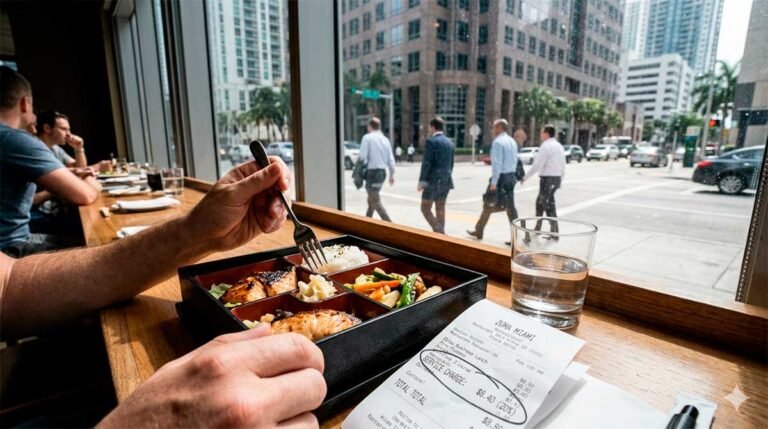
The auto-gratuity line is the one I see people miss every time. A $25 cocktail isn’t a $25 charge. Club bars run on the same 18-20% gratuity standard as the rest of US hospitality, and it’s often added to your tab automatically, no decision required from you. Two drinks at the bar and you’ve already cleared $60 before you’ve ordered a third.
Want to run your own number before you leave the hotel? Here’s the formula:
Entry + (drinks × average price × 1.20 for gratuity) + ride home = your real cost
Takes five minutes. Turns “this should be cheap” into a number you can actually defend to yourself the next morning.
What the Door Is Really Checking
Dress code gets talked about like it’s a style tip. It’s a filter, and half the rules aren’t written down anywhere you’ll see before you’re already standing in line.
- Space has the loosest reputation of the three, but the rules that exist are firm: no footwear without a back strap (that kills sandals and backless heels), no gym shorts or athletic wear. The “anything goes, it’s underground” thing is mostly true — except for those two lines, and showing up in the wrong shoes is the single most common reason I’ve watched people get stuck negotiating at the door.
- E11EVEN sits in the middle: collared shirt, jeans, real shoes clears it for most guys. Sneakers and jerseys don’t.
- LIV is the strict one. Dress shoes and a collared shirt expected. Athletic wear and flip-flops are an automatic no.
| LIV | Club Space | E11EVEN | |
|---|---|---|---|
| Vibe | Mainstream, see-and-be-seen | Underground, marathon dance floor | 24-hour hybrid show/club |
| Dress code | Strict | Moderate — no backless shoes, no athletic wear | Moderate — collared shirt, no sneakers |
| Ticket platform | Tixr | DICE | Tixr |
| Where you get burned | Door pricing shifts night to night | Tiered pricing by entry time | Gratuity stacks fast at the bar |
The Group Ratio Thing Nobody Tells You
A group that’s mostly guys gets a different door than a mixed group, even holding identical tickets. It’s not posted anywhere — it’s the door staff reading the room and balancing who’s already inside against who’s still waiting. In practice: groups that skew heavily male should expect a longer hold, a higher in-person cover than the advance price suggested, or a flat no on a packed night. I’m not saying it’s fair. I am saying it’s not changing because of a blog post, so plan around it instead of arguing about it at 1 a.m.
The City Itself Is Half the Cost
Miami’s clubs sit in two completely different logistical worlds, and treating them like they’re interchangeable is where a lot of nights go sideways before anyone’s even reached the door.
Here’s the part most guides get backwards: the drive itself, late at night, usually isn’t the problem. The MacArthur Causeway and the Julia Tuttle move fine after midnight — traffic on a Saturday at 1 a.m. is nothing like traffic on a Saturday at 6 p.m. The bottleneck isn’t the road. It’s what happens after you’ve parked or stepped out at the end of the night, when every app in a three-block radius is pinging for a ride at the exact same time. That’s the part that actually costs you money, and it’s covered in detail below.
Downtown and Brickell — home to Space and E11EVEN — have something South Beach doesn’t: the Metromover. It’s actually free, no fare, no app required beyond checking when the next car shows up. The catch is the schedule. It runs roughly 5:30 a.m. to midnight, which makes it useful for getting to the club before the night really starts and completely useless for getting home at 3 a.m. It also doesn’t reach South Beach at all — so if LIV’s on your list tonight, this doesn’t help you.
The 4 a.m. Math Nobody Runs Ahead of Time
Surge pricing isn’t a glitch. It’s the system doing exactly what it’s designed to do, and it hits hardest in the exact window most nights end. A normal $15-20 ride climbing to $60-90 between 2 and 4 a.m. on a weekend isn’t the exception — it’s the pattern, because every club within a few blocks dumps into the same request pool at the same time.
Two things actually move the needle here:
Walk a block before you request the ride. The pickup zone directly outside a major club gets the worst surge multiplier because every single app in the building is pinging from the same coordinates at once. Move one block over and you’re out of the worst of it.
Or just skip the window. Leaving before 1:30 a.m., or holding out until after 4:30 once the rush clears, routinely prices at a fraction of the 2-4 a.m. peak.
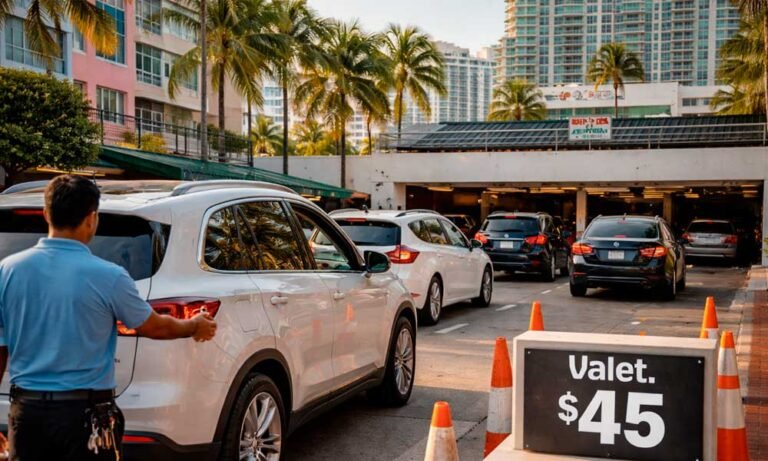
For Downtown venues specifically, here’s the one nobody talks about: street meters in the South Beach core run $2-4 an hour depending on the zone, and that adds up fast over six hours. But the city’s parking garages cap at a $20 flat daily rate — which beats both street meters and the private lots near the clubs by a wide margin if you’re staying put for the night. You have to know you’re driving before you leave the hotel, but for a group splitting one car, this is frequently the cheapest exit on the entire list.
Miami’s LGBTQ+ Nightlife: Smaller Than the Reputation Suggests
I’ll give you the version most guides won’t: Miami proper’s LGBTQ+ bar and club scene is noticeably small for a city this size. Spaces open, build a following, and close — often because of real estate pressure in neighborhoods like Wynwood, not because the business wasn’t working. A handful of long-running spots keep the scene anchored, with a strong Latin-music thread running through several of them, but the lineup turns over more than every other category of Miami nightlife.
What doesn’t turn over is Wilton Manors, about 40 minutes north. It’s its own incorporated city, with one of the highest concentrations of LGBTQ+ residents and businesses anywhere in the country, and the strip locals just call “the Drive” packs more than a dozen bars and clubs into a single walkable stretch. Park once, and the whole night happens on foot — a logistical edge South Beach and Downtown can’t touch for anyone, queer or not.
If this part of South Florida’s scene is part of why you’re here, it deserves its own breakdown, not three paragraphs buried in a club-cost guide. That’s coming as its own page — specific venues, which night to hit each one, and how the Drive’s costs actually stack up against the South Beach circuit.
Run the Numbers Before You Leave the Hotel
Miami’s nightlife system rewards exactly one thing: knowing the rules before you’re standing at the door negotiating them. Official tickets beat promoters every time — not because promoters are uniquely dishonest, but because their incentive is built around your arrival, not your night. Dress code isn’t styling advice, it’s a documented gate with real rules per venue. And the most expensive part of the night is almost never the club itself — it’s the 4 a.m. ride home, priced by an algorithm that knows exactly how few options you’ve got left at that hour.
Run the math before you go. Buy from the platform the club actually uses. Walk a block before requesting that ride. None of it takes luck. It takes five minutes most people skip.
Miami Nightlife FAQ
Are tickets from street promoters in Miami ever legit?
Sometimes, but you’re trusting one guy’s word with nothing backing it up. E11EVEN’s own policy says tickets are only valid through Tixr and specifically warns against third-party sellers like Eventbrite. If it doesn’t trace back to the club’s official platform, treat it as fake until proven otherwise.
Do Miami clubs charge automatic gratuity on drinks?
Usually, yes. Bar service follows the standard 18-20% US hospitality gratuity, and it’s often built into your tab automatically rather than left as a separate decision. Check the receipt before assuming the listed price is the final price.
Is traffic on the causeways a problem for getting to Miami clubs at night?
Not really — that’s a myth most guides repeat without checking. The MacArthur and Julia Tuttle causeways move fine late at night. The actual cost hit comes after the club, when surge pricing spikes during the 2-4 a.m. closing rush.
Is it cheaper to drive and park, or take rideshare, for Downtown clubs?
For a single night, rideshare usually wins unless you’re already driving. But if you’re staying put for several hours at Space or E11EVEN, a municipal garage’s $20 daily flat rate can beat both street meters and a surge-priced ride home — especially split across a group sharing one car.
Can the Metromover get me to Space or E11EVEN at night?
It can get you there before midnight, while it’s still running. It stops around midnight, so it won’t get you home. And it doesn’t serve South Beach at all, so it’s off the table entirely if LIV is where you’re headed.