
Ground transportation fees easily cancel budget flight discounts when traveling from Fort Lauderdale-Hollywood International Airport to downtown Miami or South Beach. Bridging this 30-mile geographic gap means navigating a regional infrastructure dominated by dynamic toll adjustments and unpredictable rideshare algorithms. During peak weekday commuter windows from 4:00 PM to 7:00 PM, or during morning cruise ship offloadings at Port Everglades, standard rideshare rates regularly double, transforming a standard $50 fare into a $110 expense.
Regional rail options present clear financial trade-offs; while a commuter train provides low-cost transit for a solo backpacker, the multi-passenger ticketing structure of higher-speed trains quickly penalizes traveling groups. Families or parties of three or more will discover that booking a direct flight to Miami International Airport eliminates complex multi-system transfers and shields the travel budget from the volatile pricing structures of the Interstate 95 express corridors.
Low-cost carriers love to advertise rock-bottom fares to Fort Lauderdale-Hollywood International Airport (FLL) as an easy alternative to Miami International Airport (MIA).
On paper, saving $50 or $100 on a domestic flight looks like an obvious win, but the math rarely holds up. FLL sits exactly 30 miles (48 km) north of Downtown Miami and roughly 33 miles (53 km) north of South Beach. The moment you step off the plane, you enter a separate transit market governed by South Florida highway congestion, dynamic toll systems, and volatile rideshare pricing. If you do not calculate the cost of bridging that 30-mile gap before booking, your flight savings will likely disappear into an electronic toll transponder or a peak-hour Uber surge.
The Mathematical Breakdown of the FLL Price Illusion
To determine if an FLL flight actually saves you money, you must bypass the ticket price and look at the total cost of arrival. A standard flight booking relies on a simple equation: price versus schedule. A smart arrival strategy uses a more rigorous financial formula:
Real Arrival Cost = Flight Ticket Price + Base Ground Fare + Dynamic Toll Fees + Surge/Peak Premiums + Time Disutility Cost
The last metric—Time Disutility Cost—represents the dollar value of the hours you spend sitting in highway gridlock instead of sitting at a beachside restaurant or attending a business meeting. If you value your vacation or professional time at a modest $30 an hour, spending an extra two hours navigating regional train transfers from Broward County to Miami-Dade County adds a hidden $60 cost to your itinerary.
When you fly directly into MIA, a rideshare to Brickell, Downtown, or Coral Gables is a short, localized trip. A ride to South Beach requires crossing a single causeway. When you land at FLL, your transportation costs are directly tied to regional commuter infrastructure, making your wallet highly vulnerable to local traffic bottlenecks.
Rideshare Surge Realities on the I-95 Corridor
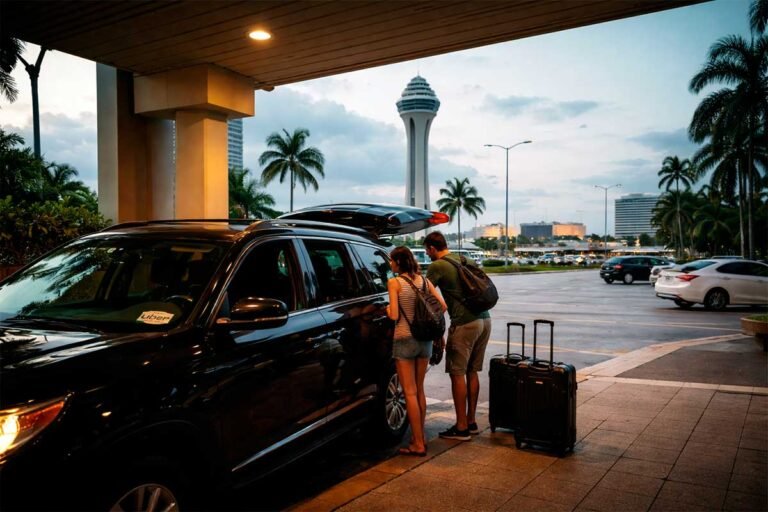
Taking an Uber or Lyft from FLL down to Miami is not a typical airport run; it is an inter-city highway journey. Under ideal conditions—such as a Tuesday morning at 10:30 AM—a standard UberX from FLL to South Beach costs between $45 and $60.
However, South Florida ground transit rarely operates under ideal conditions. Rideshare algorithms respond aggressively to two local disruptions:
1. The Afternoon Commuter Rush
Between 4:00 PM and 7:00 PM on weekdays, Interstate 95 transforms into a slow-moving parking lot. As demand for drivers spikes across both Broward and Miami-Dade counties, standard rideshare rates from FLL to Miami regularly surge by 50% to 100%. A trip that costs $50 at noon easily becomes a $95 to $120 fare at 5:30 PM.
2. The Port Everglades Cruise Influx
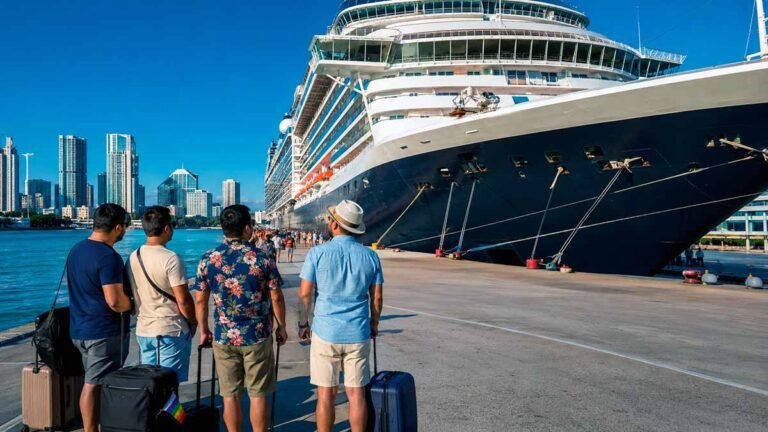
Fort Lauderdale is home to Port Everglades, one of the busiest cruise ports on earth. On Friday, Saturday, and Sunday mornings, massive cruise ships dock and unload upwards of 10,000 to 15,000 passengers simultaneously. A massive percentage of these travelers head straight to FLL to catch flights or hail rides down to Miami hotels. This creates an immediate, localized shortage of rideshare drivers in the FLL area, triggering immediate price surges that hit regular airline passengers the hardest.
Furthermore, rideshare apps pass all toll costs directly to the passenger. Drivers traveling south from FLL almost exclusively utilize the I-95 Express Lanes to avoid total gridlock. These lanes use dynamic congestion pricing, meaning the toll rate increases as the lanes get crowded. During peak traffic hours, the toll alone can add $10 to $25 to your final Uber or Lyft bill, a charge that appears silently on your digital receipt.
Rail Infrastructure: Tri-Rail vs. Brightline Economics
If you want to bypass highway traffic, South Florida offers two distinct rail networks that connect Fort Lauderdale to Miami. They operate on completely different business models, and neither connects seamlessly to the FLL airport terminals without intermediate transport.
| Transport Mode | Average Cost (Per Person) | Real Time Transit (Door-to-Door) |
| UberX / Lyft | $45 – $120+ (Group total) | 45 to 100 minutes |
| Tri-Rail | $3.75 – $5.00 + local city fare | 120 to 150 minutes |
| Brightline | $27.00 – $45.00 + Uber connection | 75 to 90 minutes |
The Tri-Rail Commuter Reality
Tri-Rail is the region’s legacy commuter train. It is highly affordable, with a one-way weekend ticket costing $5.00 or less, but it requires a high tolerance for logistical friction.
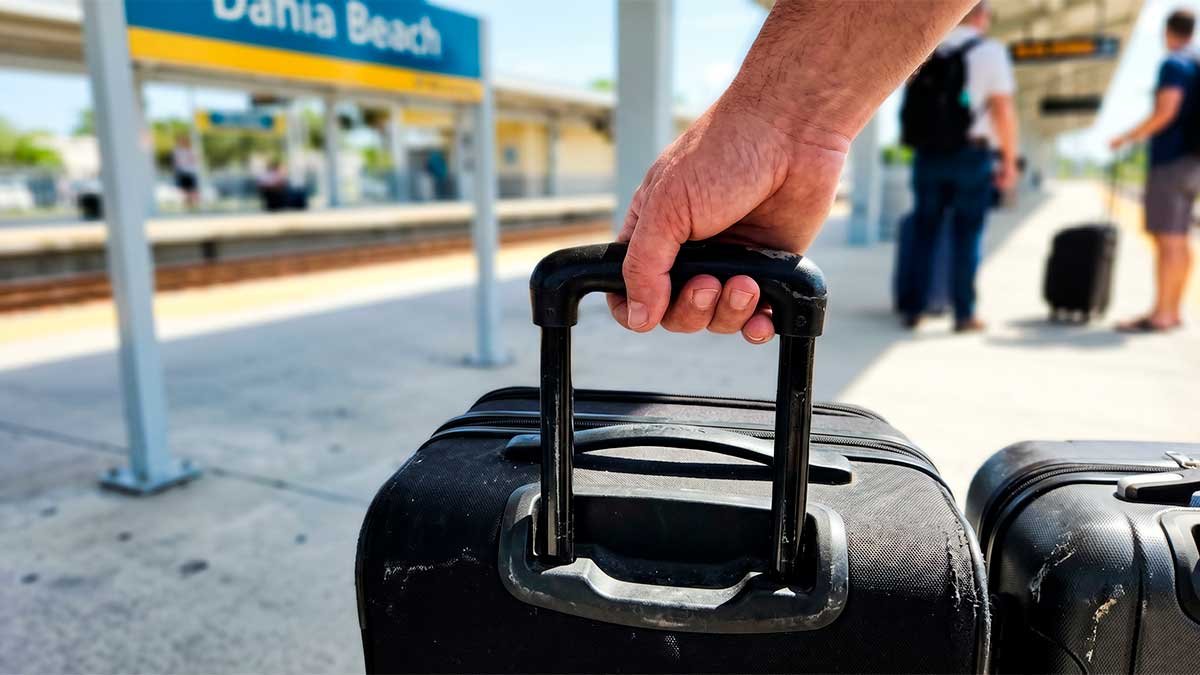
First, you must walk out of the FLL terminal and wait for the free Tri-Rail shuttle bus, which transfers you to the Dania Beach/Fort Lauderdale Airport Station. This shuttle operates on a fixed schedule and can take 15 to 25 minutes depending on traffic.
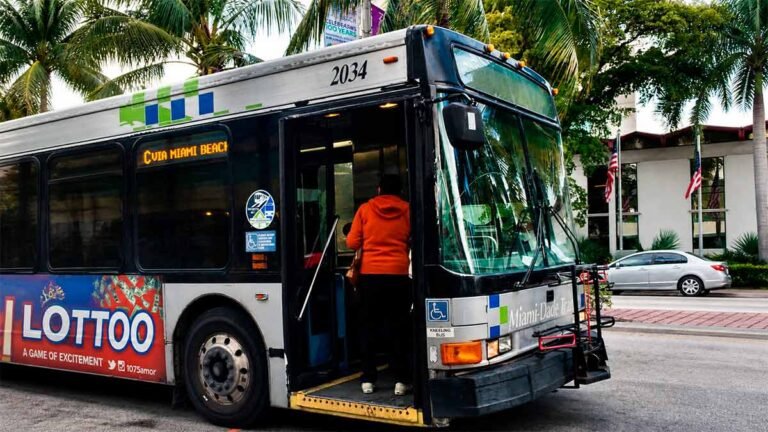
Next, you board the Tri-Rail train and ride south for roughly 40 minutes to the Miami Airport Station (located adjacent to MIA). Once you arrive there, you are still not at your final destination. If your hotel is in Brickell, you must transfer to the Metrorail Orange Line. If your hotel is in South Beach, you must either wait for a local county bus or hail an Uber to take you across the Mac Arthur or Julia Tuttle causeway.
For a solo traveler with a single backpack, Tri-Rail is an incredible money saver. For a couple or a family carrying large rolling suitcases, moving through three separate transit systems in the South Florida humidity is exhausting and inefficient.
The Brightline Group Math Trap
Brightline is a premium, higher-speed rail service featuring modern stations, pristine cars, and onboard amenities. It runs from the Fort Lauderdale Station in Downtown Fort Lauderdale to MiamiCentral Station in Downtown Miami. The train ride itself takes exactly 30 minutes.
The trap lies in the pricing structure. Brightline is billed per individual ticket. A standard “Smart” one-way fare between Fort Lauderdale and Miami typically runs between $15 and $30 depending on how far in advance you purchase it.
Before booking, you must calculate the total group cost:
- The Solo Traveler: A $20 Brightline ticket plus a $12 Uber from FLL airport to the Downtown Fort Lauderdale station equals $32. This easily beats an off-peak $55 Uber straight from FLL to Miami.
- The Group of Four: Four Brightline tickets at $20 each equals $80. Add the $12 Uber to get to the Fort Lauderdale train station, and your total is $92 before you have even arrived in Miami. At this price point, a direct UberX or UberXL straight from the FLL terminal curb directly to your destination hotel is significantly cheaper, more convenient, and completely eliminates the need to haul heavy luggage through a train terminal.
Two Real-World Arrival Scenarios
To visualize how these hidden numbers play out in real life, consider these two distinct travel profiles landing on the exact same afternoon.
Scenario A: The Tourist Trap Flight Savings
A couple traveling for a long weekend hooks a flight to FLL that saves them exactly $40 per ticket ($80 total savings for the party) compared to a direct flight to MIA. They land at FLL on a Thursday afternoon at 5:15 PM with two checked bags.
They open their rideshare app at the curb and discover that a heavy rainstorm, combined with peak commuter rush hour, has triggered a surge. A ride to their hotel on Collins Avenue in South Beach is quoted at $84. They accept the fare because they are tired.
The driver takes the I-95 Express Lanes to bypass a major accident near the Golden Glades Interchange. The ride takes 1 hour and 35 minutes. At checkout, the dynamic toll fee adds $14 to the fare. They tip the driver $10 for handling their heavy luggage.
- Initial Flight Savings: +$80
- Ground Transportation Gained: -$108
- Net Financial Result: -$28 (An actual financial loss)
- Time Lost: 1.5+ hours spent breathing exhaust fumes on the highway.
Scenario B: The Calculated Off-Peak Arrival
A solo professional flies into FLL because the flight matches their schedule perfectly, saving them $60 over the MIA option. They land on a Tuesday at 11:00 AM.
Knowing that midday highway traffic is mild but rideshare rates are still a baseline of $50, they choose a hybrid rail strategy. They take a quick $11 Uber from FLL airport to the Fort Lauderdale Brightline station. They buy a $22 Smart ticket for the 11:45 AM departure. Onboard, they utilize the complimentary Wi-Fi to answer emails and finish a project during the 30-minute transit window.
They pull into MiamiCentral Station in Downtown Miami at 12:15 PM. From there, they walk directly to the free Miami Metromover loop, riding it three stops to their corporate office building in Brickell for $0.
- Initial Flight Savings: +$60
- Ground Transportation Gained: -$33
- Net Financial Result: +$27 cash kept in pocket.
- Time Utilization: 100% productive, zero minutes spent stuck in gridlock.
How to Audit Your Flight Selection Before Buying
To protect your travel budget from hidden South Florida transit fees, use this simple checklist before inputting your credit card info on an airline website:
- Check the Arrival Time: If your plane touches down at FLL between 7:00 AM and 9:00 AM, or between 4:00 PM and 6:30 PM on a weekday, ignore the ticket savings. The I-95 commuter traffic and rideshare surge pricing will easily wipe out any discount under $75.
- Count Your Companions: If you are traveling with three or more people, ground transportation from FLL to Miami will almost always be more expensive or incredibly inconvenient. Book the direct flight to MIA.
- Map the Final Destination: If your accommodation is in North Miami, Sunny Isles, or Aventura, flying into FLL is actually highly efficient, as these neighborhoods sit right on the border of Broward County. If your destination is South Beach, Brickell, Coconut Grove, or Coral Gables, MIA is your logistical anchor point. Do not drift north unless the flight savings are massive.
Transit FAQ
Can I take the Miami Metrorail directly from Fort Lauderdale Airport?
No. The Miami Metrorail system operates exclusively within Miami-Dade County. To access it from FLL airport, you must first take a regional commuter train like Tri-Rail from the Dania Beach station down to the Miami Airport Station, where you can then transfer onto the Metrorail Orange Line.
Are toll fees included in the initial price quote given by Uber or Lyft at FLL?
No. Rideshare upfront pricing models estimate standard route costs, but dynamic congestion tolls accumulated in the I-95 Express Lanes are calculated in real-time by the driver’s transponder and added to your final invoice after the trip concludes.
How much does it cost to get from FLL to the Brightline station?
The Brightline Fort Lauderdale station is located in downtown Fort Lauderdale, roughly 5 miles (8 km) north of the FLL airport terminals. A rideshare between the two points typically takes 10 to 15 minutes and costs between $11 and $16 depending on local traffic.