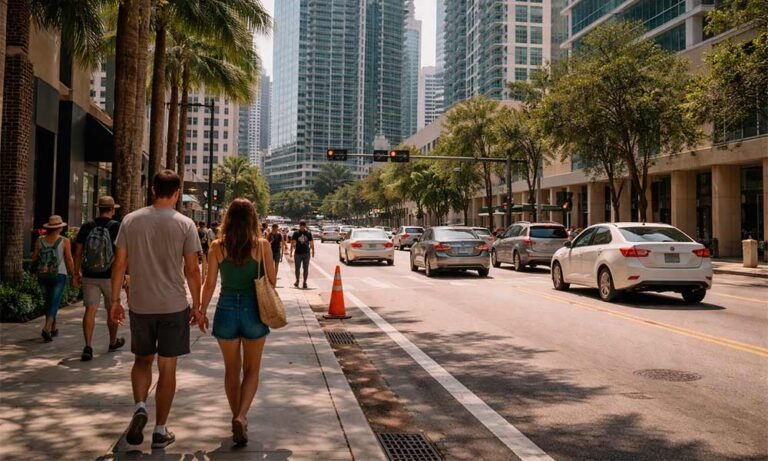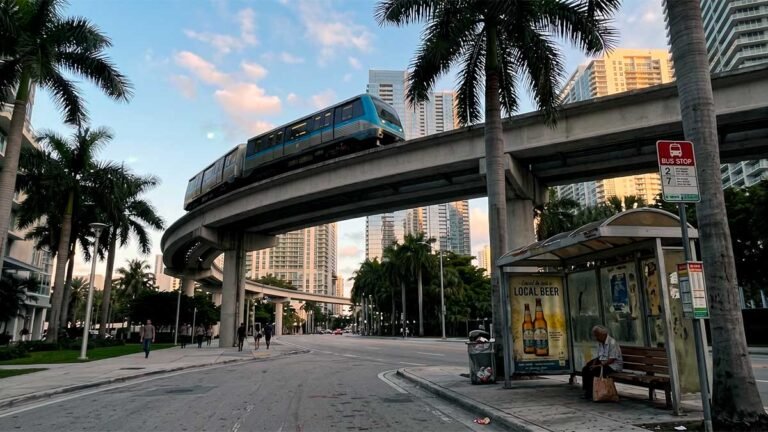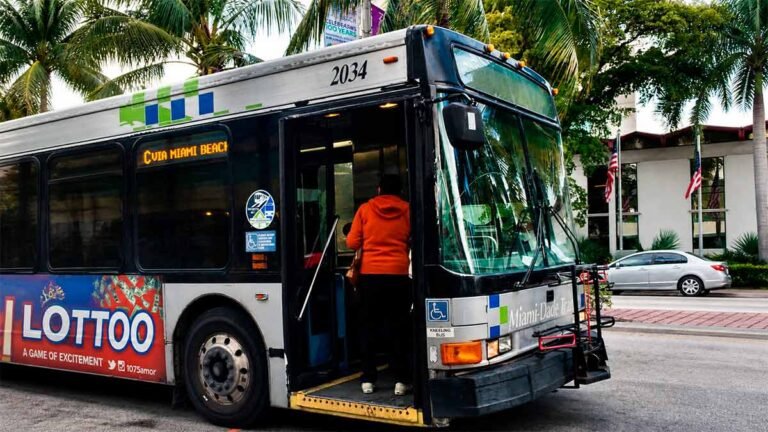


Navigating the Miami World Cup requires a realistic look at South Florida’s massive geographic sprawl and notoriously fragmented public transit networks. Unlike compact international tournament hosts, Hard Rock Stadium sits inland in suburban Miami Gardens, completely isolated from legendary coastal neighborhoods like South Beach or Downtown Miami. To avoid being stranded on asphalt or caught in predatory rideshare surge pricing, incoming football fans must establish integrated point-to-point transit layers and carefully account for hidden hotel fees like resort surcharges and overnight valet parking before confirming non-refundable accommodation. Securing smart tournament logistics means understanding regional gridlock and planning explicitly around multi-hour travel times between the beach hospitality hubs and the suburban stadium gates.
Tourism brochures love to project an image of a compact, breezy paradise where a five-minute drive connects your oceanfront hotel room to premium stadium seats. If you buy into that marketing fantasy for a massive global tournament like the World Cup, your bank account is in for a severe reality check.
Miami sells the fantasy, Miami The Hype delivers the cost of reality.
The geographic layout of South Florida is a sprawling, car-dependent concrete expanse spanning multiple counties. The venue hosting the matches isn’t on the sand, nor is it in a walkable urban core. It sits in Miami Gardens, an inland suburban area located roughly 15 miles (24 km) north of Downtown Miami and 20 miles (32 km) northwest of South Beach. On a standard afternoon, moving between these points requires thick skin and a loaded toll pass. On a tournament match day, that commute turns into a multi-hour financial bottleneck. If you handle your lodging and transit decisions with generic travel advice, you will waste hours stranded on asphalt lots while paying unprecedented premiums.
Miami FIFA World Cup 2026: Match Schedule & Logistics Cheat Sheet
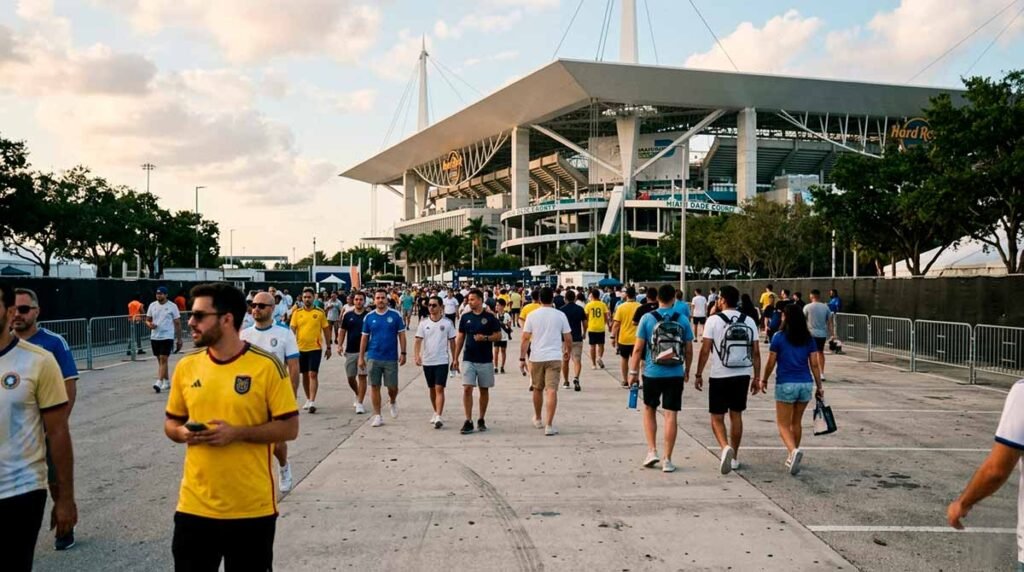
- 📍 Venue: Hard Rock Stadium, Miami Gardens.
- 🚗 Traffic Alert: Avoid relying on rideshares; surge pricing and gridlock are guaranteed.
- 🚆 Best Transit Strategy: Use the Brightline + Official Stadium Shuttle combo. It’s the only reliable way to beat the traffic.
- 💡 Pro Tip: Parking passes sell out months in advance. If you must drive, buy your pass the moment tickets open.
- ⏰ Pro Tip 2: Plan to exit the stadium 30–60 minutes after the final whistle, or be prepared to sit in the lot for two hours.
Hard Rock Stadium: Official Match Schedule
| Date | Match | Stage | Time (ET) |
| June 15 | Saudi Arabia vs. Uruguay | Group H | 7:00 PM |
| June 21 | Uruguay vs. Cape Verde | Group H | 7:00 PM |
| June 24 | Scotland vs. Brazil | Group C | 7:00 PM |
| June 27 | Colombia vs. Portugal | Group K | 8:30 PM |
| July 3 | Winner Grp J vs. Runner-up Grp H | Round of 32 | 7:00 PM |
| July 11 | Winner Match 91 vs. Winner Match 92 | Quarter-final | 6:00 PM |
| July 18 | Loser Match 101 vs. Loser Match 102 | Third Place | 6:00 PM |
The schedule above is based on the latest official announcements. Since match times and details can occasionally shift as we get closer to 2026, I always recommend checking the official source before finalizing your travel plans. You can find the full details directly on the FIFA website here: Official FIFA Miami Stadium Schedule.
The Real Daily Cost Formula: Breaking Down South Florida’s Hidden Fees
Sorting accommodation by the base price shown on booking platforms is an easy way to ruin your budget. In South Florida, the advertised room rate is a marketing fiction. To calculate what will actually be deducted from your credit card before you step outside the lobby, you must apply the Real Daily Cost formula:
Let’s dissect the structural line items that booking sites routinely hide in the fine print:
- The Occupancy and Tourism Tax: Depending on the exact zip code, this adds between 11% and 13% to your bill. If you book in Miami Beach, you pay a combined 6% state and county tax plus an extra 6% local municipal resort tax.
- The Mandatory Resort Fee: A standard practice for properties along the coastline or within major financial zones like Brickell. Expect an automatic $35 to $55 added per night to cover basic amenities like Wi-Fi and pool towels, completely independent of whether you use them.
- The Overnight Valet Penalty: Miami is an infrastructure built for vehicles, yet storing them is a premium luxury. Centrally located hotels rarely offer self-parking options. Instead, you are locked into mandatory valet parking running between $45 and $70 per night, plus local sales tax (7%) and tips.
An advertised room rate of $220 per night quickly mutates into an actual out-of-pocket cost of over $360 every single day before you have purchased a single meal, paid a highway toll, or secured a match-day ticket. To avoid making these critical financial missteps during your stay, read through our detailed breakdown of money mistakes tourists make in Miami before confirming a non-refundable room.
Calculate Your True South Florida Lodging Costs
Instead of relying on the deceptive base prices shown on aggregate booking sites, use this tactical tool to calculate exactly what will be charged to your credit card. Input your target room rate, select the geographical corridor to apply accurate local tax structures, and add the real-world overhead penalties to reveal your actual daily out-of-pocket expenses before you buy a single meal.
The Cost of Reality Calculator
The Geographic Disconnect: Hard Rock Stadium vs. The Real Miami
The immediate reflex for budget-conscious spectators is to hunt for properties directly inside Miami Gardens or adjacent inland zones like Miramar and Opa-locka. Staying within a short radius of the stadium gates seems logical on paper.
In practice, this decision leaves you isolated in a sprawling suburban zone dominated by strip malls, gated residential developments, and wide multi-lane highways like NW 27th Avenue. It lacks an interconnected, walkable street grid. Walking to the venue from a mile away sounds simple until you factor in the mid-summer climate. June and July bring afternoon temperatures averaging 90°F (32°C) with suffocating humidity levels that frequently cross the 80% mark. Walking along an unshaded asphalt corridor under these conditions leaves you completely drained before you even pass the first security checkpoint.
Furthermore, these suburban neighborhoods offer virtually zero cultural or dining substance once the stadium lights turn off. If your goal is to experience the actual culinary identity of the city, explore the art spaces of Wynwood, or visit the nightlife venues of the coast, you will spend your trip trapped in bumper-to-bumper traffic on the Palmetto Expressway (SR 826) or Interstate 95. For a raw assessment of what you will actually face on the roads, check out our analysis of the real Miami traffic situation to map out the terrain like a local.
| Location Feature | The Brochure Claims | The Practical Reality |
| Miami Gardens | Near the stadium gates. | Isolated suburb; no walkable dining. |
| Downtown / Brickell | Far from the venue. | Direct access to trains and Fan Fest. |
| Miami Beach | The ultimate home base. | Heavy traffic bottlenecks on the bridges. |
The Accommodation Dilemma: Brickell Walkability vs. Coastal Isolation
Choosing where to lay your head requires a trade-off between stadium transit ease and everyday sanity. If you are flying in strictly to watch 90 minutes of soccer and flying out the next morning, stay near the airport corridors. Otherwise, you need to match your lodging to your actual daily habits.
The biggest debate usually comes down to staying in the dense financial core versus the historic coast. We look closely at this exact matchup in our editorial on Brickell vs South Beach, but a major tournament introduces unique logistics that tilt the scale.
Brickell and Downtown: The Connected Strategy
Staying within the financial district or the downtown urban core gives you an immediate operational advantage. Downtown Miami hosts the official Fan Festival at Bayfront Park, meaning the neighborhood turns into an energetic space filled with giant viewing screens, food markets, and fan activations.
More importantly, staying here connects you directly to rail transit, allowing you to move around without paying surge rates to rideshare companies every time you want dinner. If you are questioning whether this urban district matches your travel style, check out our local guide on whether Brickell is a good area to stay to understand its safety, atmosphere, and transit connections.
South Beach and Mid-Beach: The Vacation Priority
If you refuse to visit South Florida without waking up next to the Atlantic Ocean, base yourself on the coast. However, you must accept that match days will require massive sacrifices of time and money. Crossing the MacArthur or Julia Tuttle Causeways to get inland on a match day is an exercise in pure frustration.
Choose this zone only if your trip is 70% beach vacation and 30% soccer match. If you plan to rely entirely on feet and mass transit from a coastal base, ensure you read our blueprint on the best areas to stay in Miami without a car to avoid being stranded in transit deserts.
Match-Day Transit Stratagems: Shuttles, Rails, and Rideshare Pitfalls
If your transportation game plan consists of walking out of the stadium after a high-stakes match, opening a rideshare app, and waiting for a car to pull up, you are going to spend hours stranded on an asphalt lot.
During major events at Hard Rock Stadium, the immediate roadways—specifically NW 199th Street and the dedicated Florida’s Turnpike access ramps—lock into total gridlock. Drivers actively decline trips heading into the stadium zone because a single pickup can trap them in stationary traffic for up to two hours, destroying their hourly earnings. To control this chaos, traffic authorities redirect all rideshare vehicles to remote staging lots located far from the main exits.
When the final whistle blows, tens of thousands of fans flood these designated lots simultaneously. Because local demand breaks the app algorithms, surge pricing activates instantly. A standard $35 fare back to a central hotel can easily skyrocket to $180 or $250.
Defeating the Gridlock with Mass Rail and Park-and-Ride Options
To maintain your schedule and your budget, you must utilize transit options that operate on dedicated right-of-ways or express lanes. For a deeper dive into standard travel times and why the local infrastructure struggles under stress, see our investigation into why Miami traffic is so bad. For match days specifically, use these two specific transport corridors:
- The Train Connection: The private rail system, Brightline, connects Miami Central Station (in Downtown) directly to the Aventura Station. From the Aventura platform, dedicated event shuttle buses run on a closed loop straight to the stadium gates. This route allows you to fly past the gridlock on Interstate 95 completely.
- The Game Day Express Shuttles: Local municipal transit authorities set up direct park-and-ride bus routes from major regional transportation landmarks, such as the Golden Glades Interchange and the Earlington Heights Metrorail station. These buses use the I-95 Express lanes and bypass the standard vehicle bottlenecks, dropping you off within the official security perimeter.
The Rental Vehicle Dilemma: Valet Costs and Parking Realities
The decision to rent a vehicle for a tournament week cannot be made lightly. While having your own car offers unparalleled freedom to explore external regions like the Florida Keys or the Everglades, it acts as a massive financial drain if you spend most of your time within the urban core.
If your daily schedule consists of walking to the Fan Festival, eating at local neighborhood restaurants, and using mass transit shuttles on match days, a rental vehicle will simply sit in a garage costing you up to $70 a night in valet fees. Furthermore, driving during peak gridlock hours is a miserable experience. To plan your driving blocks effectively around local congestion patterns, see our data on the best time to drive in Miami.
Should you choose to drive a vehicle to the match venue, you must face the reality of event parking. Standard stadium parking passes must be secured online weeks before the match and often cost upwards of $80 to $100 for premium placement. For an unvarnished breakdown of what you will pay to store a vehicle across the city, consult our guide on the reality of Miami parking costs to avoid unexpected citations or towing fees.
The June Heat & Rain Factor: Survival Tactics and Indoor Escapes
International travelers are routinely blindsided by the raw intensity of a South Florida summer. June and July represent the absolute peak of the tropical wet season. You will face a daily combination of intense heat indices and sudden, violent afternoon convective thunderstorms driven by Atlantic moisture.
Stadium Climate Reality
While Hard Rock Stadium features a massive open-air canopy design that shades roughly 92% of the spectator seats, the playing field is open to the sky. The humidity inside the seating bowl traps heat intensely, creating a greenhouse effect. For afternoon matches, dress strictly in lightweight, breathable clothing, apply heavy sun protection, and begin hydrating hours before your departure.
The Afternoon Retail Pivot
When a torrential downpour hits or the heat index crosses into dangerous levels, do not try to tough it out on the streets. Take a cue from the locals and head indoors.
The region’s indoor commercial spaces are massive, heavily air-conditioned destinations built for high-end retail, dining, and people-watching. If you have hours to kill between matches, running away from the midday humidity into the city’s premier shopping centers is a highly practical survival strategy.
However, picking the wrong commercial center can result in wasting an entire day. Travelers frequently debate which mega-mall deserves their time. We settle this exact issue in our head-to-head review of Aventura Mall vs Sawgrass Mills, detailing which layout offers better brand availability and cost structures. If you are looking for an alternative regional option closer to the airport corridors, explore our breakdown of Dolphin Mall vs Sawgrass Mills to compare outlet pricing structures and entertainment options accurately.
Everyday Financial Traps: Surcharges and Automatic Gratuity Tricks
Your daily expenses will face heavy inflation during tournament weeks. Restaurants and nightlife venues in high-traffic areas routinely adjust their pricing structures when major crowds arrive, capitalizing on international visitors unfamiliar with local transaction standards.
The Service Charge Surprise
In most parts of the world, tipping is a completely optional bonus for exceptional service. In Miami’s main entertainment corridors—such as Ocean Drive, the Wynwood Arts District, and Brickell—tipping is structurally mandatory.
Always inspect the bottom of your itemized receipt before adding money to the credit card slip. Most venues automatically include an 18% to 22% line item labeled as “Service Charge” or “Gratuity,” even for a table of only one or two people. If you blindly sign the bill and add another 20% on the standard tip line, you are voluntarily paying a 40% premium for your meal. To manage your daily spending without surprise fees, baseline your projections with our breakdown of a realistic Miami daily budget.
Asset Protection and Shopping Safety
When carrying high-value purchases through crowded commercial zones or tournament transit lines, you must remain aware of your surroundings. Major events attract opportunistic pickpockets who target distracted tourists carrying large luxury shopping bags. To safeguard your investments and navigate major retail centers without incident, read through our local safety protocols on Miami shopping security tactics to keep your belongings secure.
| Expense Category | Advertised Rate | Local Real Cost |
| Sit-down Dinner | $40.00 menu price. | $52.00+ with tax and auto-tip. |
| Boutique Hotel | $180.00 online rate. | $270.00+ with resort fee and valet. |
| Post-Match Ride | $35.00 base quote. | $150.00+ under full surge algorithm. |
Frequently Asked Questions for Tournament Travelers
Can I park my car in the neighborhoods surrounding Hard Rock Stadium?
No. The residential streets and commercial strip malls inside Miami Gardens strictly prohibit event parking during stadium dates. Local code enforcement and private towing companies operate aggressively on match days. Vehicles parked without specific residential decals will be towed to impound lots immediately, resulting in steep retrieval fees and hours of administrative hassle.
Is the official Fan Festival at Bayfront Park free to enter?
Yes. The official FIFA Fan Festival located at Bayfront Park in Downtown Miami features open admission and does not require a stadium match ticket. It operates as a centralized viewing site with high-definition screens, interactive events, and local food vendors, offering a practical way to experience the energy of the matches without paying premium secondary-market ticket prices.
How strict is the bag policy at the stadium gates?
The stadium enforces a zero-tolerance clear-bag policy. Standard backpacks, laptop bags, camera cases, and large purses will be flatly rejected at the security checkpoints. You are permitted to bring in a small clutch bag or purse no larger than 4.5 by 6.5 inches (11.4 by 16.5 cm). Any bag larger than those dimensions must be completely transparent and constructed of clear plastic, vinyl, or PVC to clear security lines.