
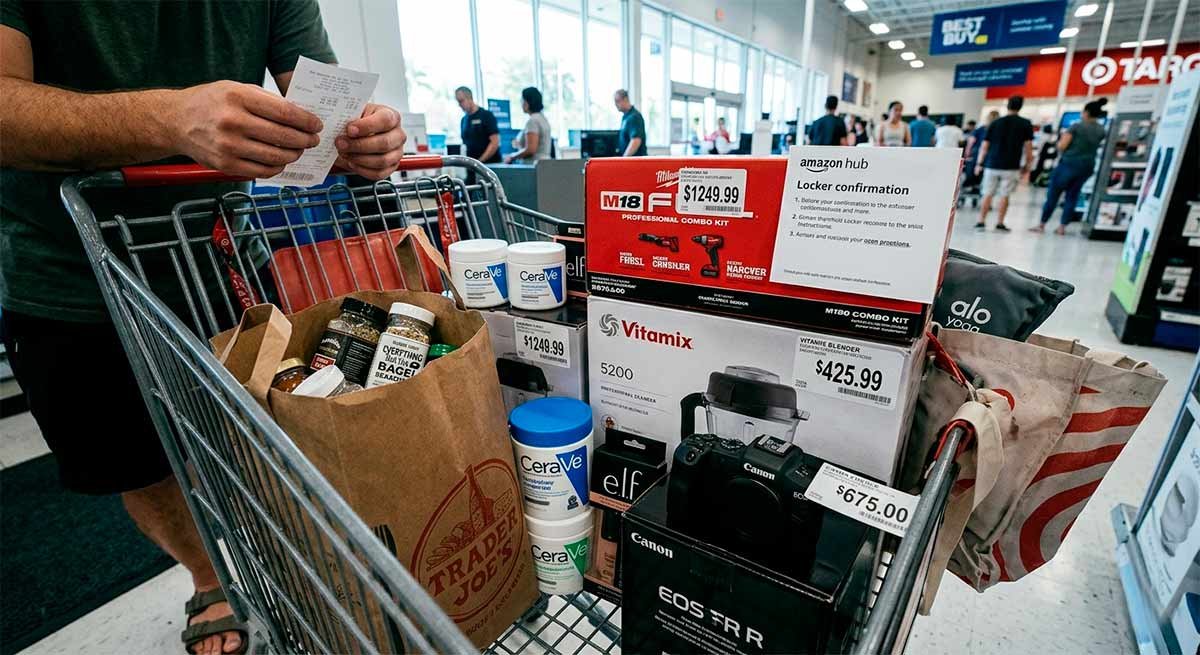
Miami’s sales tax is 7% (6% Florida plus 1% Miami-Dade), it’s added at the register on top of the price tag, and Florida has no tourist refund program. That’s the smallest part of the bill. If you’re flying in expecting a 50% off paradise, add $15 (14 EUR) in I-95 Express Lane tolls, a $60 to $100 (55 to 91 EUR) extra-bag fee and a few hours in traffic, and the ‘deal’ can cost more than at home. This guide has the math, where Miami still wins, and how to legally pay less.
The real value in Miami isn’t found in “discounts”—it is found in access. You come here to buy professional-grade equipment, specific American model variants, and brand inventories that are decimated or non-existent in Europe, Asia, or Latin America. If you aren’t calculating your Total Cost of Acquisition (TCA) before you swipe, you are effectively paying a 30% ‘clueless tourist’ premium” por “a premium you never see on the receipt.
Below we walk the corridors from the NW 25th Street tech district to the Bird Road big-box stores, and show where the money leaks.
The Total Cost of Acquisition (TCA)
Most travelers look at a price tag and see the finish line. In Miami, that is just the starting block. To understand if a purchase is actually a ‘deal,’ you must look beyond the sticker price. Use the interactive formula below to see the real numbers behind your next purchase.
Don’t charge the bag fee to one item. Split it across everything in the suitcase.
- MSRP: The price on the shelf.
- 1.07: The 7% Miami-Dade Sales Tax (never included in the sticker).
- L (Logistics): The cost of getting to the store (Uber surges or $40/36 EUR Valet fees).
- T (Time): The value of your vacation time spent in the I-95 bottleneck (average 1 hour for a 12-mile/19 km trip).
- B (Baggage): The $100 (91 EUR) airline fee for an overweight or extra suitcase.
Why the 25% Rule?
If your TCA isn’t at least 25% lower than the price in your home city, you aren’t shopping; you are working as an unpaid courier for your own goods.
A simple discount isn’t enough to justify the logistics. Between the lack of local warranty, the I-95 bottleneck transit time, and baggage surcharges, the margin must be significant to be worth the effort.
What Your Miami Purchase Must Cost at Home to Be Worth It
Using the formula above with $40 for logistics, $50 for an hour of your time and a $100 bag fee, here is the minimum home price that passes the 25% rule for a single-item trip.
| Miami Sticker Price | With 7% Tax | TCA (all costs) | Home Price Must Be At Least |
| $300 | $321 | $511 | $681 |
| $1,200 | $1,284 | $1,474 | $1,965 |
| $4,000 | $4,280 | $4,470 | $5,960 |
The fixed costs shrink when you buy a whole basket in one trip. A single $300 purchase rarely passes. A suitcase of gear that costs far less than at home does.
Can You Skip or Get Back the 7%? What Florida Actually Allows
Does Florida Refund Sales Tax to Tourists?
No. Florida has no tourist tax refund program like Europe's VAT refund. What you pay at the register is final. The only refund comes if you return the item: the tax comes back with the price, so keep the receipt and tags.
3 Legal Ways to Pay Less Tax
- The back-to-school tax holiday: Florida now runs it every year by law, and anyone can use it, tourists included. In 2026 it ran July 20 to Aug 20. It covers clothing, shoes and bags at $100 or less per item, school supplies at $50 or less, and personal computers at $1,500 or less. It excludes suitcases, watches and jewelry, and sales inside airports and hotels. Dates can shift, so check the Florida Department of Revenue before you book.
- Export sales: Florida doesn't tax a sale that is irrevocably committed to export. Some export-focused stores ship orders abroad through a freight forwarder and may not charge the tax. Carrying the item in your suitcase does not qualify. Ask before you pay, get it on the invoice, and remember you'll face duty or VAT at home.
- Buying groceries instead of souvenirs: Supermarket groceries aren't taxed. Prepared food, clothes and electronics are.
Professional Gear and "Built-to-Last" Inventory
The smartest buys in Miami are items designed for the heavy-duty American market. These products often have superior specifications compared to their international versions.
The Power Tool Standard: Milwaukee and DeWalt
Visit any Home Depot on SW 8th Street or the massive units in Kendall. You are looking for the Milwaukee M18 Fuel or DeWalt 20V Max lines.
- The Reality Check: These tools are built for the US power grid (110V). While they are "tanks" designed for years of abuse, ensure you have a compatible charger or buy the "Bare Tool" (no battery) if you already own the system.
- The Value: A 5-tool combo kit in Miami costs roughly $599 (545 EUR). In London or Sydney, the equivalent (often with lower torque specs) can exceed $1,100 (1,001 EUR).
- Weight Factor: A full kit weighs roughly 22 lbs (10 kg). Factor this into your baggage allowance immediately.
Professional Photography and Cinema (The NW 25th St Corridor)
Don't buy a camera at a mall. Head to NW 25th Street near the airport. This is the industrial heart of Miami’s export tech.
- AVC Store: This is where professionals buy Sony Alpha and Canon EOS R bodies. They understand international warranties and how international warranties work.
- The Edge: They often have "Open Box" units or "Edu" discounts that the Apple Store or generic retailers won't offer. You save by buying where the pros buy, not where the tourists browse.
Before paying, ask one question: is this a USA warranty or an international one? Some brands only honor US warranties on US models.
Lifestyle Brands and the "Inventory Advantage"
You don't shop for Lululemon or Alo Yoga in Miami because it's "cheap." You shop here because the inventory depth is unmatched.
The Athleisure War: Aventura vs. Lincoln Road
- Aventura Mall: Since the Brightline station opened, getting here is easier, but the mall is a 2.4-mile (3.8 km) loop of temptation. The Alo Yoga flagship here has one of the deepest stocks of limited drops in the state.
- Lincoln Road: Great for a walk, but the Lululemon here is often picked over by 2 PM.
- The Strategy: Go to the Dadeland Mall or Brickell City Centre locations. These stores serve locals, meaning they carry a wider range of sizes (0 to 14 US) and more "Core Colors" that are perpetually out of stock in Europe.
The "Drugstore" Beauty Haul (CVS vs. Target)
If you are looking for CeraVe, La Roche-Posay, or e.l.f. Cosmetics, avoid the CVS on Collins Avenue in South Beach.
- The Price Trap: Tourist-zone pharmacies mark up basic items by 20% compared to suburban units.
- The Bird Road Target: This is the local secret. Located on SW 40th Street, this Target has a massive beauty section. You will find the 16 oz (473 ml) "Value Size" tubs of moisturizer that pharmacies rarely stock.
A Shopping Day Done Wrong vs. Done Right
To understand the difference between a bad trip and a smart one, let's look at a real-world scenario of a shopping day in Miami in 2026.
The Misinformed Tourist Scenario
- Location: Stays in South Beach.
- The Plan: Takes an Uber to Dolphin Mall at 4:30 PM (Peak traffic).
- The Cost: $55 (50 EUR) Uber ride one-way. 1 hour and 15 minutes in traffic.
- The Action: Buys 5 pairs of Levi’s at the first store they see. Pays full MSRP + 7% tax.
- The Logistics: Realizes the bags are too heavy to carry, Ubers back at 8 PM (Surge pricing: $75 / 68 EUR).
- Total Logistics Cost: $130 (118 EUR) + 3 hours of vacation lost.
The Miami The Hype Reader Scenario
- Location: Stays in Brickell.
- The Plan: Uses the Metrorail ($2.25 / 2 EUR) to Dadeland at 9 AM.
- The Action: Hits the Target and Best Buy early. Uses the Amazon Hub Locker at a nearby 7-Eleven to pick up pre-ordered accessories, avoiding hotel "Package Fees" ($15 / 14 EUR per box). Ordering to a Miami address doesn’t skip the tax. Amazon and most big retailers collect Florida sales tax on orders delivered here
- The Logic: Buys "Open Box" electronics at Best Buy, saving $150 (137 EUR) on a MacBook Pro.
- The Logistics: Takes the train back before the afternoon rush.
- Total Logistics Cost: $4.50 (4.1 EUR) + 0 hours of traffic.
High-Ticket Investments: Kitchen and Home
Miami is a prime destination for "Lifetime" appliances that are significantly more powerful in their US versions.
Vitamix and Breville: The 110V Power Advantage
- Vitamix 5200: This blender is the gold standard for durability. At Williams Sonoma or Best Buy, it retails for around $425 (387 EUR). It weighs 15 lbs (6.8 kg) and is virtually indestructible.
- The Warning: These are 110V machines. If your home country is 220V, the transformer required is heavy and expensive. Only buy this if you have a dedicated power solution at home.
- Why Miami? Because of the Latin American and Caribbean export market, Miami stores often stock "Universal Voltage" variants of certain high-end electronics that you won't find in the Midwest. Ask for "Export Models" in the smaller specialty shops.
The "Invisible" Costs of Shopping
In 2026, the physical act of moving goods through Miami has become its own industry. If you don't plan for the "last mile," you lose your savings.
| Expense Type | The "Unaware" Cost | The Smart Strategy |
| Sales Tax | 7% (Surprise at register) | Final at the register. Only a tax holiday or an export sale changes it (see below) |
| I-95 Express | $15 - $25 (Toll) | Use the Trolley or Brightline |
| Hotel Packages | $20 / box (Handling fee) | Amazon Hub Locker (Free) |
| Suitcase | $250 (Airport price) | Ross/Marshalls ($85) |
Two Checkout Traps That Cost Real Money
- "Pay in your home currency?" Always decline. Choose dollars and let your bank convert.
- Foreign transaction fees: A 3% card fee on top of 7% tax makes a $1,000 purchase cost $1,100.
The "Extra Bag" Emergency
If you over-shopped, do not buy a suitcase at the airport.
- The Secret: Head to Ross Dress for Less on Washington Avenue or the Marshalls in Midtown. You can find a hardshell Samsonite or American Tourister for under $90 (82 EUR).
- The Math: That $60 to $100 (55 to 91 EUR), depending on airline and route, is still cheaper than the $300 (273 EUR) you would pay for the same bag at a boutique.
What You Can Bring Home Before Customs Charges You
The 7% you paid in Florida isn't credited against duty back home. These are the per-person allowances for goods bought abroad.
| Home Country | Duty-Free Allowance | Watch Out For |
| United States | $800 | Applies after a trip of at least 48 hours |
| Canada | CAD $800 | Lower for short trips |
| United Kingdom | £390 | Go over it on one item and duty and VAT apply to the full value |
| European Union | €430 | For air and sea travelers; land is lower |
| Australia | A$900 | Alcohol and tobacco count inside it |
Keep your receipts. Customs can ask for them, and declaring is cheaper than being caught.
Miami Shopping Questions, Answered
How much is sales tax in Miami?
It's 7%: 6% for Florida plus 1% for Miami-Dade County, and the rate is the same across the county. It's added at the register on top of the sticker price, so a $2,000 (1,820 EUR) laptop rings up at $2,140 (1,947 EUR). Prepared food, clothes and electronics are taxed. Supermarket groceries are not.
Do tourists get a sales tax refund in Florida?
No. Florida has no tourist refund program, and there is no VAT-style refund counter at Miami International. The only way to get the tax back is to return the item, and then it comes back with the price. Keep the receipt and the tags, and check the store's return window before you buy.
Is there tax-free shopping in Miami?
Only in two situations. The first is Florida's back-to-school tax holiday, which now runs every year (in 2026 it ran July 20 to August 20) and is open to tourists too. The second is an export sale, where the store ships your order abroad through a freight forwarder. Carrying the item home in your suitcase doesn't count, so ask the store before you pay and get it on the invoice.
Is clothing taxed in Florida?
Yes. Clothing, shoes and bags carry the full 7% year-round, with one exception: during the back-to-school holiday, items at $100 (91 EUR) or less are exempt. Suitcases, watches and jewelry are excluded, and so is anything bought inside an airport or a hotel. If you're hunting for cheap clothes, start with Ross vs Marshalls vs Burlington.
Is it cheaper to shop in Miami than at home?
Only when your total cost ends up at least 25% below your home price. That total includes the 7% tax, the ride to the store, an hour or two of your time and any extra bag you'll pay for at the airport. A single $300 purchase rarely passes. A suitcase of gear that costs far less than at home usually does. Run your own numbers in the calculator above, or read Should You Still Shop in Miami? for the bigger picture.
What can I bring back from Miami without paying duty?
It depends on where you live. The usual per-person limits are $800 for the US, CAD $800 for longer trips to Canada, £390 for the UK, €430 for the EU by air or sea, and A$900 for Australia. The 7% you paid in Florida isn't credited against duty at home. In the UK, going over the limit on a single item means duty and VAT on its full value. Keep your receipts, because customs can ask for them.
Are electronics cheaper in Miami?
Sometimes, but the bigger win is stock and choice. US prices don't include tax, while prices in Europe or the UK do include VAT, so compare both sides with tax included. Before you pay, ask whether the warranty is USA-only or international, and check that your carrier supports eSIM, since recent US iPhones have no physical SIM tray. For where the pros shop, see What Electronics Are Still Worth Buying in Miami.
Where can I shop in Miami without paying tourist prices?
Go where locals go. The Target on Bird Road beats the CVS on Collins Avenue for basics, Ross and Marshalls beat boutiques for luggage and clothes, and Dadeland and Brickell City Centre stock wider sizes than the tourist-heavy stores. For deals by type of store, compare Miami outlets vs discount stores. If you're staying on the beach, Where to Shop in Miami Beach saves you a trip.
What should I not buy in Miami?
Skip anything you can find at the same price at home, anything sold at tourist-zone markups, and anything that needs a transformer you don't own. Heavy 110V appliances are the classic mistake. What Not to Buy in Miami has the full list, and Miami Shopping Mistakes covers the checkout traps, like paying in your home currency instead of dollars.
How do I get to the stores without a car?
Metrorail runs from Brickell to Dadeland for $2.25 (2 EUR), and going early keeps you out of the afternoon traffic. Rideshare works but gets expensive when you're carrying bags back. Compare the options in Metrorail Miami: When It Beats Traffic and Miami Uber Prices before you plan a shopping day.
How much should I budget for shopping in Miami?
Take your shopping list and add 7% tax, then add your transport, your time and the extra-bag fee, which runs roughly $60 to $100 (55 to 91 EUR) depending on the airline. If your return flight is already tight on weight, a pre-trip airline check saves more than any coupon. For the rest of the trip budget, see Is Miami Expensive to Visit?.
Is Black Friday in Miami worth planning a trip around?
Only if you can handle the crowds and the lines, and only if you already planned to buy. The stock is bigger on Friday, but it costs you time and patience, and Saturday is the honest plan B with fewer deals. Our Black Friday in Miami guide does the math on what an hour of your time is worth.