
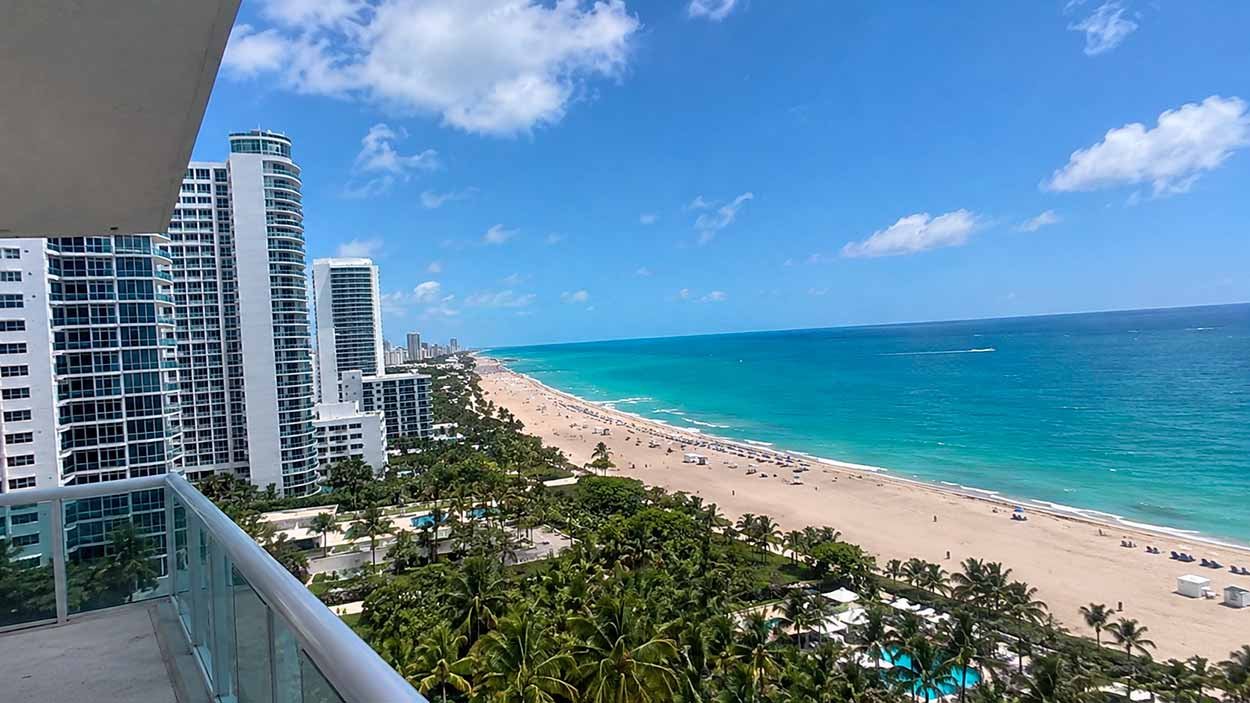
Booking a hotel in Miami is not just about finding a room at a good nightly rate. The city spreads across a mainland urban core and a chain of barrier islands, and choosing the wrong side of the bay can add hours of transportation and hundreds of dollars to a trip. Resort fees, local lodging taxes, overnight valet parking, and the distance between your hotel and the places you actually want to visit all affect the final bill.
Before comparing hotel photos or chasing a discounted rate, understand where you’re booking, what the property will really charge, and how much it will cost to move around Miami.
Miami Is Not One Hotel Market. Start With the Map.
One of the easiest mistakes to make when searching for hotels in Miami is treating every listing labeled “Miami” as if it were in the same location.
It isn’t.
Miami is the mainland city. Miami Beach is a separate municipality on a barrier island, connected to the mainland by several causeways. Brickell, Downtown, Wynwood, and the Design District are on the mainland. South Beach, Mid-Beach, and North Beach are part of Miami Beach. Sunny Isles sits farther north along the coast, while Doral and the airport hotel corridor are west of the urban core.
That distinction changes more than the view from your room.
A hotel in Downtown may be only a few miles from South Beach in a straight line, but reaching the beach means crossing a causeway. During weekday rush hour, event traffic, or a busy weekend, a short-looking trip can become a long ride. The same applies in reverse when beach-based visitors plan dinners or business meetings in Brickell.
The map is not just a way to find your hotel. It is a preview of the transportation bill you are accepting.
If you’re still deciding which side of the bay deserves your money, our Miami vs Miami Beach breakdown puts the two cities side by side: causeway crossing times, garage prices on the island, resort fees, and the scenarios where each choice backfires. Settle that first and the hotel search gets a lot shorter.
The Direct Answer: Where Should You Stay in Miami?
For a first visit focused on beaches, restaurants, and nightlife, South Beach is usually the most convenient base. Mid-Beach makes more sense when you want an oceanfront hotel in a quieter setting, while Brickell is a stronger choice for an urban stay with access to restaurants and public transportation. Downtown can work well for cruise passengers, short business trips, and travelers who choose their exact hotel location carefully. Wynwood, the airport area, and Sunny Isles suit more specific itineraries rather than every first-time visitor.
The right choice depends on where you will spend your days, not simply which hotel has the lowest advertised price.
The Miami Hotel Map: Which Area Actually Fits Your Trip?
The table below is a starting point, not a ranking. Each area has a different relationship with the beach, transportation, parking, and everyday convenience.
| Area | Best fit | Main trade-off |
|---|---|---|
| South Beach | First visits, beach, nightlife, walking | Higher rates, parking, noise |
| Mid-Beach | Beachfront resorts, quieter stays | More rideshare or trolley planning |
| Brickell | Business, dining, urban lifestyle | No beach outside the door |
| Downtown | Cruises, short stays, central transport | Block-by-block evening experience |
| Wynwood | Art, restaurants, nightlife | Limited beach convenience |
| Airport / Doral | Early flights, business, western Miami | Long trips to beach attractions |
| Sunny Isles | Resort-focused beach vacations | Distance from central Miami |
South Beach: Pay for the Location, Then Use It
South Beach is the easiest area to understand if your Miami plans revolve around the beach, restaurants, bars, and walking between activities.
The strongest advantage is simple: you can leave the car parked, reach the sand on foot, and avoid ordering a rideshare for every short trip. Areas around Collins Avenue, Washington Avenue, Ocean Drive, and Lincoln Road offer different experiences within the same general neighborhood.
There is an important street-level distinction, though. Collins Avenue runs along the oceanfront and has many hotels with direct or very close beach access. Washington Avenue sits farther inland and is more connected to restaurants, shops, and nightlife. A hotel on Washington may be perfectly convenient, but it is not the same product as an oceanfront property.
South Beach also has a cost problem. Resort fees, valet parking, smaller rooms in older buildings, restaurant prices, and late-night noise can make the premium difficult to justify for someone who barely uses the beach.
For a closer look at the location trade-offs, read our guide to Miami Beach hotels, costs, and what to know before booking and our analysis of whether South Beach is actually worth staying in.
Mid-Beach: A Different Kind of Beach Stay
Mid-Beach occupies the central stretch of Miami Beach, between the busier southern end and the quieter northern neighborhoods.
It can be a better match for travelers who want an oceanfront resort, a calmer hotel environment, and less nightlife immediately outside the lobby. The trade-off is that you may need to plan transportation more carefully when visiting South Beach, Brickell, Wynwood, or Downtown.
Collins Avenue is the main north-south corridor here. The area around 41st Street is particularly useful for restaurants, shopping, and everyday services.
Miami Beach operates free trolley routes, including South Beach, Middle Beach, North Beach, and Collins Express. They are useful for local movement, but they are not a replacement for a 24-hour transportation network. The city’s published service information lists operating hours from 8 a.m. to 11 p.m., with an average frequency of approximately 20 minutes per route. Check the official Miami Beach trolley schedule before relying on it.
Our guide to Mid-Beach as a hotel base explains who benefits from this location and who would be better off farther south or on the mainland.
Brickell: An Urban Base, Not a Beach Substitute
Brickell is a strong choice for travelers who prefer modern hotels, restaurants, business facilities, and a more city-oriented stay.
The neighborhood has useful connections through Metrorail and the free Metromover system. The Metromover covers Downtown, Omni, and Brickell through three loops, making it particularly useful for shorter trips within the central business districts.
This is one of the few areas where a hotel location can genuinely reduce the need for a rental car if your itinerary is concentrated on the mainland.
But Brickell is not a beachfront neighborhood. Getting to South Beach usually means a rideshare or a combination of transportation options. If your trip is primarily about swimming, spending afternoons on the sand, and walking back to your hotel, paying for a Brickell address may not make much sense.
Read our detailed guide to staying in Brickell before treating it as the automatic alternative to Miami Beach.
Downtown Miami: Convenient on Paper, Specific in Practice
Downtown has a practical advantage: transportation connections, access to MiamiCentral, proximity to PortMiami, and a range of hotels that may be more competitive than beachfront properties.
It is particularly relevant for cruise passengers, short stays, and visitors with business or event plans in the urban core.
However, Downtown should be judged by the exact hotel address, not just the neighborhood name. Some blocks are busy and convenient during the day but noticeably quieter after office hours. A hotel close to a Metromover station may be a very different proposition from another property several blocks away.
Brightline’s MiamiCentral station is at 600 NW 1st Avenue, with connections to other local transit services nearby. It is a downtown railway station, not a station inside Miami International Airport.
For travelers embarking on a cruise, where to stay in Miami before a cruise is a more useful starting point than choosing a hotel solely because its listing mentions PortMiami. Our Downtown Miami hotel guide breaks down the local trade-offs.
Wynwood, Sunny Isles, and the Areas That Need More Planning
Wynwood is appealing when art, restaurants, galleries, and nightlife are the main reasons for choosing a neighborhood. It is not a beach base, and the atmosphere can change considerably from one street to another. Hotel availability is also different from the large resort inventory found on Miami Beach.
Before booking, check the exact address, nighttime surroundings, and how you will get back after dinner or drinks. Our guide to staying in Wynwood looks at the real advantages and limitations.
Sunny Isles is another case where the hotel itself can be the destination. An oceanfront resort makes sense when you intend to spend much of the trip on the property or beach. It is less convenient when your plans involve repeated trips to South Beach, Brickell, Downtown, or Wynwood.
The same caution applies to cheaper hotels around the airport, Doral, and suburban highway corridors. They are not automatically bad locations. They simply serve different itineraries. An airport hotel can be a sensible choice before an early flight, while a Doral property may work for business or shopping in western Miami. Neither automatically makes a good base for a beach-focused vacation.
See our breakdown of the Sunny Isles hotel trap and the real cost of a cheap Miami room before comparing rates across very different locations.
One more warning sign deserves its own mention: a rate that looks too good for central Miami. Listings marketed as “near Wynwood” or “greater Downtown” can sit on blocks that have little in common with the neighborhood in the photos, and the discount is often the clue. Before booking anything priced far below its neighbors, read our guide on where not to stay in Miami, which maps the areas and listing patterns that turn a cheap room into an expensive mistake.
The Price on the Screen Is Not the Cost of the Stay
Hotel shopping gets misleading when travelers compare the first nightly rate they see instead of the full amount they will pay.
There are several separate charges to understand.
| Cost | What it means | What to check |
|---|---|---|
| Room rate | Advertised accommodation price | Same room type and dates |
| Lodging taxes | State, county, and local taxes | Exact hotel municipality |
| Resort fee | Property-imposed daily charge | Mandatory amount and inclusions |
| Parking | Self-parking or valet | Overnight rate and reentry |
| Incidental hold | Temporary credit-card authorization | Amount and release time |
The 7% Tax Is Not the Whole Hotel Tax Bill
Florida’s general state sales tax is 6%. Miami-Dade adds a 1% discretionary sales surtax, which also applies to transient rentals. That produces a 7% state-and-county sales tax layer, but short hotel stays are also subject to separate local lodging taxes.
For many Miami-Dade addresses outside special municipal tax districts, the local transient rental taxes add another 6%: a 3% Convention Development Tax, a 2% Tourist Development Room Tax, and a 1% Professional Sports Facilities Franchise Tax.
Miami Beach has a different structure. The county’s published breakdown identifies a 3% Convention Development Tax, while the city imposes its own 4% Resort Tax on short-term room rentals. Together with the 6% state tax and 1% county surtax, the commonly applicable lodging tax stack is approximately 14% in Miami Beach, compared with approximately 13% at many other Miami-Dade addresses.
These are useful planning figures, not a substitute for checking the exact property address and checkout breakdown. Special municipalities can have different rates.
The distinction matters: 7% is not the complete tax burden on a hotel room in Miami. Consult the Florida Department of Revenue’s accommodation tax guidance, its 2026 discretionary surtax table, and Miami-Dade County’s lodging tax explanation. For Miami Beach, the city’s Resort Tax information provides the municipal rate.
Resort Fee vs. Resort Tax: They Are Not the Same Thing
A resort fee is a charge imposed by the hotel. It may cover Wi-Fi, beach chairs, pool access, fitness facilities, bicycles, or other property services.
A Resort Tax is a government-imposed lodging tax. In Miami Beach, the municipal Resort Tax is 4%. The hotel resort fee and the city’s Resort Tax are separate items, even though the names sound almost identical.
The difference can be confusing during booking, so look for both.
There is also an important federal pricing rule. Since May 12, 2025, the Federal Trade Commission’s Rule on Unfair or Deceptive Fees has required short-term lodging businesses to display a total price that includes mandatory fees. Government charges, such as taxes, can be excluded from that initial total-price figure and disclosed separately. Mandatory resort fees should not be treated as optional extras or quietly added after the displayed price.
The FTC allows mandatory fees to be itemized, but the total price must remain clear and prominent. Its official fee-disclosure guidance explains the rule.
The practical lesson is to compare the total displayed accommodation price, then add the government taxes and any optional services you actually intend to use.
Valet Parking Can Change the Decision
Parking is one of the most important costs for anyone renting a car in Miami.
Some hotels offer self-parking. Others use valet-only arrangements, and some properties have limited parking capacity or no independent garage.
The difference is not small. For example, Fontainebleau Miami Beach currently lists a $59 daily resort fee per room. Its published hotel-guest valet rate ranges from $58 to $73 per night, plus tax, with rates potentially higher during special events.
Using a hypothetical $200 room rate and those published property fees, the room, resort fee, and overnight valet would total approximately $317 to $332 per night before lodging taxes. That is a mathematical illustration, not a live room quote.
Check the hotel’s own published fee policy before booking.
Also ask whether valet includes unlimited in-and-out privileges, whether oversized vehicles cost more, and whether the property offers a genuine self-parking alternative.
There is a time cost, too. At busy beachfront hotels, valet retrieval can become a bottleneck around peak arrivals, departures, and event periods. A car that costs $70 per night but takes extra time to retrieve may be the wrong choice for a visitor who plans to drive several times a day.
If you are renting a car, add parking to the comparison before confirming the hotel. If you are not renting one, do not pay a beach-resort parking premium for a facility you will never use.
Deposits, Service Charges, and Tips
A hotel may authorize a security deposit or incidental hold on your credit card at check-in. This is not necessarily a final charge, but it can temporarily reduce your available credit.
For example, Fontainebleau’s published FAQ describes a $200-per-day security deposit authorization, with unused amounts released at checkout and potentially taking five to seven business days to appear again in the guest’s account.
Policies vary by property and payment method, so confirm the amount and release schedule before arrival.
Also distinguish service charges from gratuities. Room service, poolside dining, and hotel restaurants may add automatic service charges or gratuity. Read the bill before adding another tip automatically. Valet gratuity is also separate from the parking rate unless the property explicitly states otherwise.
Use the Real Daily Rate Before You Book
Miami The Hype uses a simple principle: the cheapest room is not necessarily the cheapest stay.
Instead of comparing nightly rates alone, calculate the Real Daily Rate, or RDR.
Real Daily Rate = (Room rate + mandatory nightly fees + applicable lodging taxes) + daily parking cost + average daily transportation cost.
For a full trip, multiply recurring nightly expenses by the number of nights, add one-time charges, and include the transportation budget for your actual itinerary. Divide the result by the number of nights to compare properties on the same basis.
Here is a simple example.
A hotel outside the main tourist areas costs $150 per night. A more central hotel costs $210. Over four nights, the cheaper hotel saves $240 on the room rate.
But suppose the outlying hotel requires an additional $60 per day in rideshares for the places you intend to visit. That adds another $240 over four days. The apparent room-rate saving has disappeared, before accounting for the extra time spent in transit.
The central hotel may still cost more once taxes and fees are considered. But the original $60 nightly difference no longer tells the whole story.
This is why comparing the real cost of a Miami hotel stay is more useful than sorting search results from lowest to highest price.
Can You Stay in Miami Without Renting a Car?
Yes, but only if you choose a base that matches your daily plans.
Brickell and Downtown are the strongest mainland options for travelers who want access to urban public transportation. The free Metromover operates through Downtown, Omni, and Brickell, serving 21 stations. It is useful for central trips, not for reaching every neighborhood.
Metrorail connects Miami International Airport with the mainland network, including Downtown and Brickell. The published standard fare is $2.25, although travelers should confirm current fares and operating information through Miami-Dade Transit.
Miami Beach has its own free trolley network, which helps with movement around the island. It does not replace the need for a rideshare when crossing to the mainland, returning late, or traveling outside its routes and operating hours.
Brightline is useful for intercity travel along Florida’s southeast coast. Its MiamiCentral station is in Downtown, close to other transit connections. Do not assume that booking a hotel near Brightline automatically solves airport transportation.
For a complete breakdown of the best neighborhoods, practical transit connections, and car-free trade-offs, use our Miami Without a Car guide.
The rental-car decision should follow your itinerary. If you are staying in South Beach and spending most of your time on the island, a car may create more expense than convenience. If you are visiting outlets, suburban destinations, beaches farther north, and several mainland locations, a rental may be useful — but only after you calculate parking and rental costs together.
Two Travelers, Two Very Different Hotel Bills
Consider two hypothetical four-night trips.
The Cheap-Room Strategy
A traveler chooses an inexpensive hotel near the airport because the search result looks significantly cheaper than beachfront alternatives. The plan includes South Beach, Wynwood, Brickell, and several restaurants across town.
The room costs less, but each day involves multiple rideshares. The traveler also loses flexibility because returning to the hotel between activities becomes inconvenient. If a rental car is added, overnight parking and fuel become additional expenses.
This strategy can work before an early flight or during a business trip near the airport. For a beach-focused vacation, the original room-rate advantage may be much smaller than expected.
See the real trade-off of staying near Miami Airport before treating an airport property as a citywide bargain.
The Location-First Strategy
Another traveler pays more for a hotel within walking distance of the beach and the restaurants they plan to visit. They skip the rental car, use the local trolley for shorter trips, and reserve rideshares for occasional mainland visits.
The nightly rate is higher, but parking disappears from the budget and daily movement becomes simpler.
This option is not automatically cheaper. Its advantage is that the traveler is paying for something they actually use: location.
The smart choice is whichever option produces the better total trip cost for the itinerary, not whichever has the lowest search-result price.
Where to Research and Compare Miami Hotels
Once you understand the map and the real costs, it is time to search.
Use hotel platforms as comparison tools, not as proof that the first result is the best deal.
- Booking.com is useful for comparing hotel inventory, room categories, guest reviews, and cancellation conditions.
- Expedia provides another source for comparing properties, rates, and travel arrangements.
- Hotels.com is another hotel-focused search option worth checking against the same dates and room requirements.
- Google Hotels is useful for discovering properties and comparing prices offered by different booking providers.
After finding a hotel, check its official website as well. Direct booking is not automatically cheaper, but the hotel may offer different cancellation terms, packages, loyalty benefits, or inclusions.
When comparing the same property across platforms, make sure you are comparing the same room type, occupancy, breakfast conditions, payment timing, cancellation policy, and total price.
A refundable room at $230 per night is not directly comparable to a non-refundable room at $205. Neither is a room with breakfast compared with one that excludes it.
Do not stop at the first price you see. Open the final payment screen and check the full amount before confirming.
When Should You Book a Miami Hotel?
Miami hotel inventory can tighten during the winter high season, Spring Break, major conventions, Art Basel, and large sports or entertainment events.
Demand also changes by location. A major event in Downtown may affect hotels in the central business district differently from beachfront properties. A convention on Miami Beach can have a different impact on the Beach’s hotel inventory and parking availability.
There is no universal rule that booking a fixed number of months ahead always produces the lowest rate.
A sensible approach is to compare refundable options early, monitor the same room category, and recheck the cancellation deadline before making any change. Non-refundable rates can make sense when your travel dates are firm and the discount is meaningful. They are a poor way to save a small amount when flights, cruise plans, or other arrangements may change.
Before You Book: The Miami Hotel Checklist
Use this checklist before paying:
- Confirm the exact hotel address and municipality.
- Check the route to your main activities at the time you expect to travel.
- Compare the final room price, not just the headline nightly rate.
- Confirm state, county, and local lodging taxes.
- Check whether a mandatory resort fee applies.
- Confirm overnight parking rates and whether valet is mandatory.
- Ask about in-and-out parking privileges.
- Check incidental deposits and credit-card holds.
- Read recent guest reviews, especially about noise and maintenance.
- Confirm check-in, check-out, and cancellation conditions.
If something important is missing from the listing, ask the hotel before paying. A five-minute email can prevent a frustrating surprise at check-in.
Frequently Asked Questions About Hotels in Miami
What is the best area to stay in Miami for first-time visitors?
South Beach is usually the most convenient option for first-time visitors whose plans revolve around the beach, restaurants, nightlife, and walking. Brickell is a stronger option for travelers who prefer an urban environment, while Downtown can work well for short stays and cruise-related trips.
Are Miami hotel prices cheaper in Miami Beach or Downtown?
Downtown often offers more competitive room rates because it does not command the same beachfront premium as South Beach and other oceanfront areas. However, the final difference depends on dates, resort fees, parking, and transportation. Compare the entire stay before deciding.
Do Miami hotels charge resort fees and parking fees?
Many Miami hotels charge resort or destination fees, particularly beachfront and resort-style properties. Parking is also a significant cost, and some hotels rely on valet rather than independent self-parking. Both should be checked before booking.
Can you visit Miami without renting a car?
Yes. South Beach and Brickell are two of the most practical bases for travelers who want to limit car use. Downtown can also work when the hotel is close to useful transit connections. The decision depends on your itinerary, because trips to outlets, suburban areas, and more distant beaches may still require rideshares or a rental car.
Choose the Hotel That Makes the Whole Trip Work
Miami has plenty of hotel inventory, but that does not mean every property is a good fit for every trip. A beachfront address can be worth paying for when you intend to use the beach every day. Brickell can be a better investment when your plans are concentrated around restaurants, business, and mainland attractions. Downtown may be the practical choice for a cruise or short visit, while an airport hotel can make sense when the flight schedule matters more than sightseeing.
The decision becomes much easier when you stop comparing nightly rates in isolation.
Choose your main area first. Calculate the full accommodation cost. Check parking and transportation. Then compare actual hotel inventory on the dates you need.
Miami sells the fantasy. Miami The Hype delivers the cost of reality.