
The biggest mall in the US is a tempting search because it sounds like a shortcut to the best shopping trip. But for a traveler, especially someone already planning a Miami vacation, the smarter question is not which mall is largest — it is which shopping plan gives you better odds of finding the right products at the right price. Mall of America is the spectacle; Miami’s outlet scene is the buying strategy. This page looks at that difference without treating size as proof of value. A huge mall can be worth visiting for the experience, indoor entertainment, and variety, but that does not automatically make it the best place to stretch a shopping budget. For deal-focused travelers, the real decision is whether to chase scale in Minnesota or use Miami’s outlet-heavy setup, airport access, and year-round travel flow to shop with a clearer purpose.
This comparison focuses on shopping efficiency, not entertainment scale.
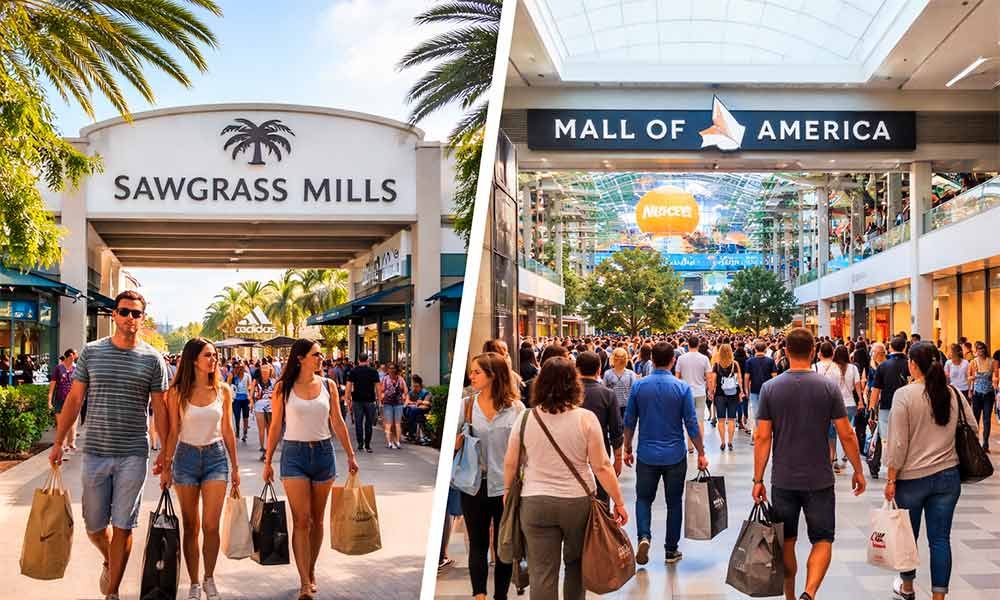
Mall of America is located in Bloomington, Minnesota.
Mall of America is widely recognized as the largest shopping mall in the United States based on retail space and number of stores. According to the official Mall of America website, the complex includes over 500 stores and more than 5 million square feet of total space.
But here’s the smarter question:
Does the largest mall equal the best shopping destination?
Especially if you are traveling internationally to spend money?
Let’s separate size from value.
What Is the Biggest Mall in the US?
Mall of America includes:
- 500+ stores
- Over 5 million square feet of total space
- Nickelodeon Universe indoor theme park
- SEA LIFE Aquarium
- Multiple hotels attached
- Dozens of restaurants
It is massive.
It is designed to keep visitors inside for hours — sometimes days.
But it is not an outlet mall.
And that distinction matters.
Is Mall of America Cheaper Because It’s Bigger?
No.
Mall of America is primarily a full retail mall, not a discount outlet center.
That means:
- Standard retail pricing
- Seasonal sales (not structural discounts)
- Brand flagship stores
- Entertainment-driven spending
Size increases variety — not necessarily savings.
How Miami Competes Without Being the Biggest
Miami does not have the biggest mall in the US.
What it has is a dense outlet ecosystem.
Key locations include:
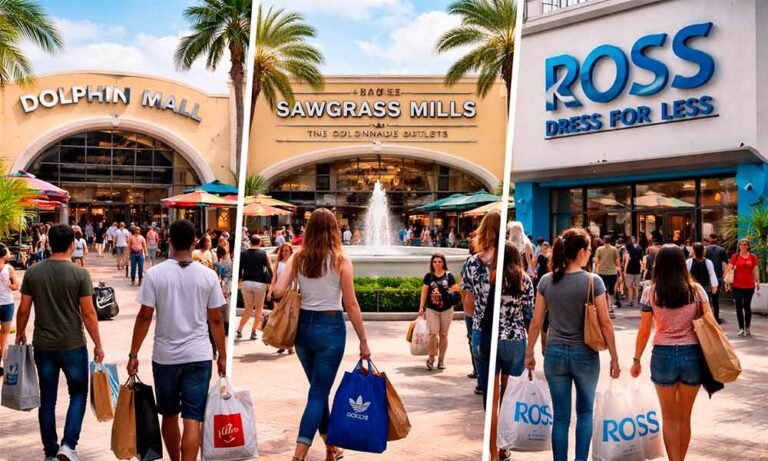
- Sawgrass Mills
- Dolphin Mall
Sawgrass Mills is one of the largest outlet centers in the country.
But more importantly:
It is built around discounted distribution models.
That changes your probability of finding deals.
Biggest Mall vs Best Shopping Strategy
Here’s the structural difference:
Mall of America
- Largest mall in the US
- Full retail pricing
- Experience-first environment
- Indoor mega-complex
Miami Outlets
- Discount-focused
- Outlet-specific production lines
- Clearance rotation
- Less entertainment, more transaction
If your goal is:
“I want to visit the biggest mall in America.”
Mall of America wins.
If your goal is:
“I want better odds at lower prices.”
Miami often has structural advantages.
Travel Considerations That Affect Value
Location
Mall of America is in Minnesota.
Miami is in Florida.
Climate
Minnesota winters are severe.
Miami operates year-round without weather disruption.
International Access
Miami is a major international gateway.
Minnesota is not a primary international entry hub.
Logistics influence cost.
Cost influences value.
Is It Worth Traveling to the Biggest Mall in the US?
It depends on your objective.
Travel primarily for:
- Entertainment experience → Mall of America
- Discount hunting → Miami outlets
The largest mall in the US is impressive.
But impressive and cost-efficient are not the same thing.
Final Verdict
Yes, Mall of America is the largest mall in the US.
But for international shoppers focused on maximizing purchasing power, Miami’s outlet structure may be the smarter option.
Size is spectacle.
Structure is strategy.
And strategy usually wins.
Many international travelers assume the biggest mall means the best prices. That assumption is often wrong.