
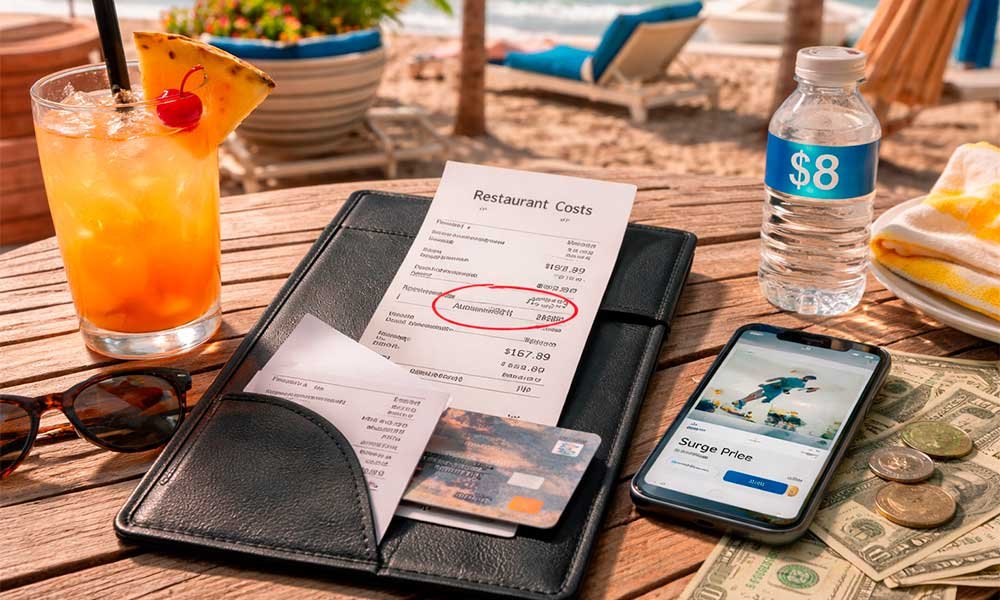
Miami usually does not feel expensive because of one shocking charge. It gets expensive because the number you saw first is rarely the number you end up paying. A hotel rate can leave out mandatory fees. A restaurant bill can already include gratuity. A quick ride can change price at the wrong hour. Even beach rentals, delivery apps, parking, tolls, ticket platforms and card fees can turn a normal day into a higher bill than expected. The real mistake is budgeting Miami by sticker price. This Spend Smart in Miami guide is about the quiet add-ons that make a trip feel more expensive once plans are already locked in, so you can read receipts more carefully, compare the full cost before booking, and leave room in your budget for the charges tourists usually notice only when they are already paying.
Miami doesn’t usually shock people at checkout. It shocks them slowly.
Not with one giant expense — but with small, constant charges that quietly inflate your trip total. By the time you notice, you’ve spent hundreds more than planned.
This isn’t about flights or luxury hotels. It’s about the hidden friction costs that most first-time visitors underestimate.
If you want to spend smart in Miami, these are the ones that matter.
1. Automatic Gratuity (You’re Probably Tipping Twice)
In many Miami restaurants — especially in South Beach and Brickell — an 18% to 20% service charge is automatically added to your bill.
Tourists often don’t notice.
Then they add another 18–20% on top.
That turns:
- A $120 dinner
Into - $165+ without realizing it
It’s legal. It’s common. And it’s one of the fastest ways budgets get distorted.
Always check the receipt before tipping.
2. Resort Fees That Aren’t Optional
Many hotels advertise a nightly rate — then add a mandatory resort fee of $25–$45 per night at check-in.
It usually covers:
- Wi-Fi
- Pool access
- Beach towels
- Gym use
Even if you don’t use any of it.
Three nights at $35 = +$105 you didn’t mentally calculate.
This is one of the reasons Miami can feel more expensive than expected.
3. Hotel Incidental Holds (Money You Can’t Touch)
Most hotels place a temporary hold of $100–$300 per night on your card.
It’s not a charge — but it reduces your available balance.
For travelers using debit cards or tight credit limits, this can create panic or force spending adjustments.
The hold is released later. But during the trip, it limits your flexibility.
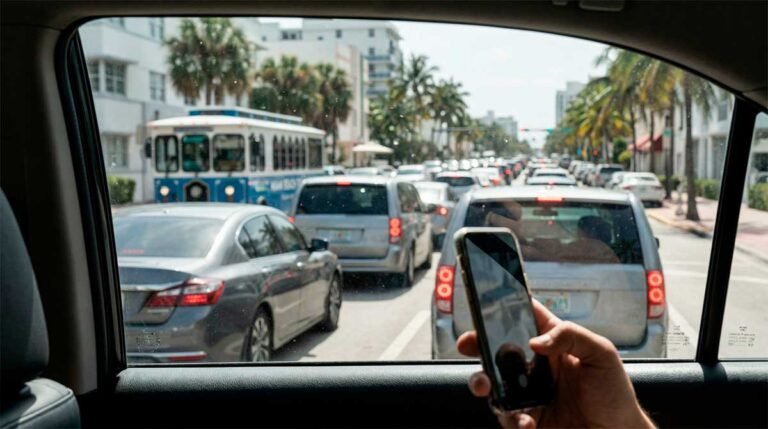
4. Surge Pricing (Especially at Night)
Uber and Lyft in Miami can spike hard:
- Rain
- Events
- Nightlife hours
- Airport rush
A $18 ride can suddenly cost $42.
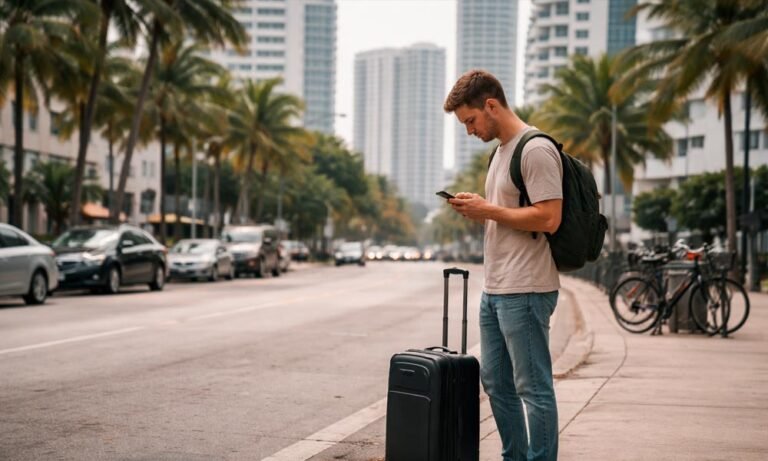
And because Miami spreads out, transportation decisions add up fast.
(If you’re evaluating mobility strategy, see our Move Smart guides.)
5. 7% Sales Tax + Restaurant Add-Ons
Florida has a 7% sales tax — and it applies to most purchases.
But restaurants often stack:
- Sales tax
- Automatic gratuity
- Service charges
- Credit card fees (sometimes)
A menu price is almost never your final price.
6. Event & Ticket Fees That Inflate 30%+
Concerts, boat parties, club entries and attractions often advertise a base price.
Then:
- Platform fee
- Service fee
- Processing fee
- Venue fee
A $60 ticket can easily become $85+.
This catches many visitors off guard.
7. Beach & Convenience Pricing
You’ll notice pricing differences quickly:
- $8–$10 bottled water in tourist zones
- $25–$35 beach chair rentals
- $20+ basic cocktails
Individually manageable.
Repeated daily? Budget distortion.
8. ATM & International Card Fees
International visitors often pay:
- ATM withdrawal fees
- Foreign transaction fees
- Dynamic currency conversion markups
It may look small — but repeated withdrawals compound.
9. Delivery App Inflation
Food delivery pricing in Miami includes:
- Menu markup
- Delivery fee
- Service fee
- Small order fee
- Driver tip
A $22 meal can quietly become $38.
If you’re staying without a car, this happens more than expected.
10. “It’s Vacation” Spending Psychology
This one isn’t a line item — but it’s real.
Miami is designed to encourage spontaneous spending:
- Ocean views
- Rooftop bars
- Influencer culture
- Upgrade prompts everywhere
You don’t overspend once.
You overspend $25 at a time.
That’s the real hidden cost.
How Much Do These Hidden Costs Add Up To?
On a 4-day trip, conservative estimates:
- Resort fees: $120
- Accidental double tipping: $80
- Surge pricing differences: $60
- Delivery + service fees: $70
- Incidental overspending: $150
That’s $400–$500 extra — without changing your hotel class or flight.
That’s why some travelers feel like Miami was “more expensive than expected.”
It wasn’t the headline costs.
It was friction.
How to Stay in Control (Without Feeling Restricted)
You don’t need to avoid Miami’s experiences.
You just need awareness.
Before spending:
- Check for automatic gratuity
- Look at final ticket totals before checkout
- Budget daily transportation realistically
- Expect resort fees
- Assume everything in tourist zones costs more
Planning for these costs prevents emotional spending later.
That’s what Spend Smart in Miami really means.
Final Perspective
Miami isn’t a trap.
But it is a city optimized for premium pricing.
The travelers who enjoy it most aren’t the ones who spend the least.
They’re the ones who understand where the money actually goes.
If you plan for the hidden costs in Miami, the trip feels intentional — not inflated.