

A Miami budget usually breaks in the middle, not at the obvious places. Flights, hotels, and major activities are easy to count before the trip, but the real damage often comes from decisions that feel too small to track: another short ride, one more drink, parking “just for a few minutes,” snacks near the beach, tips added all day, and convenience choices made because the city is hot, spread out, and built around movement. The problem is not only that Miami is expensive; it is that ordinary Miami days repeat expensive little moments. This page is about spotting those leaks before they turn a reasonable daily budget into a number that feels confusing by night. If you want to enjoy Miami without constantly wondering where the money went, the smarter move is not to chase fake “cheap Miami” hacks — it is to control the habits that quietly multiply.
Most people don’t destroy their Miami budget on hotels or flights. They lose it slowly.
- In short Uber rides.
- In $6 waters.
- In “it’s just one more drink.”
- In convenience.
If you’ve already read our breakdown on how much money you really need per day in Miami, you know the realistic daily ranges How Much Money You Really Need ….
This guide is different.
This is about where that daily number quietly explodes.
Welcome to the real side of Spend Smart.
1. Short Uber Rides That Turn Into a Habit
A $12 Uber doesn’t feel expensive.
Until you take:
- One to brunch
- One back to the hotel
- One to the beach
- One to dinner
- One back at night
Suddenly:
$12 becomes $60–$80 in a single day.
Miami is spread out. Distances look short on the map but are not walkable in heat and humidity.
Small rides. Big accumulation.
Smart move:
Cluster activities by neighborhood.
If you’re in South Beach, stay in South Beach that day.
If you’re in Brickell, plan your day around it.
Movement costs compound faster than meals.
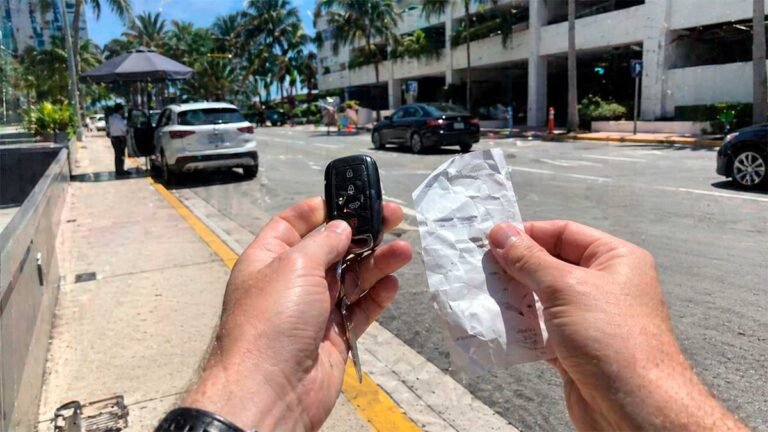
2. Parking + Valet + “Just for a Few Minutes”
If you rent a car, the silent drain begins.
Typical scenario:
- $20–$35 parking garage
- $30–$50 hotel overnight
- $10–$20 valet “just for dinner”
It doesn’t feel dramatic.
It feels normal.
But parking alone can equal a full restaurant bill.
Transportation isn’t just Uber.
It’s friction. And friction costs money.
3. Food Leaks: The $6–$15 Micro-Expenses
Nobody budgets for:
- Bottled water
- Coffee stops
- Snacks
- Smoothies
- Poolside drinks
- Extra appetizers
But Miami pricing adds:
- Sales tax
- Automatic gratuity (often 18–20%)
- Tourist area markup
A casual lunch listed at $25 often becomes:
$32–$36 without noticing.
It’s not a scam.
It’s structure.
Multiply that by 3 meals + extras, and your “moderate day” jumps fast.
4. The Tip Multiplier Effect
Tipping culture in the U.S. is normal.
The surprise is the accumulation.
You tip:
- Servers
- Bartenders
- Uber drivers
- Hotel staff
- Valet
Each tip seems small.
Together? It can add $30–$60 per day.
That’s not about being generous or not.
It’s about understanding the system before it surprises you.
If you didn’t account for it in your daily estimate, your budget will feel wrong — even if prices were correct.
5. “We’re on Vacation” Psychology
This is the most expensive factor.
- “Let’s not walk.”
- “Let’s just order another round.”
- “It’s only $10 more.”
- “We’re in Miami.”
Vacation logic suspends friction.
You don’t feel the money leaving.
But emotional convenience is expensive.
The city isn’t draining your wallet.
Comfort is.
6. Convenience Shopping (The CVS Trap)
You forgot sunscreen.
You need flip-flops.
You want a quick snack near the hotel.
Tourist-area convenience stores can charge:
- 2x supermarket pricing
- Inflated souvenir prices
- Premium on basics
One quick stop can cost $40–$60 in items that would cost $20 elsewhere.
Not catastrophic.
But cumulative.
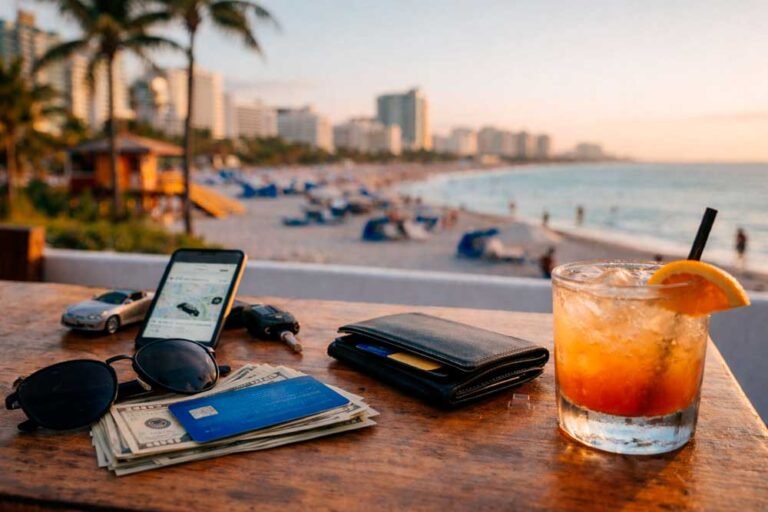
7. Alcohol Is a Budget Accelerator
Drinks in Miami aren’t shocking individually.
They’re shocking in frequency.
- $18 cocktail
- $9 beer
- $22 rooftop drink
- Automatic gratuity
Two people.
Two rounds.
That’s $80+.
Not because it’s luxury.
Because it’s normal pricing in nightlife areas.
The Real Problem Isn’t Price — It’s Repetition
Most travelers don’t underestimate Miami’s price level.
They underestimate:
- Frequency
- Friction
- Add-ons
- Psychology
That’s why the daily number we break down in our main budget guide How Much Money You Really Need … often feels “wrong” to people — even when it’s accurate.
Because leaks weren’t accounted for.
How to Actually Stay on Budget in Miami
Not by chasing “cheap hacks.”
But by controlling repetition.
Practical adjustments:
- Group activities geographically
- Choose 1 paid experience per day (not 3)
- Set a drink limit before going out
- Buy basics at supermarkets, not hotel shops
- Track small expenses in notes (yes, even on vacation)
Miami isn’t impossible.
It’s just friction-heavy.
Final Reality Check
Knowing how much money you need per day is step one How Much Money You Really Need ….
Knowing where it disappears is step two.
If your trip feels more expensive than expected, it’s rarely the hotel.
It’s the small decisions repeated five times.
That’s the difference between surviving Miami…
…and enjoying it without financial regret.
Welcome to Spend Smart in Miami.