If you are reading this, you’ve likely seen the glossy ads promising that the Go City Miami Pass will save you 50% on your vacation. In a city where a mediocre cocktail in Brickell now costs $24 before tip, that promise sounds like a lifeline.
But here is the reality check: the Go City Pass is a productivity contract, not a discount voucher.
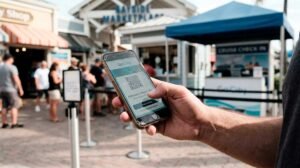
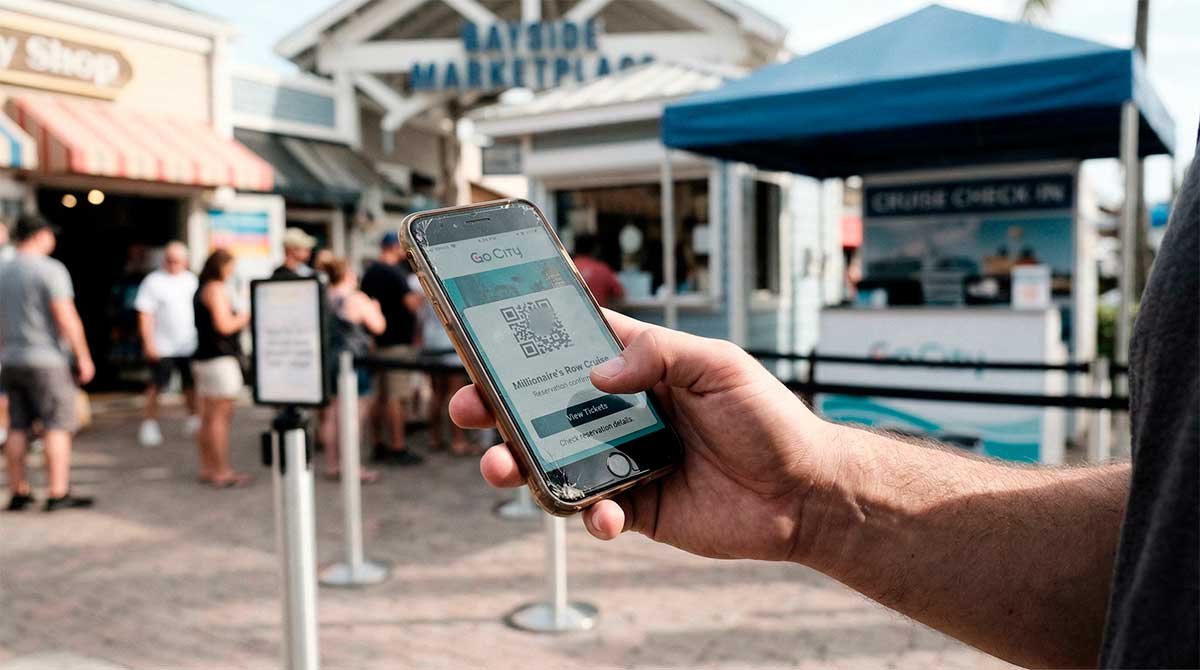
Miami is not a destination you can “coupon” your way through without paying a massive tax in time and frustration. Between the perpetual construction on the I-95 and the skyrocketing costs of ride-shares, the math used by travel bloggers to justify these passes is dangerously obsolete. At Miami The Hype, we don’t look at the “potential” savings; we look at the actual bank statement you’ll be staring at while waiting 45 minutes for an Uber at the Bayside Marketplace.
The Daily Efficiency Score (DES)
To determine if this pass belongs in your Apple Wallet, you must stop looking at ticket prices and start looking at your Daily Efficiency Score (DES).
The average “Premium” attraction gate price in Miami—think high-end boat tours or private airboat excursions—has stabilized at approximately $70 to $90, including the 7% Florida Sales Tax. If you buy a 3-day All-Inclusive Pass for roughly $180 ($60 per day), the math looks simple: visit one big thing, and you’re even, right?
Wrong. The marketing conveniently ignores the Movement Penalty.
The Movement Penalty Formula:
Real Cost = Pass Price + Uber/Valet + (Hours Lost X $50)
Practical Example: The “Value Gap”
To see the formula in action, let’s compare a Standard Sightseeing Pass (often cheaper but scattered) versus staying Hyper-Local (doing attractions within one zone):
- Scenario A (The “Cheap” Pass): You buy a pass for $80. However, it forces you to drive from Miami Beach to Everglades City and back to Wynwood.
- Uber/Gas/Parking: $70
- Time Lost in Transit: 3 hours ($150 value)
- Real Cost: $80 + $70 + $150 = $300
- Scenario B (The Smart Choice): You pay $120 for a premium, centralized experience or simply pay out-of-pocket for local spots.
- Uber/Gas/Parking: $20
- Time Lost in Transit: 0.5 hours ($25 value)
- Real Cost: $120 + $20 + $25 = $165
Even though Scenario A had a cheaper entry price, the Movement Penalty makes it nearly twice as expensive in terms of total value and lost vacation time.
We value a traveler’s hour in Miami at a minimum of $50—the “opportunity cost” of not being at the beach or a world-class rooftop. If a pass “saves” you $20 but forces you to spend 90 minutes in traffic moving between disjointed attractions, you have actually lost $55 in value.
The Geography of Greed: Why “All-Inclusive” is a Lie
The Go City inventory includes over 40 attractions, but they are scattered across a geographical area that makes a single-day pass a logistical nightmare.
The Orlando Deception
The pass still lists the Kennedy Space Center and Gatorland. For a global traveler landing at MIA, this is the ultimate “gotcha.” Cabo Canaveral is 215 miles (346 km) from Miami. That is a 3.5 to 4-hour drive each way. If you use your Miami pass for an Orlando attraction, you aren’t just paying for gas and tolls; you are incinerating two days of your vacation on the Florida Turnpike.
The South-North Bottleneck
Consider the distance from Zoo Miami (South) to the Fort Lauderdale Glass Bottom Boat (North).
- Distance: 52 miles (83 km).
- The Reality: With the ongoing expansion of the Palmetto Expressway, this drive can take upwards of 2 hours during the “rush window” (which in Miami is now 7 AM to 8 PM).
If you try to “maximize” your pass by hitting both in one day, you will spend $120 in Uber fees and 4 hours in a car to save $30 on tickets. Miami The Hype calls this “Financial Masochism.”
The “Misinformed Tourist” vs. The “MTH Reader”
To illustrate how the pass drains your wallet, let’s look at a Tuesday in April 2026 for two different types of travelers staying at the Loews Miami Beach on Collins Ave.
The Misinformed Tourist (The Spreadsheet Victim)
- 9:00 AM: Leaves South Beach for Zoo Miami. Uber cost: $55. Time: 65 minutes.
- 1:00 PM: Finishes the Zoo. Wants to use the pass for the Seaquarium. Uber cost: $40. Time: 50 minutes.
- 4:00 PM: Finishes Seaquarium. Rushes to Bayside for the Millionaire’s Row Cruise. Uber cost: $25. Time: 40 minutes (stuck on the Rickenbacker Causeway).
- 5:30 PM: Misses the boat because the 5:00 PM departure was full.
- Financials: Paid $60 for the day’s pass + $120 in Ubers.
- The Damage: $180 spent to see two things. They could have bought individual tickets for $105 and stayed on the beach.
The MTH Reader (The Strategic Professional)
- 10:00 AM: Walks to the Big Bus stop on Lincoln Road (Free). Uses the pass for the Hop-on Hop-off ($65 value).
- 12:00 PM: Hoops off at Bayside. Takes the Millionaire’s Row Cruise ($35 value).
- 2:00 PM: Grabs a $5 local empanada, avoids the tourist restaurants, and takes the Mover (Free) back toward Brickell.
- 7:00 PM: Uses the final “credit” for the Salsa Night! in South Beach ($94 value).
- Financials: Used a 3-Attraction Explorer Pass (approx. $36 per attraction cost).
- The Damage: Spent $108 for $194 worth of value. Total Uber spend: $0.
The “Musts” vs. The “Dust”
Not all attractions are created equal. The cost of labor and energy has pushed ticket prices up, making some choices significantly better than others.
High-Yield Winners (Use Your Pass Here)
- Salsa Night! (Lessons, Mojitos, & Dancing): Retailing at $94, this is the highest ROI on the pass. It’s located in South Beach (Mango’s Tropical Cafe area), making it easy to access without a car.
- Key West Day Trip: This retails for $85+. It’s a 4-hour (6.4 km) bus ride each way. It is exhausting, but it is the only way to make an All-Inclusive pass “pay for itself” in a single day.
- Big Bus Miami: At $65, this is a “Smart Comparison” winner because it doubles as your transportation between the Beach and Wynwood.
Low-Yield Traps (Pay Out of Pocket)
- Wynwood Walls: The gate price is $12. If you use a pass “credit” worth $40 on a $12 ticket, you are literally throwing $28 into the trash.
- Miami Children’s Museum: Great for kids, but at $24, it doesn’t justify the pass cost.
- Duck Tours South Beach: While fun, the $45 price point is “Mid-Tier.” Only use the pass here if you’ve already done the $90 attractions.
The Hidden “Friction” of the Tourist Economy
The Go City website won’t tell you about the “Soft Costs” that come with using their QR codes.
1. The Reservation Bottleneck
Every boat tour and the Key West bus require 24-48 hours’ notice for pass holders. You cannot simply “show up.” If the boat is 90% full with full-paying customers, the pass holders are often pushed to the next available slot (usually 3 hours later). This “holding pattern” is where your vacation goes to die.
2. Valet & Parking Rates
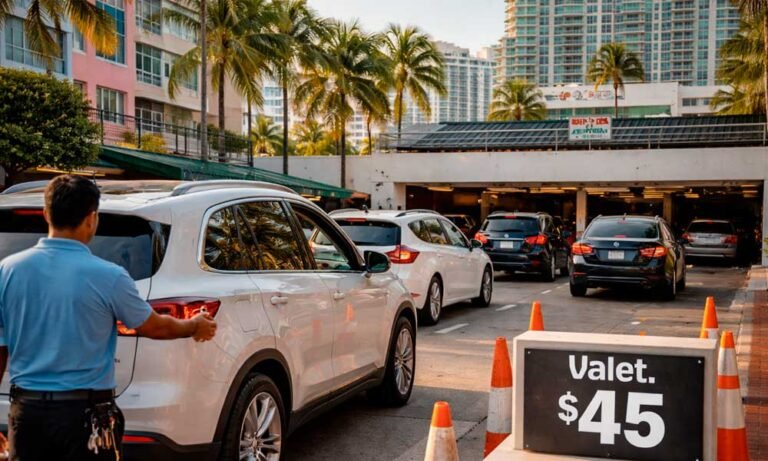
If you are driving a rental car to “save” on Ubers, you haven’t checked the valet rates.
- Bayside Marketplace Parking: $45 for 4 hours.
- South Beach Public Garage: $4 per hour (if you can find a spot).
- Zoo Miami: Free (The only win).
3. The 7% Sales Tax & Service Charges
When you see a price on a blog, it usually excludes the 7% Florida Sales Tax. The Go City Pass includes this, which is a small but real benefit. However, for experiences like the Salsa Night or Sunset Cruises, be prepared for “Mandatory Gratuity” on any included drinks. “Auto-Grat” of 20% is the standard for anything involving a QR code.
Strategic Recommendation: How to Win
Stop looking at the All-Inclusive Pass. The pressure to perform ruins the vibe of a Miami vacation. Instead, look at the Explorer Pass.
The Explorer Pass allows you to pick 2, 3, 4, or 5 attractions and gives you 60 days to use them. This is the Spend Smart choice. It allows you to wait for a clear sky to visit the Everglades or a cool evening for a boat cruise without feeling like you are “losing money” by sitting at a café on Ocean Drive.
Comparison of Pass Options
Which Pass Fits Your Trip?
| Feature | All-Inclusive (1-5 Days) | Explorer (2-5 Attractions) |
| Best For | The “Bucket List” Marathoner | The Chill High-Roller |
| Daily Pressure | Extreme (3+ items/day) | Zero (Valid for 60 days) |
| Max ROI | Key West + Big Bus + Salsa | Salsa + Boat Cruise + Everglades |
| Value | Hard to hit break-even | Guaranteed $40-$60 profit |
FAQ: What the Tourist Office Won’t Tell You
1. Can I use the Go City Pass for the Brightline train?
No. While there was talk of a partnership, as of April 2026, the Go City Pass does not cover Brightline fares. You will still pay $30+ for a Smart Class ticket from Miami to Fort Lauderdale.
2. Is the “Skip the Line” feature real?
Absolutely not. You are skip-the-line for buying the ticket, but you are in the same security and boarding line as everyone else. At the Everglades Airboat Tours, this wait can still be 45 minutes on a Saturday.
3. What happens if it rains?
This is the danger of the All-Inclusive Pass. Miami’s weather patterns are unpredictable. If you have a 1-day pass and it pours, your $94 investment is gone. The Explorer Pass protects you from the rain.
4. Is the Seaquarium still included?
Yes, but check local news before going. Operational hours and animal exhibits are subject to frequent changes due to ongoing facility renovations.
Latest Spend Smart Guides
- Go City Miami Pass: Is the Discount Worth the Movement Penalty?

- The $40 Zuma Hack: Beating Miami’s Predatory “Vibe Tax”
- Wedding Dress Shopping in Miami: Is Miracle Mile Worth It?
- What Electronics Are Still Worth Buying in Miami
- What to Buy at Walgreens in Miami (And What to Skip)
- What to Buy at CVS in Miami