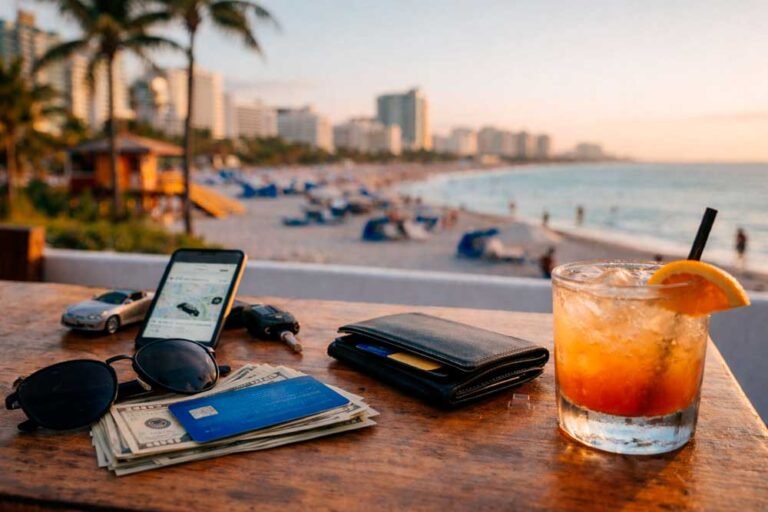
The cheapest nightly rate on your screen is almost certainly the most expensive mistake of your trip.
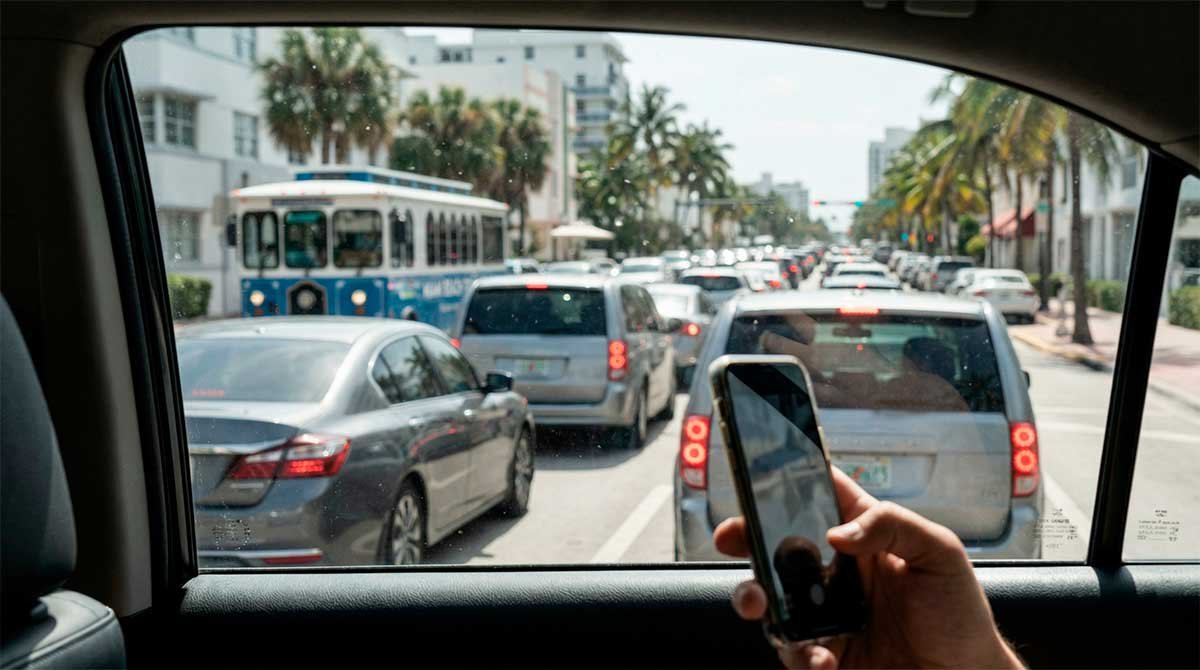
In 2026, Miami is no longer a city where you can “just drive” everywhere. The expansion of the financial district and the density of the Beach have turned a 10-mile (16 km) commute into a 90-minute ordeal. If you book a hotel based on the base price alone, you are walking into a financial ambush.
At Miami The Hype, we don’t look at the booking confirmation. We look at the Real Daily Rate (RDR). This is the only number that matters if you want to Spend Smart.
The Reality Check: The Real Daily Rate (RDR)
To find the truth behind the marketing, you have to look at the total overhead of existing in a specific neighborhood. Before you click “book,” apply this calculation to your budget:
RDR = (Price + Fees + Parking) + (Uber X times 1.5)
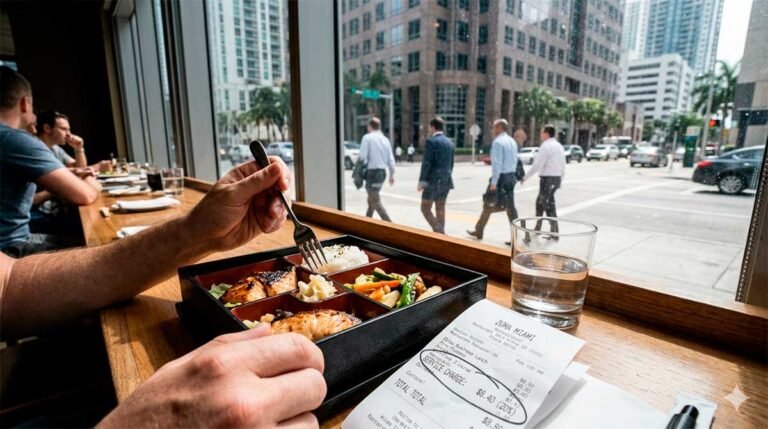
- Price + Fees: The nightly rate plus the mandatory “Resort Fees” (which now average $35–$50 in 2026).
- Parking: Valet fees at most high-end hotels are now $50 to $65 per night.
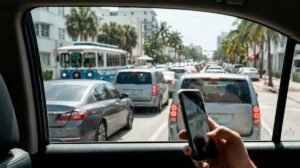
- The 1.5 Chaos Multiplier: This accounts for the “Miami Surprise.” Rain, a convention at the Kaseya Center, or a bridge opening can turn a standard $30 Uber into a $55 surge-priced nightmare instantly.
If your hotel is isolated, you are paying this “Distance Tax” every time you want a coffee or a dinner that isn’t in a hotel lobby.
The Math in Action: A 4-Day Case Study
Let’s look at the “Sunny Isles Trap” versus a “Pricey” Boutique in South Beach for a standard 4-day trip in 2026.
Option A: The Sunny Isles “Deal”
- Advertised Rate: $215/night.
- The Hidden Reality: $45 Resort Fee + $55 Valet Parking. Total before leaving the room: $315/night.
- The Logistics: You want to see the Design District, Wynwood, and have one dinner in Brickell.
- Transportation: Two round-trip Ubers per day (Chaos Adjusted): $95/day.
- TOTAL DAILY COST: $410
Option B: The South Beach (5th-15th St) “Expensive” Boutique
- Advertised Rate: $290/night.
- The Hidden Reality: $35 Resort Fee. You ditch the rental car, so Parking is $0. Total before leaving the room: $325/night.
- The Logistics: You walk to the beach and local restaurants. You use the free Trolley for Lincoln Road.
- Transportation: One Uber per day for a long-distance trip (Chaos Adjusted): $35/day.
- TOTAL DAILY COST: $360
The Result: The “expensive” hotel actually saves you $50 a day ($200 over the trip) and gives you back roughly 10 hours of your life that would have been spent in the back of a car on Collins Avenue.
Strategic Neighborhood Breakdown
To Stay Smart in 2026, you need to match your hotel to your movement.
1. South Beach: The “Pedestrian Dividend” (5th to 15th St)
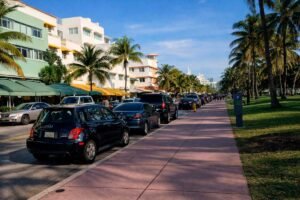
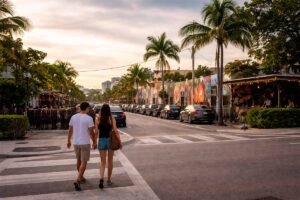
This is the only area where the math consistently works in your favor. If you stay between 5th and 15th, you are in the “Sweet Spot.”
- Why it works: You can walk to 80% of what you need.
- The Secret Weapon: The South Beach Trolley. It’s free, covers the entire island, and runs every 10–15 minutes. It effectively removes the need for Ubers for anything on the Beach.
- Verdict: Stay here if you want to maximize your budget for food and experiences rather than asphalt and parking.
2. Brickell: The Executive Hub
Brickell is the most expensive neighborhood in Miami for a reason: it’s the only one that functions like a real city.
- Why it works: You have the Metromover. This elevated train is 100% free and connects you to Downtown, the Heat arena, and various museums.
- The Savings: If you stay in Brickell, you can reach the mainland’s best dining and nightlife without ever touching a car.
- Verdict: Stay here if your itinerary is “Mainland Heavy” (Design District, Wynwood, Coconut Grove).
3. Sunny Isles: The Isolated Luxury
Sunny Isles is a beautiful place to be stranded.
- The Problem: It is a narrow strip of land with one main road (Collins Ave) that is perpetually clogged. There is no free transit to the rest of the city.
- The Savings: None, unless you literally never leave the hotel property.
- Verdict: Only stay here if you are on a “Resort Only” vacation. If you plan to “see Miami,” Sunny Isles will bankrupt your time and your wallet.
2026 Comparison Matrix
| Neighborhood | Vibe | Best For | Hidden “Killer” Cost |
| South Beach | Classic / Walkable | Savings & Lifestyle | Small, older rooms. |
| Brickell | Urban / Modern | Efficiency & Food | Parking is $60+/night. |
| Sunny Isles | Relaxed / Luxury | Staying at the Pool | 90-min traffic to the City. |
The Final Verdict: Buy it or Skip it?
- SKIP IT: Any hotel in Sunny Isles or Mid-Beach (40th-60th St) if you don’t have a $1,000 “Uber & Parking” budget line item. You are paying for a view, but you are buying a prison sentence in traffic.
- BUY IT: A boutique hotel in South Beach between 5th and 15th. It is the only way to experience Miami in 2026 without the “Distance Tax.”
- BUY IT: A hotel within two blocks of a Metromover station (How to Use Public Transportation in Miami) in Brickell. The convenience of free rail travel in a gridlocked city is worth the higher nightly rate.
FAQ: Real Talk for 2026
Is it cheaper to rent a car?
Almost never. In 2026, between the rental cost ($65/day), gas, and hotel parking ($55/night), you are looking at $120+ per day before you even pay for public parking at your destination. Unless you are driving to the Everglades or Orlando, skip the car.
Does the Brightline train help with hotel costs?
Yes. If you stay in Downtown, the Brightline allows you to reach Aventura Mall or Fort Lauderdale in 30 minutes for a fraction of a private car cost. It’s the ultimate Move Smart play.
What is the “Resort Fee” for?
In Miami, it’s a legal way for hotels to show a lower price on sites like Expedia. It rarely adds value. Always assume the real price is $40 higher than what you see on the search results.
Latest Stay Smart Guides
- The “Cheap” Hotel Trap: How to Actually Save Money in Miami

- Miami Beach: Where to Stay, How to Get Around, and What to Know Before You Book
- Mid-Beach: The Quiet Miami Beach Base Most Tourists Overlook
- Where to Stay in Miami Before a Cruise
- Is Wynwood a Smart Place to Stay in Miami — or Just Better to Visit?
- Airbnb in Miami: How to Book Smarter and Avoid Bad Locations