
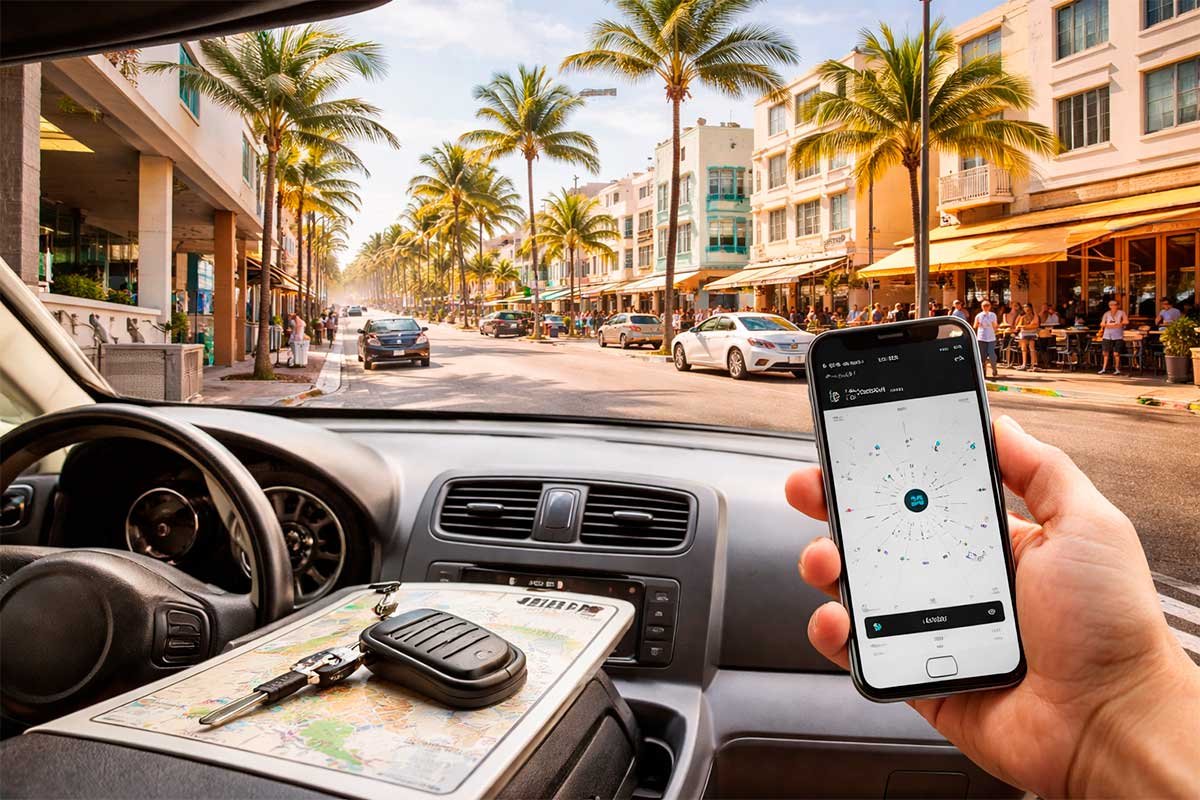
Miami Without a Car vs Rental Car: What a Weekend Really Costs
Most tourists compare the wrong numbers when they try to decide between Miami without a car vs rental car.
The usual mistake is simple: they compare the advertised daily rental rate with a few Uber rides and assume the cheaper option is obvious. In Miami, that shortcut misses the part that actually changes the total.
What matters here is not rental price vs Uber price. It is full weekend vs full weekend.
In real trips, the decision usually turns on things that look secondary at first and then quietly dominate the math: hotel parking, parking near busy areas, rental taxes and fees, gas, surge pricing, hotel location, walking tolerance, and how much convenience you keep buying stop after stop.
That is also why this decision feels so inconsistent online. Two people can both say “renting a car in Miami was worth it” and still be describing completely different weekends.
If you want the clean answer upfront, here it is.
This is the kind of Miami decision that looks easy at booking stage and gets more expensive later. The car itself is rarely the whole story. The weekend pattern is.
Quick answer: is it cheaper to rent a car in Miami or use Uber?
For a short, well-planned Miami weekend, staying in the right area and using rideshares is often the simpler and cheaper choice. A rental car becomes more competitive when your trip is spread out, your costs are shared, or you are willing to manage parking strategically instead of paying for convenience every time.
Put simply, if you are asking whether it is cheaper to rent a car in Miami or use Uber for a weekend, the answer is usually this: Uber wins on compact trips, while a rental becomes more competitive on spread-out trips.
Quick answer table: what a Miami weekend usually costs
| Weekend transportation style | Low | Typical | High |
|---|---|---|---|
| Without a car | $60 | $100 | $180 |
| Rental car — budget-minded | $110 | $150 | $210 |
| Rental car — balanced | $140 | $210 | $290 |
| Rental car — convenience-first | $190 | $280 | $380 |
These are practical planning ranges, not guarantees. In Miami, the total changes most with where you stay, how often you move, and how you deal with parking.
A cheap rental does not always mean a cheap weekend.
In Miami, parking and hotel location often change the math more than the advertised daily rate.
Why most tourists get this decision wrong
Because they compare one visible number and ignore the structure of the weekend.
The rental rate is visible. Uber prices are visible. What is less visible at first is everything around those choices: hotel parking, short paid parking stops, route mistakes, backtracking across the city, and the cost of choosing a hotel that forces extra movement all day.
That is why this comparison gets distorted so easily online. People talk about “having a car in Miami” as if that were one single experience, when in practice it can mean very different weekends with very different spending patterns.
- a traveler staying in a practical base and moving selectively
- a traveler crossing the city repeatedly because the hotel base was weak
- a driver paying for convenience at almost every stop
- a budget-minded driver accepting more walking and planning parking better
All of those people may describe their choice as the right one. That does not mean they are contradicting each other. It usually means they are talking about different Miami weekends.
The base scenario for this comparison
To keep this useful, this article is based on one realistic weekend instead of trying to cover every trip style at once.
Generic advice about Miami transportation breaks down fast because the answer changes with hotel location, parking habits, and how aggressively you move around the city. So instead of pretending there is one universal number, it makes more sense to compare one believable weekend pattern and build from there.
| Assumption | Base scenario |
|---|---|
| Traveler | Solo traveler |
| Trip length | 2 full days |
| Trip style | Short leisure weekend |
| Hotel area | Walkable or semi-practical base |
| Itinerary | Breakfast, beach or sightseeing, lunch, one afternoon move, dinner, evening return |
| Long-distance driving | Not included |
| Major shopping haul | Not included |
| Airport transfer | Not included in the core comparison |
If you are traveling as a couple or with friends, the rental car usually becomes more competitive because the cost can be split.
From a practical trip-planning perspective, this is where Miami stops being a simple “car or no car” question. In many cases, the better answer starts with hotel base, not transportation mode.
That said, hotel parking is where many “cheap rental” calculations start to fall apart. A car that looked affordable at booking can stop looking cheap once overnight parking is added to the weekend total.
Scenario 1: a Miami weekend without a car
A no-car weekend works best when your hotel reduces the need to move constantly.
When the base is right, skipping the rental can feel much easier than expected. When the base is wrong, rideshare starts compensating for a hotel decision that was never really practical.
If your hotel is in a practical area and your weekend is reasonably compact, not renting a car can feel easier than expected. If your hotel is badly placed and your plans are scattered, rideshare costs rise fast.
If you are still deciding whether this kind of trip setup is realistic, see Can You Stay in Miami Without Renting a Car?. It helps frame the same decision from the lodging side, not just the transportation side.
A realistic no-car weekend
A realistic no-car day in Miami usually works best when it feels compact rather than ambitious. Think less “cross the city whenever I feel like it” and more “stay mostly within one functional orbit, then add one or two meaningful moves.”
A plausible version might include:
- hotel to breakfast
- breakfast to beach or sightseeing
- beach area to lunch
- lunch to one afternoon stop
- afternoon stop to dinner
- dinner back to hotel
That kind of day is not automatically expensive.
It becomes expensive when the hotel is in the wrong place or the itinerary keeps jumping between disconnected parts of the city. A compact day is one thing. A day that keeps crossing Miami for no good reason is something else entirely.
Estimated weekend cost without a car
| No-car weekend pattern | Estimated total |
|---|---|
| Compact, well-located weekend | $60–$90 |
| Typical tourist weekend | $90–$150 |
| Scattered weekend with longer rides | $150–$180+ |
What makes a no-car weekend cheaper
A no-car weekend usually works best when the hotel is doing part of the job for you. A walkable or semi-practical base cuts the number of rides you need, reduces bad route decisions, and makes the whole weekend feel less fragmented.
It also helps when your itinerary stays compact. If you are mostly moving within one main zone, plus one or two extra stops, rideshare can stay very reasonable. The math gets worse when the hotel is poorly placed, the schedule keeps jumping between neighborhoods, or every part of the day requires a separate car ride.
A no-car weekend can be cheaper if your hotel location does the heavy lifting.
If the base is wrong, rideshare starts paying for a problem that began with the hotel.
That is also why a transportation decision is often really a lodging decision in disguise. If you are still choosing your base, Where Not to Stay in Miami is useful because it helps avoid areas that create extra cost and friction later.
The experience difference most cost comparisons ignore
This decision is not only financial. It is also about friction.
On paper, two options can look relatively close. In practice, they can feel completely different. A no-car weekend usually removes parking stress, cuts down on micro-decisions, and makes it harder to overspend through convenience. The trade-off is reduced spontaneity for longer or scattered trips.
A rental car does the opposite. It gives you control, faster plan changes, and better tolerance for multi-stop days. But it also creates a steady stream of little decisions: where to park, whether this garage is worth it, whether this stop is close enough, whether moving the car again is actually a good idea.
That difference matters because travelers value different things. Some would rather pay a bit more to avoid parking stress altogether. Others want the freedom badly enough that the extra cost still feels worth it.
Scenario 2: a weekend with a rental car
This is where generic articles usually fail.
“Rental car” is not one fixed scenario. In Miami, it usually means one of several different behaviors, and those behaviors do not cost the same. That is why so much advice online sounds contradictory even when each person thinks they are being honest.
The three real rental-car styles in Miami
1) Convenience-first driver
This traveler wants the car to remove effort.
They want to park close to the beach, close to dinner, close to shopping, and close to everything else. They do not want extra walking. They do not want to think too much about parking strategy.
This is the version of renting a car that feels easiest and often costs the most.
2) Balanced driver
This traveler wants flexibility, but not at any price.
They will pay for parking when it makes sense, avoid the worst convenience premiums when possible, and accept a reasonable walk instead of insisting on stopping at the door.
This is usually the most realistic middle ground.
3) Budget-minded driver
This traveler uses the car strategically.
They think about route order. They avoid paying for parking every single time. They accept more walking. They do not expect the car to erase all friction.
This is the version of renting a car that can look much better financially than many tourists assume.
In other words, the same rental car can produce a very different final bill depending on whether you use it as a freedom tool, a convenience machine, or a budget-controlled asset.
Parking strategy changes the rental cost
| Rental car style | Parking pattern | Convenience level | Typical result |
|---|---|---|---|
| Convenience-first | Frequent paid parking, close access, little walking | High | Highest total cost |
| Balanced | Mix of paid parking and practical choices | Medium | Mid-range total |
| Budget-minded | More planning, more walking, fewer convenience purchases | Low to medium | Lowest rental-car total |
This is the missing piece in most comparisons.
The cost of renting a car in Miami changes not only because of the car itself, but because of how you use it once you have it.
Estimated weekend cost with a rental car
Core weekend cost table
| Cost item | Estimated weekend cost |
|---|---|
| Base rental price | $70–$140 |
| Taxes and fees | $25–$50 |
| Gas | $10–$25 |
| Hotel parking | $0–$110 |
| Parking near busy areas | $10–$60+ |
| Total | $115–$385+ |
Cost by driving style
| Rental car style | Low | Typical | High |
|---|---|---|---|
| Budget-minded | $110 | $150 | $210 |
| Balanced | $140 | $210 | $290 |
| Convenience-first | $190 | $280 | $380 |
That is why online advice about rental cars in Miami often feels contradictory.
Different people are describing different behaviors while talking as if they are describing the same trip.
Miami parking costs: the hidden factor that changes the math
The biggest variable is parking.
Not because every parking situation in Miami is absurd, but because parking is where “cheap rental” math usually starts to break. It is the part of the total that reacts most aggressively to behavior.
If you want close access everywhere, dislike walking, and keep paying for convenience without much strategy, parking can reshape the whole weekend budget. If you are more selective, accept some walking, and think in terms of route order instead of constant door-to-door convenience, the same rental becomes much easier to justify.
That makes parking less of a fixed fee and more of a multiplier for your travel style.
It is also why driving at the wrong times can quietly reduce the value of the rental even before parking costs do. If your trip will involve a lot of road movement, Best Time to Drive in Miami is worth reading because traffic timing changes how useful that flexibility really feels.
When does a rental car actually pay off in Miami?
A rental car becomes more competitive when the car is actually helping you cover meaningful distance, support a more complex itinerary, or replace repeated medium and longer rides. It becomes much less attractive when it mostly sits parked while you keep paying to keep it nearby.
A rental car usually starts to make more sense when it is solving a real movement problem. That tends to happen when the weekend covers multiple neighborhoods, includes shopping or heavier logistics, involves several medium or longer rides, or lets costs be shared with another traveler.
A no-car weekend usually wins when the trip is compact, the hotel base is strong, and the plan stays centered on one main area with only a few side moves. In that kind of weekend, simplicity itself becomes part of the savings.
Break-even logic in plain English
If your weekend is mostly “stay in one good area and move a few times,” rideshare usually makes more sense.
If your weekend is “move around a lot, cover several areas, carry shopping, and split costs,” a rental starts to compete much more seriously.
If your weekend is “I want total flexibility, but I also want to park close to everything,” the rental may still be worth it emotionally, but it often stops being the cheaper choice financially.
What many tourists forget to compare
| Cost item | Without a car | Rental car |
|---|---|---|
| Ride costs | Yes | No |
| Hotel parking | No | Yes |
| Parking near attractions or busy areas | No | Yes |
| Gas | No | Yes |
| Rental taxes and fees | No | Yes |
| Surge pricing | Sometimes | No |
| Ability to change plans instantly | Medium | High |
| Parking stress | None | Varies a lot |
This is not really an Uber-vs-rental headline battle.
It is a convenience-structure decision.
Side-by-side weekend comparison
| Category | Without a car | Rental car |
|---|---|---|
| Best-case total | Lower | Lower only with good strategy |
| Typical total | Often lower | Often higher |
| Simplicity | Higher | Medium |
| Flexibility | Medium | Higher |
| Parking pressure | None | High enough to change the math |
| Budget surprise risk | Medium | Higher if convenience spending keeps stacking up |
| Best for | Compact urban weekend | Spread-out or multi-stop weekend |
Best choice by traveler type
For a short Miami Beach or Brickell weekend, staying without a car is usually the cleaner answer. The same tends to be true when you are based in a walkable area and your itinerary is compact enough that you are not forcing long jumps across the city.
A rental car becomes more attractive when the weekend includes multiple neighborhoods, shopping stops, longer movement patterns, or shared costs with a partner or friends. It also improves when you are genuinely willing to manage parking instead of automatically paying for convenience every time.
If you hate parking stress, the no-car option often feels better even when the difference in money is not dramatic. If you value freedom more than friction, the rental may still be worth it — but that is a different decision from saying it is the cheapest one.
What about public transportation?
For most short Miami trips, public transportation is rarely the clean answer to this specific comparison.
It can help in some situations, but it usually does not replace the full flexibility of a rental car or the simplicity of direct rideshare for a short visitor weekend.
That is why this article is focused on the real tourist decision: rideshare simplicity vs rental-car flexibility.
Still, if part of your trip may involve using transit to reduce rideshare costs, How to Use Public Transportation in Miami can help you understand where that option fits and where it tends to waste time instead of saving money.
So which one usually wins for a weekend in Miami?
For most short, urban, well-planned weekends, staying in the right area and using rideshares usually wins.
It is simpler. It is often cheaper. And it removes one of the easiest ways to quietly overspend in Miami: paying for convenience through parking over and over again.
That does not mean a rental is a bad decision. A rental starts making more sense when your weekend is broader, your stops are more spread out, your costs are shared, or your driving style is disciplined enough that parking does not spiral.
The real comparison is not Uber vs rental rate.
It is full weekend vs full weekend, with hotel location, parking strategy, walking tolerance, and trip pattern included.
Final takeaway
For a short, well-planned Miami weekend, the strongest no-hype answer is this:
If your hotel is in the right place, going without a car often makes more sense than renting one. If your weekend is spread out, your logistics are heavier, or your costs are shared, a rental can become the better value.
The real mistake is not choosing the “wrong” side. It is comparing a cheap-looking rental rate against an incomplete rideshare estimate and acting as if that were the full decision.
In Miami, transportation costs are rarely just transportation costs. They are hotel-location costs, parking-behavior costs, convenience costs, and movement-pattern costs wearing a different label.
That is the comparison that actually matters.
Frequently asked questions
Is it cheaper to use Uber than rent a car in Miami for a weekend?
Usually yes, if your trip is compact and your hotel is in a practical area. The rental becomes more competitive when your itinerary is spread out, parking is manageable, or costs are shared.
Do you need a rental car in Miami for a short trip?
Not always. Many short Miami trips work better without a car, especially in areas where walking plus rideshare reduces parking stress and unnecessary fixed costs.